THE ADVENTURE COLLECTIVE® · Independent discovery and booking for outdoor travel

Three days in Etosha deliver close-up wildlife viewing against a colossal salt pan. This guided, accommodated safari from Windhoek pairs game drives at prime waterholes with lodge comfort and expert narration.
Three days in Etosha deliver close-up wildlife viewing against a colossal salt pan. This guided, accommodated safari from Windhoek pairs game drives at prime waterholes with lodge comfort and expert narration.
A predawn convoy leaves Windhoek and the horizon lightens into a raw Namibian map—orange scrub, flat salt crusts and distant termite mounds. By the time the group crosses Etosha’s rim, the pan stretches white and stubborn, a natural mirror that draws life to its margins. A guide’s voice cuts through the morning hush: directions, behavior rules, and where the best sightlines form at first light.
Verified experiences and guided adventures in the surrounding area.
Operated by Motema Tours and Safaris Namibia · Okaukuejo (Etosha NP), Kunene
A predawn convoy leaves Windhoek and the horizon lightens into a raw Namibian map—orange scrub, flat salt crusts and distant termite mounds. By the time the group crosses Etosha’s rim, the pan stretches white and stubborn, a natural mirror that draws life to its margins. A guide’s voice cuts through the morning hush: directions, behavior rules, and where the best sightlines form at first light.
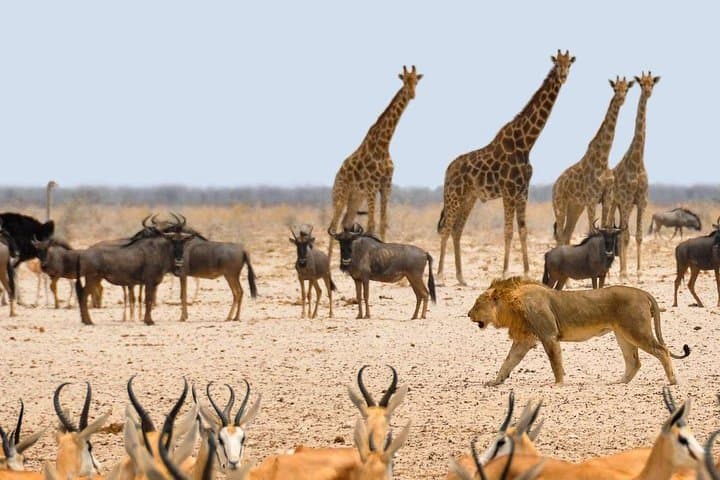
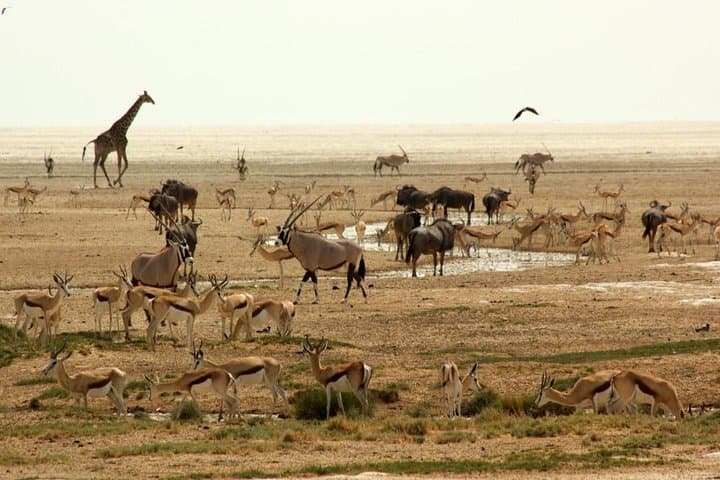
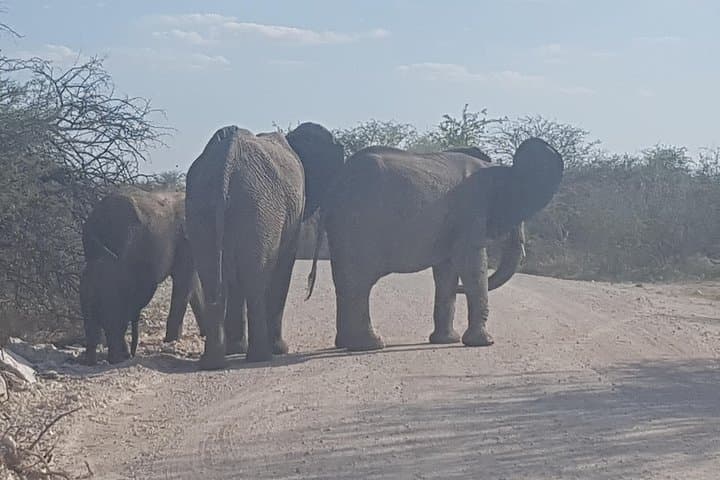
Etosha’s scale is geological: a shallow basin once connected to ancient inland seas that now holds the vast Etosha Pan, 4,760 km2 of salt in the dry season and a shallow lake when rains come. Culturally the park sits on land long used by Ovambo and San peoples; colonial-era roads and boreholes changed movement patterns of both animals and people. The park’s waterholes—Okaukuejo, Halali, Namutoni—have become stage sets where elephant herds and large cats perform survival in plain view.
Over three days, expect multiple game drives (day and late-afternoon), lodge accommodation, and guided stops at permanent waterholes. Wildlife viewing is deliberate: quiet windows, long lenses, patience. Birdwatchers will be rewarded with raptors and flocks when the pan floods.
Practical guidance: rise with the vehicles, carry layered sun protection, and keep water accessible; lodge beds are comfortable but nights can drop sharply. Vehicles are game-drive configured—bring binoculars and a charged camera with extra storage. Respect gate times, follow guides’ instructions around wildlife, and budget for park entry fees and tips. This safari pairs high-probability sightings with relaxed, lodge-based comfort—ideal for travelers who want close wildlife encounters without rough camping.
moderate.
3 days (approx. 72 hours).
Suitable for travelers in average fitness; involves long vehicle days and short, gentle walks at waterholes.
Park entry fees are commonly not included in tour prices; confirm with the operator and budget to pay on arrival or in advance.
Etosha is in a low-to-moderate malaria risk zone—consult a healthcare provider about prophylaxis based on season and personal health.
This tour typically requires a minimum age of 9 years; check specifics with the operator for family bookings.
Dry season (May–October) concentrates animals at waterholes for reliable viewing; wet season brings bird migrations and greener scenery.
Etosha’s pan formed as an endorheic basin over geological time; colonial-era wells and fences altered traditional migration routes used by local communities.
Poaching pressure, especially on rhinos, has driven anti-poaching patrols and community conservation partnerships; visitors can support by following guidelines and choosing operators that invest in local programs.
Motema Tours and Safaris Namibia operates guided outdoor trips and adventures with an emphasis on safety, stewardship, and memorable experiences.
A predawn convoy leaves Windhoek and the horizon lightens into a raw Namibian map—orange scrub, flat salt crusts and distant termite mounds. By the time the group crosses Etosha’s rim, the pan stretches white and stubborn, a natural mirror that draws life to its margins. A guide’s voice cuts through the morning hush: directions, behavior rules, and where the best sightlines form at first light.
A predawn convoy leaves Windhoek and the horizon lightens into a raw Namibian map—orange scrub, flat salt crusts and distant termite mounds. By the time the group crosses Etosha’s rim, the pan stretches white and stubborn, a natural mirror that draws life to its margins. A guide’s voice cuts through the morning hush: directions, behavior rules, and where the best sightlines form at first light.
Etosha’s scale is geological: a shallow basin once connected to ancient inland seas that now holds the vast Etosha Pan, 4,760 km2 of salt in the dry season and a shallow lake when rains come. Culturally the park sits on land long used by Ovambo and San peoples; colonial-era roads and boreholes changed movement patterns of both animals and people. The park’s waterholes—Okaukuejo, Halali, Namutoni—have become stage sets where elephant herds and large cats perform survival in plain view.
Over three days, expect multiple game drives (day and late-afternoon), lodge accommodation, and guided stops at permanent waterholes. Wildlife viewing is deliberate: quiet windows, long lenses, patience. Birdwatchers will be rewarded with raptors and flocks when the pan floods.
Practical guidance: rise with the vehicles, carry layered sun protection, and keep water accessible; lodge beds are comfortable but nights can drop sharply. Vehicles are game-drive configured—bring binoculars and a charged camera with extra storage. Respect gate times, follow guides’ instructions around wildlife, and budget for park entry fees and tips. This safari pairs high-probability sightings with relaxed, lodge-based comfort—ideal for travelers who want close wildlife encounters without rough camping.