THE ADVENTURE COLLECTIVE® · Independent discovery and booking for outdoor travel

Traverse High Atlas passes, palm-dotted Draa Valley, and the remote dunes of Erg Chegaga on a private three-day journey from Marrakech. Expect kasbah stays, a camel sunset, and an off-road 4x4 crossing into one of Morocco’s most dramatic desert landscapes.
Traverse High Atlas passes, palm-dotted Draa Valley, and the remote dunes of Erg Chegaga on a private three-day journey from Marrakech. Expect kasbah stays, a camel sunset, and an off-road 4x4 crossing into one of Morocco’s most dramatic desert landscapes.
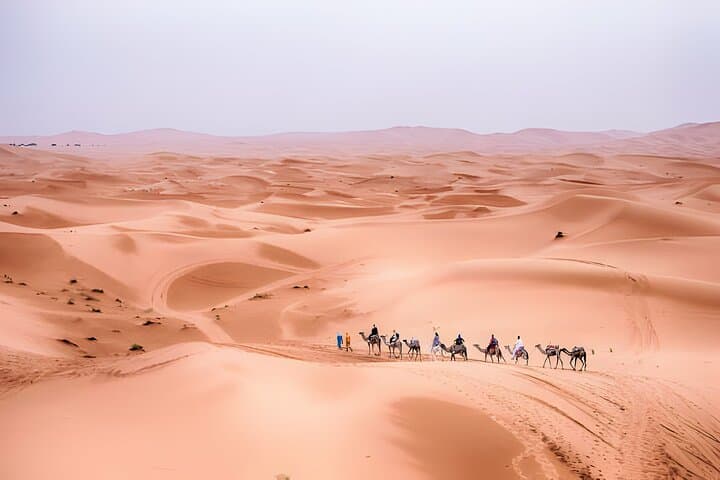
A ribbon of asphalt peels away from Marrakech and the High Atlas rises like a living wall: jagged ridgelines, scattered oak, and villages where flat-roofed houses lean into the slopes. By late afternoon the road drops into the Draa Valley — palms crowding ovens and kasbahs — and the light turns copper on adobe walls. On day two the pavement ends and the landscape loosens into sand and stone; the dunes of Erg Chegaga push and shape the wind, daring you to climb.
Verified experiences and guided adventures in the surrounding area.
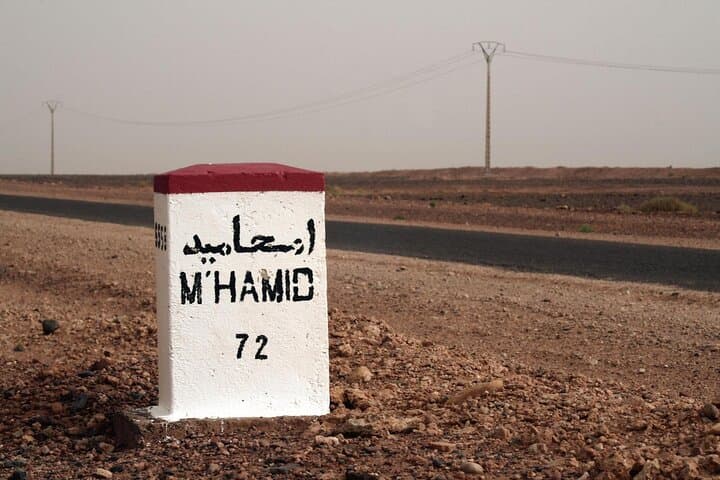
Operated by Eddyafa Travel · M'Hamid El Ghizlane, Drâa-Tafilalet
A ribbon of asphalt peels away from Marrakech and the High Atlas rises like a living wall: jagged ridgelines, scattered oak, and villages where flat-roofed houses lean into the slopes. By late afternoon the road drops into the Draa Valley — palms crowding ovens and kasbahs — and the light turns copper on adobe walls. On day two the pavement ends and the landscape loosens into sand and stone; the dunes of Erg Chegaga push and shape the wind, daring you to climb.
This route threads centuries of human movement: caravan tracks, kasbah architecture at Ait Ben Haddou (a UNESCO site), and the Draa oasis system that supported trans-Saharan trade. Geologically, the region is a collision zone—Atlas uplifted by plate forces—while the Iriki basin and Chegaga erg are wind-built features of Pleistocene and Holocene sands. Local Amazigh (Berber) culture remains visible in pottery, carpet weaving around Taznakhte, and small libraries such as Tamgrout’s Quranic collection.
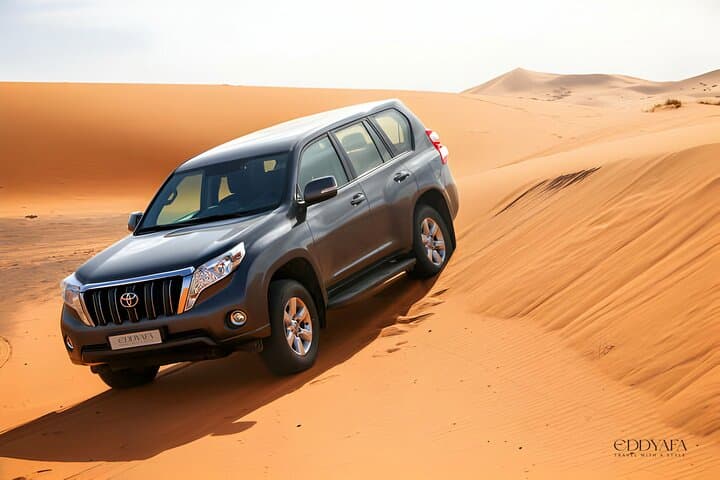
Practically, expect long drives (most days include several hours in 4x4), a sunset camel ride, and one night in a desert camp under clear, starlit skies. Pack layered clothing for cold desert nights and sun protection for midday heat; bring a small daypack for short walks and camera batteries for fast-changing light. Timing your trip for spring or autumn reduces extreme temperatures. Hydrate on the road, move slowly over dune slopes, and follow local guides when off-road — the desert rewards patience and respect.
easy.
3 days.
Suitable for most travelers; ability to mount a camel and walk short distances on sand recommended
Days include several hours of driving: expect long scenic transfers between Marrakech, Zagora, and the Chegaga access points, with off-road segments in 4x4 vehicles on day two and three.
Camel treks are short (typically at sunset) and gentle; basic mobility is enough though mounting can be awkward for some—guides assist.
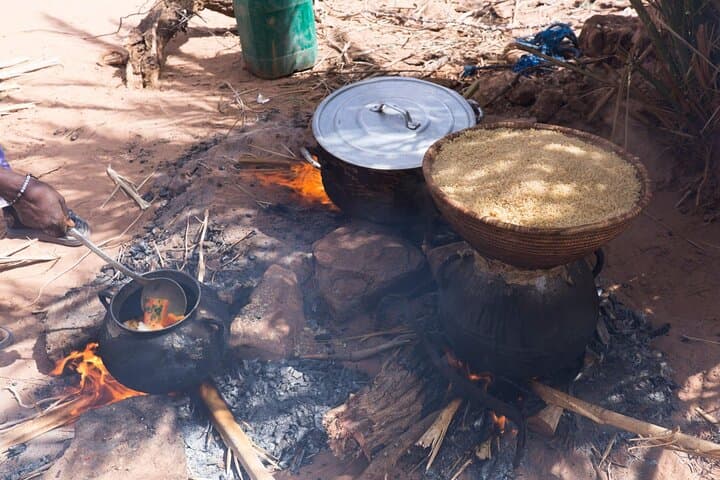
Accommodations alternate between restored kasbah guesthouses with basic comforts and a desert camp offering prepared meals and mattress-covered tents; standards are rustic-luxury rather than hotel-style.
Travel insurance is recommended for medical evacuation and trip interruption; no special permits are needed for standard tourist routes on this private itinerary.
The route follows old caravan corridors; Ait Ben Haddou served as a fortified stop on trans-Saharan and trans-Mediterranean trade routes, while the Draa valley sustained oasis communities for centuries.
The fragile desert and oasis systems are susceptible to overuse—stick to marked routes in the dunes, limit campfire use, and support local guides and eco-minded camps to minimize impact.
Eddyafa Travel operates guided outdoor trips and adventures with an emphasis on safety, stewardship, and memorable experiences.
A ribbon of asphalt peels away from Marrakech and the High Atlas rises like a living wall: jagged ridgelines, scattered oak, and villages where flat-roofed houses lean into the slopes. By late afternoon the road drops into the Draa Valley — palms crowding ovens and kasbahs — and the light turns copper on adobe walls. On day two the pavement ends and the landscape loosens into sand and stone; the dunes of Erg Chegaga push and shape the wind, daring you to climb.
A ribbon of asphalt peels away from Marrakech and the High Atlas rises like a living wall: jagged ridgelines, scattered oak, and villages where flat-roofed houses lean into the slopes. By late afternoon the road drops into the Draa Valley — palms crowding ovens and kasbahs — and the light turns copper on adobe walls. On day two the pavement ends and the landscape loosens into sand and stone; the dunes of Erg Chegaga push and shape the wind, daring you to climb.
This route threads centuries of human movement: caravan tracks, kasbah architecture at Ait Ben Haddou (a UNESCO site), and the Draa oasis system that supported trans-Saharan trade. Geologically, the region is a collision zone—Atlas uplifted by plate forces—while the Iriki basin and Chegaga erg are wind-built features of Pleistocene and Holocene sands. Local Amazigh (Berber) culture remains visible in pottery, carpet weaving around Taznakhte, and small libraries such as Tamgrout’s Quranic collection.
Practically, expect long drives (most days include several hours in 4x4), a sunset camel ride, and one night in a desert camp under clear, starlit skies. Pack layered clothing for cold desert nights and sun protection for midday heat; bring a small daypack for short walks and camera batteries for fast-changing light. Timing your trip for spring or autumn reduces extreme temperatures. Hydrate on the road, move slowly over dune slopes, and follow local guides when off-road — the desert rewards patience and respect.