THE ADVENTURE COLLECTIVE® · Independent discovery and booking for outdoor travel

Ride your own dog team across the White Mountains over three days of trail-running, river crossings, and cabin nights. Learn mushing skills from experienced mushers while experiencing Alaska’s winter landscapes up close.
Ride your own dog team across the White Mountains over three days of trail-running, river crossings, and cabin nights. Learn mushing skills from experienced mushers while experiencing Alaska’s winter landscapes up close.
You step from the van into a landscape that narrows and opens at once: scrub birch and black spruce give way to rolling tundra, and the air bites clean and sharp. Snow squeaks underfoot while a team of eager sled dogs pulls at their harnesses, reading the trail with the calm impatience of athletes about to run. Over the next three days you ride those teams across portions of the White Mountains National Recreation Area, moving with dog power and the slow drum of runners on packed snow.
Verified experiences and guided adventures in the surrounding area.
You step from the van into a landscape that narrows and opens at once: scrub birch and black spruce give way to rolling tundra, and the air bites clean and sharp. Snow squeaks underfoot while a team of eager sled dogs pulls at their harnesses, reading the trail with the calm impatience of athletes about to run. Over the next three days you ride those teams across portions of the White Mountains National Recreation Area, moving with dog power and the slow drum of runners on packed snow.
The region is geologically young, shaped by glacial scouring and underlain by schist and quartzite; the low, rounded ranges are cut by river valleys that the Athabaskan people have used for millennia. Dog mushing here is both culture and livelihood—practical travel turned competitive sport—rooted in gold rush era logistics and modern racing traditions.
Expect long daylight hours (or northern twilight) depending on season, wide-open views, and nights spent in simple lodges or heated cabins near kennels. Mushing instruction is included: learn to balance on the runners, give commands, and care for the team. Terrain is mostly packed winter trails and frozen river crossings with occasional ungroomed stretches.
Practical tips: dress in layered, windproof clothing; use waterproof winter boots and face protection; hydrate and eat frequently to maintain energy. Operators provide training, sled gear, and experienced guides—the physical demand is steady rather than extreme, but cold-weather endurance matters. This trip is for travelers who want to move with the dogs, not merely ride along: it’s tactile, immersive, and unfiltered Alaska.
moderate.
3 days.
Moderate endurance and balance; able to stand on sled runners, handle cold exposure, and help with dog care between runs.
No—most operators teach the basics; you'll start under guidance and progressively handle more of the driving.
Age limits vary by operator; generally children can ride as passengers while drivers should be teens or adults with reasonable balance and stamina.
Multi-day tours typically use heated cabins or lodges near the kennels; expect simple, warm sleeping quarters and communal meals.
Guides monitor conditions and may alter routes or schedules for safety; severe storms or unsafe ice can lead to delays or cancellations.
Mushing in Interior Alaska developed from Indigenous travel systems and was later central to gold-era logistics and modern sled dog racing.
Operators minimize trail impact by using established winter routes and managing kennel waste; respect wildlife and avoid off-trail travel to protect vegetation under snow.
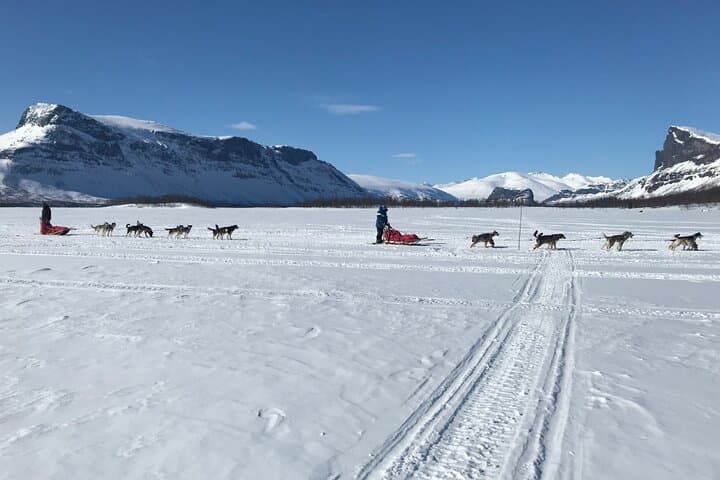
You step from the van into a landscape that narrows and opens at once: scrub birch and black spruce give way to rolling tundra, and the air bites clean and sharp. Snow squeaks underfoot while a team of eager sled dogs pulls at their harnesses, reading the trail with the calm impatience of athletes about to run. Over the next three days you ride those teams across portions of the White Mountains National Recreation Area, moving with dog power and the slow drum of runners on packed snow.
You step from the van into a landscape that narrows and opens at once: scrub birch and black spruce give way to rolling tundra, and the air bites clean and sharp. Snow squeaks underfoot while a team of eager sled dogs pulls at their harnesses, reading the trail with the calm impatience of athletes about to run. Over the next three days you ride those teams across portions of the White Mountains National Recreation Area, moving with dog power and the slow drum of runners on packed snow.
The region is geologically young, shaped by glacial scouring and underlain by schist and quartzite; the low, rounded ranges are cut by river valleys that the Athabaskan people have used for millennia. Dog mushing here is both culture and livelihood—practical travel turned competitive sport—rooted in gold rush era logistics and modern racing traditions.
Expect long daylight hours (or northern twilight) depending on season, wide-open views, and nights spent in simple lodges or heated cabins near kennels. Mushing instruction is included: learn to balance on the runners, give commands, and care for the team. Terrain is mostly packed winter trails and frozen river crossings with occasional ungroomed stretches.
Practical tips: dress in layered, windproof clothing; use waterproof winter boots and face protection; hydrate and eat frequently to maintain energy. Operators provide training, sled gear, and experienced guides—the physical demand is steady rather than extreme, but cold-weather endurance matters. This trip is for travelers who want to move with the dogs, not merely ride along: it’s tactile, immersive, and unfiltered Alaska.