THE ADVENTURE COLLECTIVE® · Independent discovery and booking for outdoor travel

Cross the High Atlas, explore Ait Ben Haddou and Todra Gorges, then ride camels into Erg Chebbi for sunset and an overnight desert camp. This three-day route mixes dramatic mountain passes with Saharan dunes and coastal finish in Agadir.
Cross the High Atlas, explore Ait Ben Haddou and Todra Gorges, then ride camels into Erg Chebbi for sunset and an overnight desert camp. This three-day route mixes dramatic mountain passes with Saharan dunes and coastal finish in Agadir.
You leave Marrakech before sunrise, the city’s last minarets shrinking as the road climbs into the High Atlas. Wind and sun trade places across the windshield; soon you’ll be perched at Tizi n’Tichka (2,260 m), where stone scrapes the sky and the air feels thin and honest.
Verified experiences and guided adventures in the surrounding area.
Operated by Morocco Best Tour · Marrakech, Marrakech-Safi
You leave Marrakech before sunrise, the city’s last minarets shrinking as the road climbs into the High Atlas. Wind and sun trade places across the windshield; soon you’ll be perched at Tizi n’Tichka (2,260 m), where stone scrapes the sky and the air feels thin and honest.
The route is a geography lesson on motion: red-ochre kasbahs cling to slopes, the road threads through the Road of 1,001 Kasbahs, and UNESCO-listed Ait Ben Haddou rises like a clay fortress from the valley. Descend toward the Todra and Dades gorges—limestone cliffs that constrict the river into a cool, echoing cut—and smell Damascus rose fields as you pass Kelaat M’Gouna.
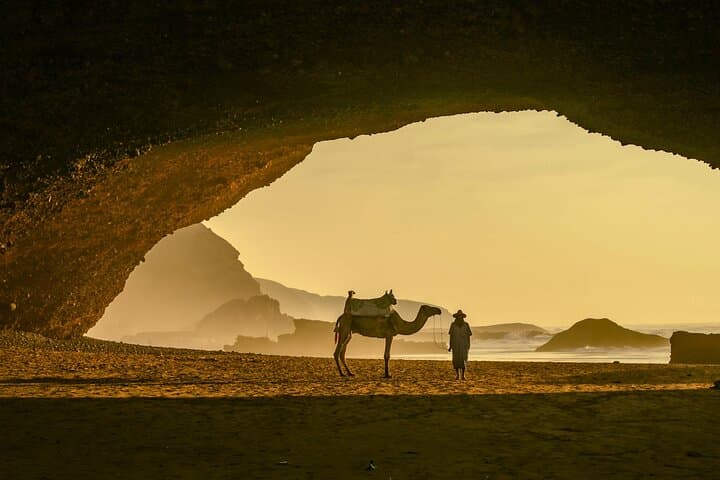
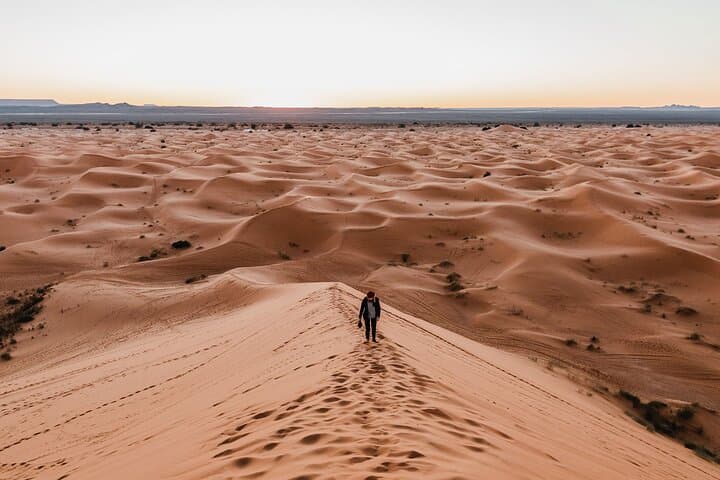
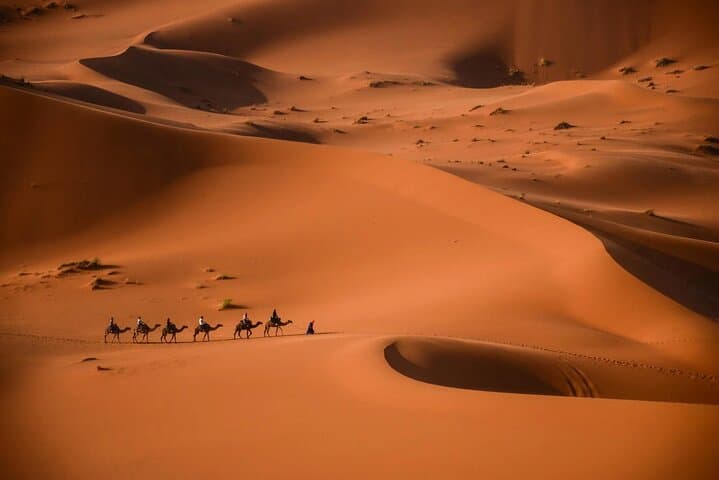
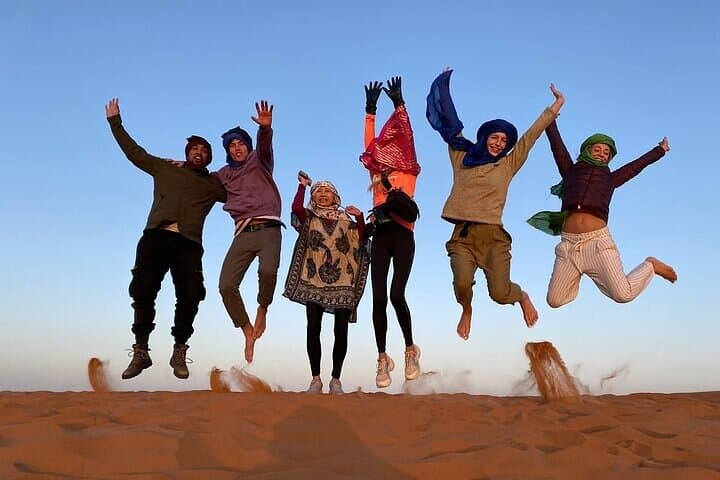
Erg Chebbi’s dunes are the trip’s pulse. Sand towers up to 150 meters; a one-hour sunset camel ride eases you into the rhythm of the desert, campfire drums punctuating a sky absent of light pollution. Morning brings a short dune walk at sunrise, then the long drive west through Ouarzazate and Taznakht to the Atlantic coast and Agadir.
History here is practical: trading routes, Berber kasbah architecture, and argan groves that shaped local economies. Geology alternates between folded High Atlas and the wind-sculpted erg of the Sahara.
Practicalities: expect long drives (Marrakech–Merzouga ~560 km), varied temperatures (hot days, cold nights), and simple desert camps with toilets and communal tents. Bring layered clothing, sun protection, cash for small purchases, and a sense of patience—the landscape demands time, and rewards it with wide horizons and quiet starlit nights.
moderate.
3 days (approx. 72 hours).
Suitable for travelers in average fitness—long vehicle transfers with short to moderate walks, a one-hour camel ride and dune scrambling.
Typical camel rides are about one hour at sunset and a short sunrise ride the next morning; transfers to and from the camel station are included.
Camps are basic to comfortable depending on the booking—most offer shared toilets, warm dinner in a communal tent, and sleeping mats or simple beds; VIP upgrades provide private tents and nicer amenities.
The operator lists the tour as suitable for all fitness levels, but camel riding and dune walking require basic mobility; contact the operator about wheelchair needs or very young children.
Mobile coverage is intermittent in remote stretches and at the dunes; larger towns like Ouarzazate, Tinghir, and Agadir have reliable service.
The route follows historic trans-Saharan and caravan corridors; Ait Ben Haddou is a fortified ksar reflecting centuries of southern Moroccan trade and mud-brick architecture.
The Sahara’s fragile soils and scarce water mean stick to marked paths, avoid off-track driving, and support local guides and small businesses to help sustain communities and landscapes.
Morocco Best Tour operates guided outdoor trips and adventures with an emphasis on safety, stewardship, and memorable experiences.
You leave Marrakech before sunrise, the city’s last minarets shrinking as the road climbs into the High Atlas. Wind and sun trade places across the windshield; soon you’ll be perched at Tizi n’Tichka (2,260 m), where stone scrapes the sky and the air feels thin and honest.
You leave Marrakech before sunrise, the city’s last minarets shrinking as the road climbs into the High Atlas. Wind and sun trade places across the windshield; soon you’ll be perched at Tizi n’Tichka (2,260 m), where stone scrapes the sky and the air feels thin and honest.
The route is a geography lesson on motion: red-ochre kasbahs cling to slopes, the road threads through the Road of 1,001 Kasbahs, and UNESCO-listed Ait Ben Haddou rises like a clay fortress from the valley. Descend toward the Todra and Dades gorges—limestone cliffs that constrict the river into a cool, echoing cut—and smell Damascus rose fields as you pass Kelaat M’Gouna.
Erg Chebbi’s dunes are the trip’s pulse. Sand towers up to 150 meters; a one-hour sunset camel ride eases you into the rhythm of the desert, campfire drums punctuating a sky absent of light pollution. Morning brings a short dune walk at sunrise, then the long drive west through Ouarzazate and Taznakht to the Atlantic coast and Agadir.
History here is practical: trading routes, Berber kasbah architecture, and argan groves that shaped local economies. Geology alternates between folded High Atlas and the wind-sculpted erg of the Sahara.
Practicalities: expect long drives (Marrakech–Merzouga ~560 km), varied temperatures (hot days, cold nights), and simple desert camps with toilets and communal tents. Bring layered clothing, sun protection, cash for small purchases, and a sense of patience—the landscape demands time, and rewards it with wide horizons and quiet starlit nights.