THE ADVENTURE COLLECTIVE® · Independent discovery and booking for outdoor travel

Cross the High Atlas, ride camels into Erg Chegaga and sleep under nomad tents on this compact 3-day Sahara circuit from Marrakech. Expect long drives, dune climbs at sunrise, and authentic Berber hospitality.
Cross the High Atlas, ride camels into Erg Chegaga and sleep under nomad tents on this compact 3-day Sahara circuit from Marrakech. Expect long drives, dune climbs at sunrise, and authentic Berber hospitality.
You step out before dawn in Marrakech and the city’s orange walls recede into a cooler light as the road climbs the Tizi n’Tichka pass. Wind cuts across the High Atlas and the air tastes of stone and thyme; roadside kasbahs loom like compact fortresses, then slip away into palm-lined valleys. By evening the landscape thins to ochre plains and the first silhouette of M’hamid appears — the last village before the Sahara opens.
Verified experiences and guided adventures in the surrounding area.
Operated by Desertbrise Travel · M'Hamid (Mhamid El Ghizlane), Drâa-Tafilalet
You step out before dawn in Marrakech and the city’s orange walls recede into a cooler light as the road climbs the Tizi n’Tichka pass. Wind cuts across the High Atlas and the air tastes of stone and thyme; roadside kasbahs loom like compact fortresses, then slip away into palm-lined valleys. By evening the landscape thins to ochre plains and the first silhouette of M’hamid appears — the last village before the Sahara opens.
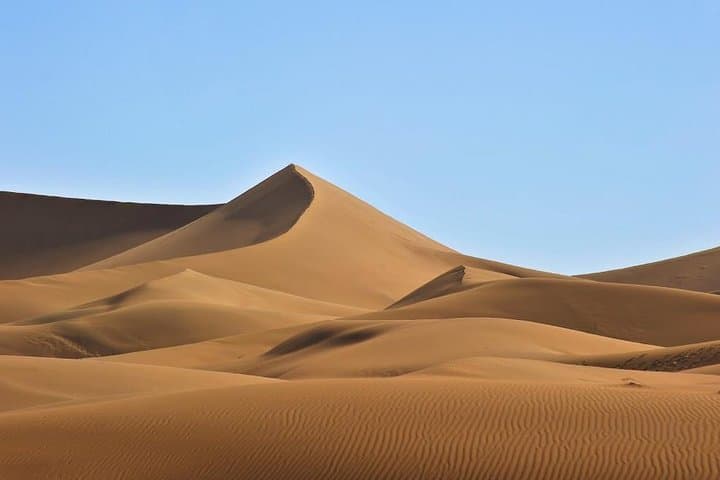
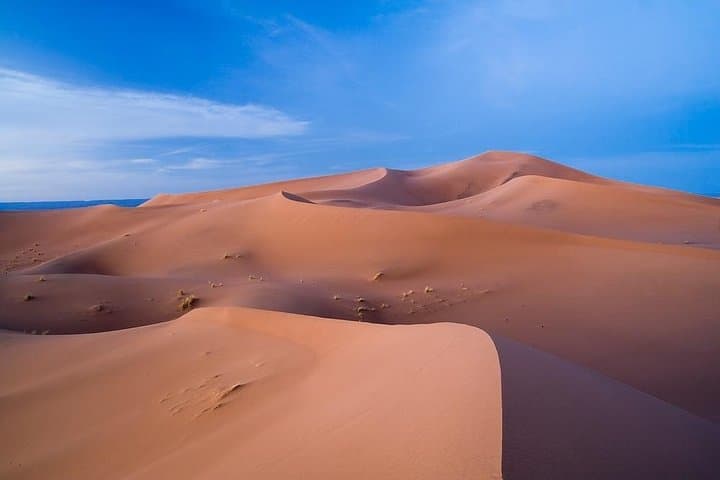
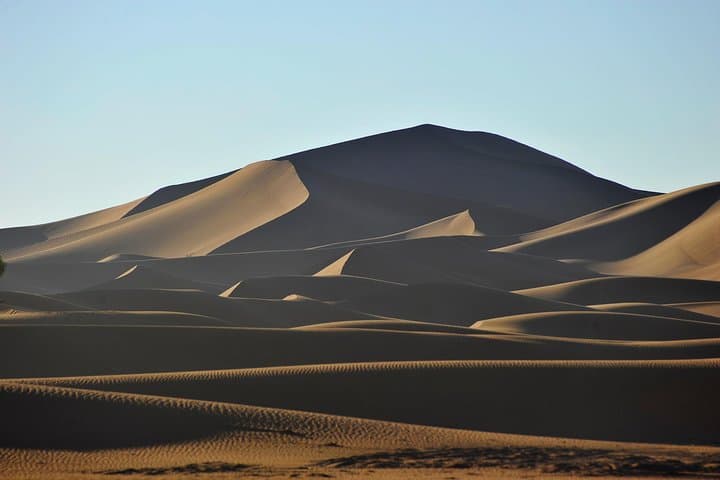
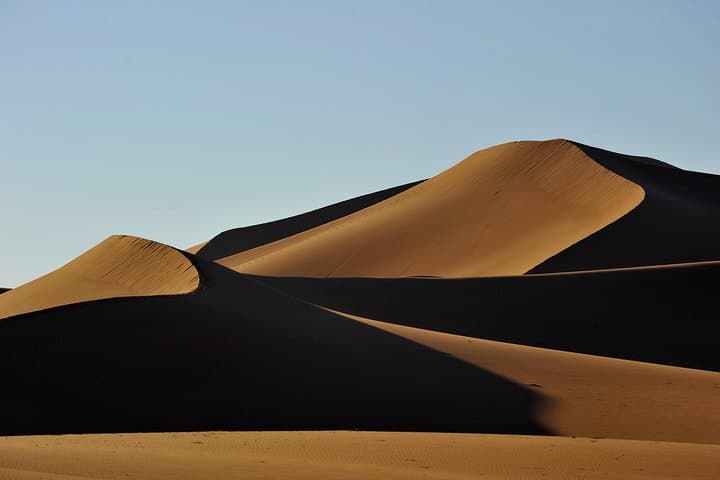
This 3-day route threads history, geology and desert culture. The Tichka Pass is the highest paved road in Morocco, carved through folded volcanic and sedimentary layers. Ait Benhaddou, a UNESCO ksar you pass on day one, is an intact example of earthen architecture used for centuries and filmed in many international movies. The Draa Valley’s irrigated palm oases contrast sharply with the sweep of dunes on day two, where wind-driven ripples and star dunes of Erg Chegaga rise as high as 300 meters.
Expect camel rides, a 4x4 crossing of a former Paris–Dakar track, evenings in tented camps with Berber music, and sunrise climbs on sand for sweeping views. Practical notes: bring a warm layer for night, sturdy shoes for soft sand, sun protection, and a refillable water bottle — dehydration and heat are the primary challenges. Travel between stops involves long drives; motion-sickness remedies and flexible timing help.
This itinerary suits travelers who want a tactile desert experience — sand underfoot, nomadic hospitality, and the slow rhythm of dunes — with accessible logistics from Marrakech and guided support for camping, meals, and transport.
moderate.
3 days.
Basic to moderate fitness: able to manage 1–2 hours of camel riding or dune walking and tolerate multi-hour vehicle transfers.
The tour is suitable for most travelers; camel rides and dune walks are moderate and guides handle logistics and camp set-up.
Nights are spent in shared or private nomad-style tents with bedding supplied; basic camp facilities and dinner are included.
The operator lists the tour as accessible for various fitness levels, but sand and camel mounts can be challenging; check specifics for wheelchair accessibility beforehand.
Spring and fall offer milder daytime temperatures and stable weather for dune activities; early winter mornings can be cold and summer days very hot.
This route crosses traditional caravan corridors and palm oases of the Draa Valley; Ait Benhaddou is a well-preserved earthen ksar reflecting centuries of trans-Saharan trade.
Dune ecosystems are sensitive to vehicle traffic and litter; follow local guidance, minimize off-track driving and carry out all trash to protect sparse desert flora and archaeological sites.
Desertbrise Travel operates guided outdoor trips and adventures with an emphasis on safety, stewardship, and memorable experiences.
You step out before dawn in Marrakech and the city’s orange walls recede into a cooler light as the road climbs the Tizi n’Tichka pass. Wind cuts across the High Atlas and the air tastes of stone and thyme; roadside kasbahs loom like compact fortresses, then slip away into palm-lined valleys. By evening the landscape thins to ochre plains and the first silhouette of M’hamid appears — the last village before the Sahara opens.
You step out before dawn in Marrakech and the city’s orange walls recede into a cooler light as the road climbs the Tizi n’Tichka pass. Wind cuts across the High Atlas and the air tastes of stone and thyme; roadside kasbahs loom like compact fortresses, then slip away into palm-lined valleys. By evening the landscape thins to ochre plains and the first silhouette of M’hamid appears — the last village before the Sahara opens.
This 3-day route threads history, geology and desert culture. The Tichka Pass is the highest paved road in Morocco, carved through folded volcanic and sedimentary layers. Ait Benhaddou, a UNESCO ksar you pass on day one, is an intact example of earthen architecture used for centuries and filmed in many international movies. The Draa Valley’s irrigated palm oases contrast sharply with the sweep of dunes on day two, where wind-driven ripples and star dunes of Erg Chegaga rise as high as 300 meters.
Expect camel rides, a 4x4 crossing of a former Paris–Dakar track, evenings in tented camps with Berber music, and sunrise climbs on sand for sweeping views. Practical notes: bring a warm layer for night, sturdy shoes for soft sand, sun protection, and a refillable water bottle — dehydration and heat are the primary challenges. Travel between stops involves long drives; motion-sickness remedies and flexible timing help.
This itinerary suits travelers who want a tactile desert experience — sand underfoot, nomadic hospitality, and the slow rhythm of dunes — with accessible logistics from Marrakech and guided support for camping, meals, and transport.