THE ADVENTURE COLLECTIVE® · Independent discovery and booking for outdoor travel

Cross the High Atlas, peer into Ait Ben Haddou, and ride camels into the orange sweep of Erg Chebbi on a compact 3-day loop from Marrakech. Expect gorges, fossil stops, desert stars and a night in a Berber camp.
Cross the High Atlas, peer into Ait Ben Haddou, and ride camels into the orange sweep of Erg Chebbi on a compact 3-day loop from Marrakech. Expect gorges, fossil stops, desert stars and a night in a Berber camp.
Morning light peels across the High Atlas as the van climbs Tizi n’Tichka and the road opens onto ochre valleys. Dust smells of sun-warmed stone; distant peaks watch as the landscape eases into palm-lined oases and finally the great sweep of Erg Chebbi, where dunes push and breathe like a living horizon.
Verified experiences and guided adventures in the surrounding area.
Operated by Vacanza Marocco · Merzouga, Drâa-Tafilalet
Morning light peels across the High Atlas as the van climbs Tizi n’Tichka and the road opens onto ochre valleys. Dust smells of sun-warmed stone; distant peaks watch as the landscape eases into palm-lined oases and finally the great sweep of Erg Chebbi, where dunes push and breathe like a living horizon.
This route follows ancient caravan paths and modern film roads: Ait Ben Haddou’s earthen kasbahs recall Saharan trade and cinematic backdrops, while the Todra and Dades gorges expose layered limestone carved by seasonal rivers. Berber communities dot the route — you’ll pass mud-brick villages, fossil-strewn plateaus around Erfoud, and the date palms of the Draa Valley.
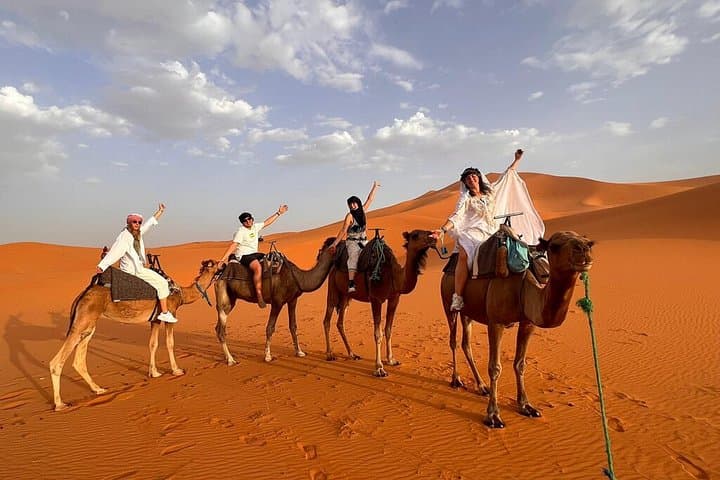
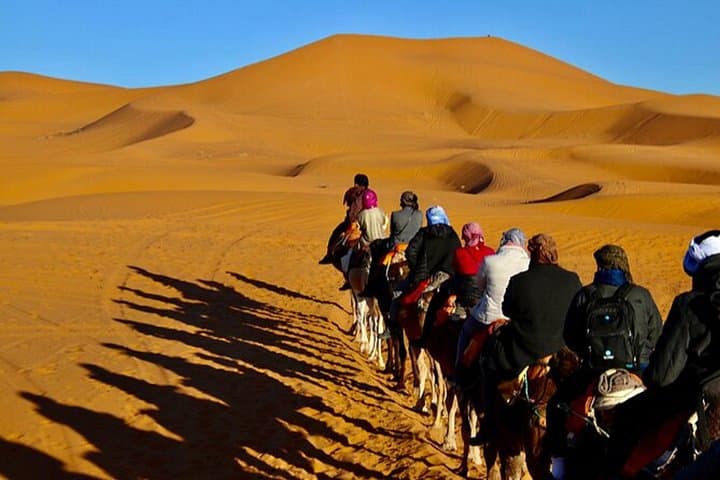
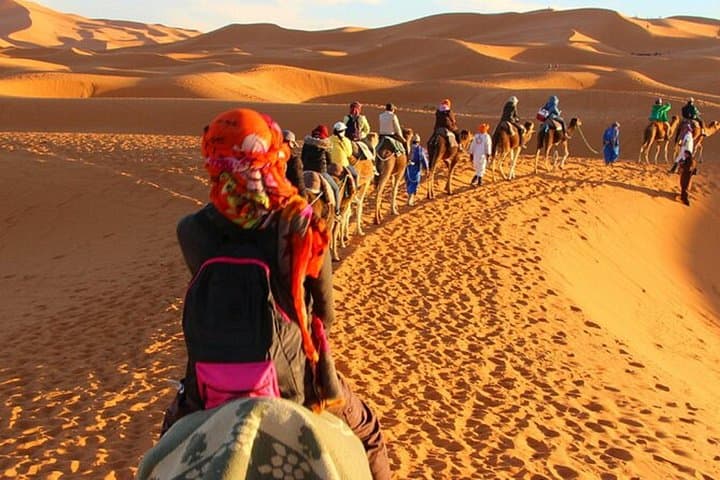
The highlight is the camel trek at dusk across Erg Chebbi, arriving at a nomad-style bivouac where dinner around a fire and live Berber music mark the night. Wake before dawn for the dune-top sunrise, then return to Marrakech across the Anti-Atlas.
Practical edge: expect long drives (three days of transit plus stops), basic riad or camp accommodations, and stretches of walking on loose sand. Nights in the desert can be cold even after hot days — pack warm layers and a headlamp. Drink plenty of water; the landscape is beautiful and fragile, so stick to guides’ routes and carry out waste. For timing, the clearest skies for stars and sunrises are spring and autumn; summer brings heat and winter delivers sharp nighttime chill. This loop is accessible to most travelers comfortable with long drives and short camel rides, offering a compact but authentic Sahara experience.
moderate.
3 days (approx. 48–60 hours).
Suitable for travelers in average fitness: involves short dune walks, camel riding, and long vehicle transfers.
Spring and autumn offer the most comfortable temperatures with clear skies; summers are very hot and winters bring cold desert nights.
Camel treks to the camp typically last 1–2 hours over dunes; mounting is assisted and pace is slow, so it’s suitable for most travelers.
Yes — expect simple riads or hotels in Dades/Todra and nomad-style tents or basic desert camps with shared facilities in Merzouga.
Young children can usually ride; however, camel mounts and dune walking may be challenging for those with limited mobility—check with the operator beforehand.
This corridor linked Saharan trade routes and agricultural oases; Ait Ben Haddou is a well-preserved kasbah and UNESCO site that reflects trans-Saharan history.
The Sahara is ecologically fragile—avoid off-route driving, minimize water use, and take all trash out of the desert to reduce impact.
Vacanza Marocco operates guided outdoor trips and adventures with an emphasis on safety, stewardship, and memorable experiences.
Morning light peels across the High Atlas as the van climbs Tizi n’Tichka and the road opens onto ochre valleys. Dust smells of sun-warmed stone; distant peaks watch as the landscape eases into palm-lined oases and finally the great sweep of Erg Chebbi, where dunes push and breathe like a living horizon.
Morning light peels across the High Atlas as the van climbs Tizi n’Tichka and the road opens onto ochre valleys. Dust smells of sun-warmed stone; distant peaks watch as the landscape eases into palm-lined oases and finally the great sweep of Erg Chebbi, where dunes push and breathe like a living horizon.
This route follows ancient caravan paths and modern film roads: Ait Ben Haddou’s earthen kasbahs recall Saharan trade and cinematic backdrops, while the Todra and Dades gorges expose layered limestone carved by seasonal rivers. Berber communities dot the route — you’ll pass mud-brick villages, fossil-strewn plateaus around Erfoud, and the date palms of the Draa Valley.
The highlight is the camel trek at dusk across Erg Chebbi, arriving at a nomad-style bivouac where dinner around a fire and live Berber music mark the night. Wake before dawn for the dune-top sunrise, then return to Marrakech across the Anti-Atlas.
Practical edge: expect long drives (three days of transit plus stops), basic riad or camp accommodations, and stretches of walking on loose sand. Nights in the desert can be cold even after hot days — pack warm layers and a headlamp. Drink plenty of water; the landscape is beautiful and fragile, so stick to guides’ routes and carry out waste. For timing, the clearest skies for stars and sunrises are spring and autumn; summer brings heat and winter delivers sharp nighttime chill. This loop is accessible to most travelers comfortable with long drives and short camel rides, offering a compact but authentic Sahara experience.