THE ADVENTURE COLLECTIVE® · Independent discovery and booking for outdoor travel

Three days of canoeing, camping and coastal boat rides through Europe’s largest wetland. Paddle narrow canals, sleep in field camps and watch the Danube meet the Black Sea on a private guided tour.
Three days of canoeing, camping and coastal boat rides through Europe’s largest wetland. Paddle narrow canals, sleep in field camps and watch the Danube meet the Black Sea on a private guided tour.
You push off at first light into a ribbon of water that cleaves through reed beds taller than your head; the delta answers with a hush broken only by oars and gulls. Day one is a long, focused paddle—Mahmudia to the Litcov and Caraorman canals—where channels narrow to green tunnels and the open lakes spread like shallow mirrors.
Verified experiences and guided adventures in the surrounding area.
Operated by Cămara · Tulcea, Tulcea County
You push off at first light into a ribbon of water that cleaves through reed beds taller than your head; the delta answers with a hush broken only by oars and gulls. Day one is a long, focused paddle—Mahmudia to the Litcov and Caraorman canals—where channels narrow to green tunnels and the open lakes spread like shallow mirrors.
The Danube Delta is Europe’s largest wetland and a UNESCO Biosphere Reserve, shaped by centuries of sediment and seasonal floods. Here, sandy forest islands such as Caraorman and Letea preserve relic Mediterranean vegetation and the Lipovan and Romanian fishing communities keep a slow, practical rhythm of life.
Expect flat water and variable currents rather than climbs: paddling dominates the exertion, and wind can dictate route choices. You’ll camp on equipped sites—showers and a rustic bar some evenings—or sleep in tents with provided mattresses; rental kits are available for about €15/day. Meals emphasize local fish, smoked carp, and seasonal vegetables; lunches are picnic-style on the riverbank.
Practical notes: travel light, waterproof everything, and plan for insects—long sleeves, DEET, and a head net help. Non-swimmers or anyone with serious cardiovascular limits should skip this trip. The guide supplies canoes, life jackets, and safety briefings; days typically include 6–8 hours paddling interspersed with hourly hydration stops. Aim for spring or late summer for bird activity and calmer conditions. Leave no trace: the delta’s channels and reed beds are fragile and the fishing communities depend on its health.
This is a slow, tactile adventure—water pushing you forward, reeds leaning in like curious neighbors—and it rewards patience with quiet wildlife encounters and evenings spent around a low campfire.
moderate.
3 days.
Moderately fit: able to paddle 6–8 hours in a day with short breaks; comfortable with camping.
No—guides provide instruction and life jackets, but basic fitness and comfort in water are required.
Nights are spent in tents at equipped campsites with access to showers, electricity and a small bar; mattresses and sleeping bags can be rented.
Breakfasts, two lunches, and two dinners are included, focused on local products; communicate dietary restrictions at booking for adjustments.
Not recommended: the operator advises against participation for non-swimmers and pregnant travelers due to water-based activity and camping conditions.
The delta’s islands and channels were formed by centuries of sediment deposition from the Danube; the Lipovan community arrived in the 18th century and still practices traditional fishing.
The Danube Delta is a protected UNESCO biosphere—stick to marked channels, avoid disturbing nesting birds, and use biodegradable products to reduce impact.
Cămara operates guided outdoor trips and adventures with an emphasis on safety, stewardship, and memorable experiences.
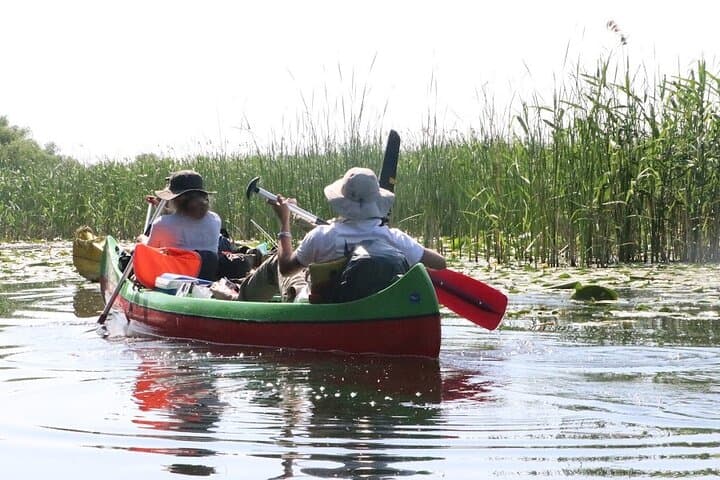
You push off at first light into a ribbon of water that cleaves through reed beds taller than your head; the delta answers with a hush broken only by oars and gulls. Day one is a long, focused paddle—Mahmudia to the Litcov and Caraorman canals—where channels narrow to green tunnels and the open lakes spread like shallow mirrors.
You push off at first light into a ribbon of water that cleaves through reed beds taller than your head; the delta answers with a hush broken only by oars and gulls. Day one is a long, focused paddle—Mahmudia to the Litcov and Caraorman canals—where channels narrow to green tunnels and the open lakes spread like shallow mirrors.
The Danube Delta is Europe’s largest wetland and a UNESCO Biosphere Reserve, shaped by centuries of sediment and seasonal floods. Here, sandy forest islands such as Caraorman and Letea preserve relic Mediterranean vegetation and the Lipovan and Romanian fishing communities keep a slow, practical rhythm of life.
Expect flat water and variable currents rather than climbs: paddling dominates the exertion, and wind can dictate route choices. You’ll camp on equipped sites—showers and a rustic bar some evenings—or sleep in tents with provided mattresses; rental kits are available for about €15/day. Meals emphasize local fish, smoked carp, and seasonal vegetables; lunches are picnic-style on the riverbank.
Practical notes: travel light, waterproof everything, and plan for insects—long sleeves, DEET, and a head net help. Non-swimmers or anyone with serious cardiovascular limits should skip this trip. The guide supplies canoes, life jackets, and safety briefings; days typically include 6–8 hours paddling interspersed with hourly hydration stops. Aim for spring or late summer for bird activity and calmer conditions. Leave no trace: the delta’s channels and reed beds are fragile and the fishing communities depend on its health.
This is a slow, tactile adventure—water pushing you forward, reeds leaning in like curious neighbors—and it rewards patience with quiet wildlife encounters and evenings spent around a low campfire.