THE ADVENTURE COLLECTIVE® · Independent discovery and booking for outdoor travel

Spend three days hiking through northern Thailand’s jungle, staying with Karen hilltribe families, swimming at hidden waterfalls and finishing with a bamboo raft glide. Practical, cultural and nature-focused, this trip mixes steady trekking with hands-on homestay experiences.
Spend three days hiking through northern Thailand’s jungle, staying with Karen hilltribe families, swimming at hidden waterfalls and finishing with a bamboo raft glide. Practical, cultural and nature-focused, this trip mixes steady trekking with hands-on homestay experiences.
Dawn breaks over a steaming valley as your minivan pushes beyond Chiang Mai’s outer suburbs and into a patchwork of rice paddies and rising forest. The air sharpens—green and damp—and by midmorning you’re stepping off a dirt track into a narrow jungle corridor where the trail narrows and the canopy presses close.
Verified experiences and guided adventures in the surrounding area.
Operated by Trips Chiang Mai · Chiang Mai, Chiang Mai Province
Dawn breaks over a steaming valley as your minivan pushes beyond Chiang Mai’s outer suburbs and into a patchwork of rice paddies and rising forest. The air sharpens—green and damp—and by midmorning you’re stepping off a dirt track into a narrow jungle corridor where the trail narrows and the canopy presses close.
These mountains are part of northern Thailand’s older volcanic and sedimentary formations; streams have carved steep gorges and left pockets of fertile terraces where Karen and Shan communities have farmed for generations. On this three-day route you move between working rice fields, simple hilltribe homestays and shaded waterfall pools, with evenings spent cooking over charcoal and trading stories beside a fire.
Expect 4–6 hours of walking on most days over uneven, sometimes muddy trail surfaces, with short stretches across terraced paddies. Elevation changes are moderate rather than alpine—think rolling climbs of a few hundred meters rather than high passes—but tropical humidity makes the work feel heavier. Bamboo rafting on day three is low-tech and scenic but can be canceled in high water.
Practical guidance: bring durable hiking shoes with good grip, a lightweight rain jacket, at least 2–3 liters of water daily, insect repellent and a small daypack for valuables (larger luggage can be stored in Chiang Mai). Be ready for basic homestay conditions, communal meals and variable phone signal. If you want to swim at waterfalls, follow the group and guide decision; park rules and safety come first. This itinerary prioritizes cultural exchange and low-impact travel—leave no trace and respect local customs to keep these routes open.
moderate.
3 days (approx. 12–18 hours hiking total).
Moderate fitness—comfortable walking 4–6 hours per day on uneven terrain, able to handle humid conditions
Children aged 4 and above can join, but parents should assess stamina and be prepared for basic homestay conditions and long walking days.
Yes, the trek operates year-round but bamboo rafting may be canceled in heavy rains or when water levels are unsafe.
Yes—larger suitcases can be left at the operator’s Chiang Mai office while you take a small daypack on the trail.
Airport drop-off is not included; inform the operator of flights and they may advise on timing, but return times can vary with traffic.
Karen and Shan communities have farmed these foothills for generations; homestays offer insight into rice cultivation, weaving and local cooking traditions.
The tour supports eco-tourism and local livelihoods; follow Leave No Trace principles and avoid single-use plastics to minimize impact.
Trips Chiang Mai operates guided outdoor trips and adventures with an emphasis on safety, stewardship, and memorable experiences.
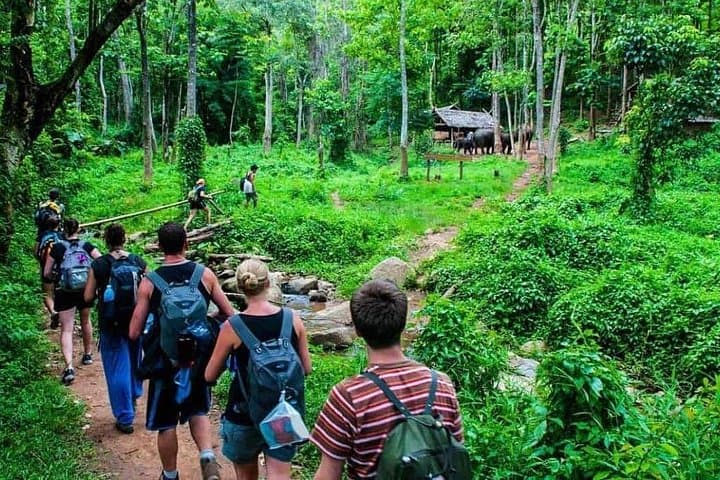
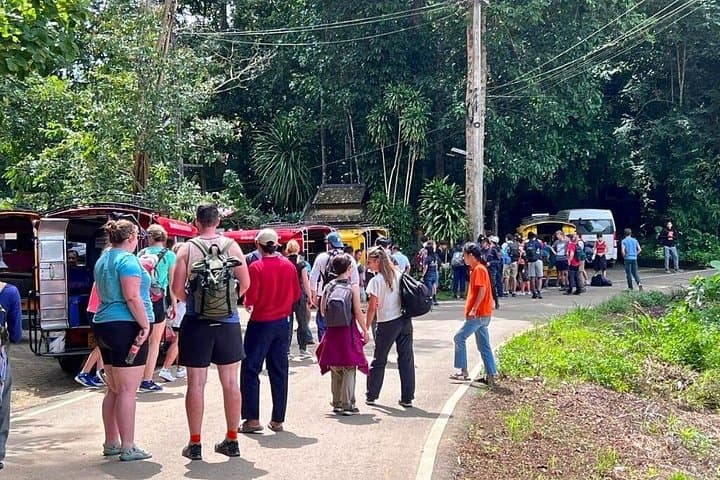
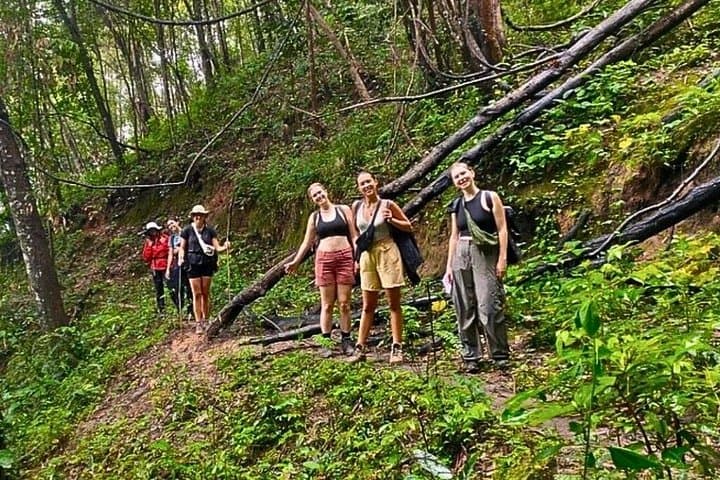
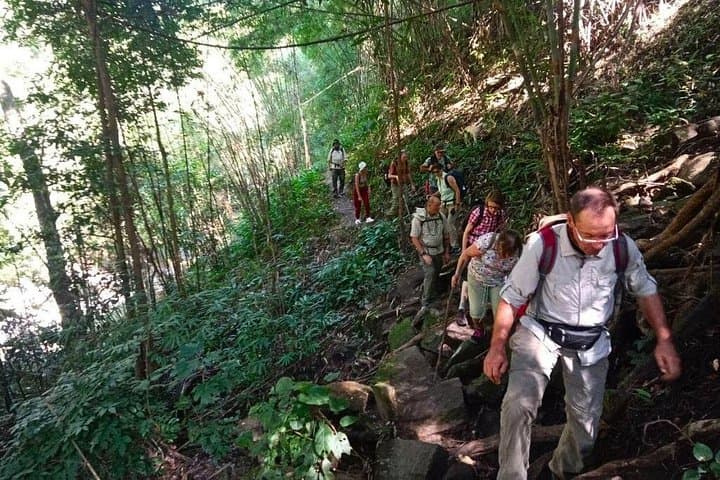
Dawn breaks over a steaming valley as your minivan pushes beyond Chiang Mai’s outer suburbs and into a patchwork of rice paddies and rising forest. The air sharpens—green and damp—and by midmorning you’re stepping off a dirt track into a narrow jungle corridor where the trail narrows and the canopy presses close.
Dawn breaks over a steaming valley as your minivan pushes beyond Chiang Mai’s outer suburbs and into a patchwork of rice paddies and rising forest. The air sharpens—green and damp—and by midmorning you’re stepping off a dirt track into a narrow jungle corridor where the trail narrows and the canopy presses close.
These mountains are part of northern Thailand’s older volcanic and sedimentary formations; streams have carved steep gorges and left pockets of fertile terraces where Karen and Shan communities have farmed for generations. On this three-day route you move between working rice fields, simple hilltribe homestays and shaded waterfall pools, with evenings spent cooking over charcoal and trading stories beside a fire.
Expect 4–6 hours of walking on most days over uneven, sometimes muddy trail surfaces, with short stretches across terraced paddies. Elevation changes are moderate rather than alpine—think rolling climbs of a few hundred meters rather than high passes—but tropical humidity makes the work feel heavier. Bamboo rafting on day three is low-tech and scenic but can be canceled in high water.
Practical guidance: bring durable hiking shoes with good grip, a lightweight rain jacket, at least 2–3 liters of water daily, insect repellent and a small daypack for valuables (larger luggage can be stored in Chiang Mai). Be ready for basic homestay conditions, communal meals and variable phone signal. If you want to swim at waterfalls, follow the group and guide decision; park rules and safety come first. This itinerary prioritizes cultural exchange and low-impact travel—leave no trace and respect local customs to keep these routes open.