THE ADVENTURE COLLECTIVE® · Independent discovery and booking for outdoor travel

Move from moonlike valleys to marble avenues on a compact three-day tour that pairs Cappadocia’s rock-cut landscapes with Ephesus’s Roman ruins. Expect cave hotels, an underground city with narrow passages, and several hours of walking across uneven archaeological sites.
Move from moonlike valleys to marble avenues on a compact three-day tour that pairs Cappadocia’s rock-cut landscapes with Ephesus’s Roman ruins. Expect cave hotels, an underground city with narrow passages, and several hours of walking across uneven archaeological sites.
Morning light slices across Cappadocia’s tuff pillars as the group steps from a cave hotel into a landscape shaped by wind and volcanic ash. The air tastes of dry earth and baking stone; low scrub brushes the edges of trails that lead past dovecotes and chimney-like cones. Over three days travelers move from these lunar valleys to the marble streets of Ephesus, where columns and mosaics reintroduce the human scale to the journey.
Verified experiences and guided adventures in the surrounding area.
Operated by Moira Travel Agency · Göreme, Nevşehir Province
Morning light slices across Cappadocia’s tuff pillars as the group steps from a cave hotel into a landscape shaped by wind and volcanic ash. The air tastes of dry earth and baking stone; low scrub brushes the edges of trails that lead past dovecotes and chimney-like cones. Over three days travelers move from these lunar valleys to the marble streets of Ephesus, where columns and mosaics reintroduce the human scale to the journey.
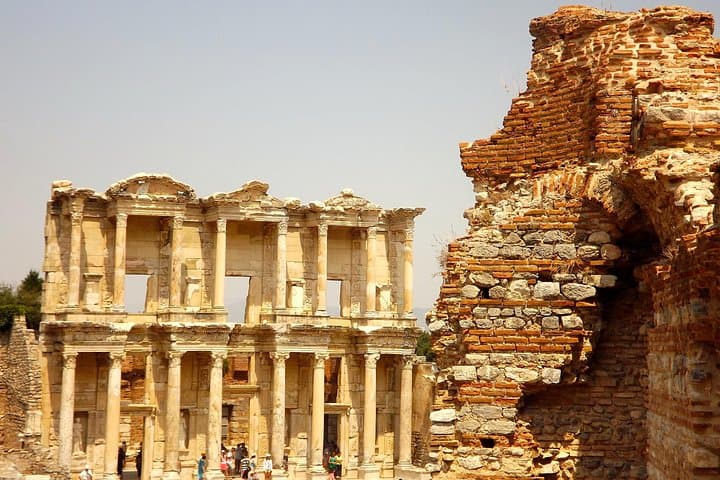
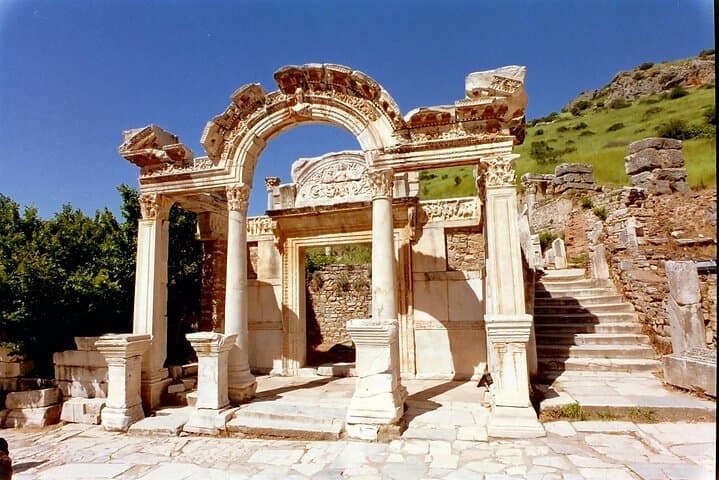
Cappadocia’s soft volcanic rock was carved for centuries into churches, homes and pigeon houses; Kaymakli’s underground city descends through eight floors of connected rooms, now reduced to four open levels with tight passages and low ceilings. Geologically the region is young—eroded tuff forms hoodoos and valleys—and culturally it carries Byzantine and early Christian layers visible in frescoes and monastic cells. Ephesus, once a major Roman port, offers the Library of Celsus and a marble-paved main street that reveal urban planning and public life from Antiquity.
Practically, expect several short hikes (Rose Valley’s one-hour route is roughly 2–4 km with minor elevation change) plus extensive walking across uneven archaeological sites. Wear sturdy, treaded shoes, bring 1–2 liters of water, and plan for sun—shade is sparse between rock formations and ruins. Allow time for narrow stairways in underground chambers and a steady pace through Ephesus’s exposed marble lanes.
Timings are tight on a three-day loop that includes domestic flights; packing light, carrying a daypack, and keeping important documents handy will keep transitions smooth.
moderate.
3 days.
Participants should be able to walk 2–5 km in a day on uneven terrain and manage stairs and short climbs.
Yes; the itinerary includes domestic flights (Istanbul–Kayseri/Nevşehir and Izmir–Istanbul) as part of the tour package.
The tour listing notes wheelchair-accessible transportation and surfaces, but some sites—like underground passages in Kaymakli and uneven archaeological terrain—have limited accessibility.
This tour is suitable for travelers in reasonable physical condition who can manage up to a few hours of walking on uneven terrain and staircases.
Meals listed include breakfasts, lunches and some dinners as specified in the itinerary; check the booking details for exact meal counts and any dietary requirements.
Cappadocia’s dwellings and churches were carved into soft tuff during Byzantine times, while Ephesus flourished as a Roman port city and scholarly center, home to the Library of Celsus.
Soft tuff is highly erodible—stay on marked paths and avoid touching frescoes or carved surfaces; local sites manage visitor flow to protect fragile archaeological and geological features.
Moira Travel Agency operates guided outdoor trips and adventures with an emphasis on safety, stewardship, and memorable experiences.
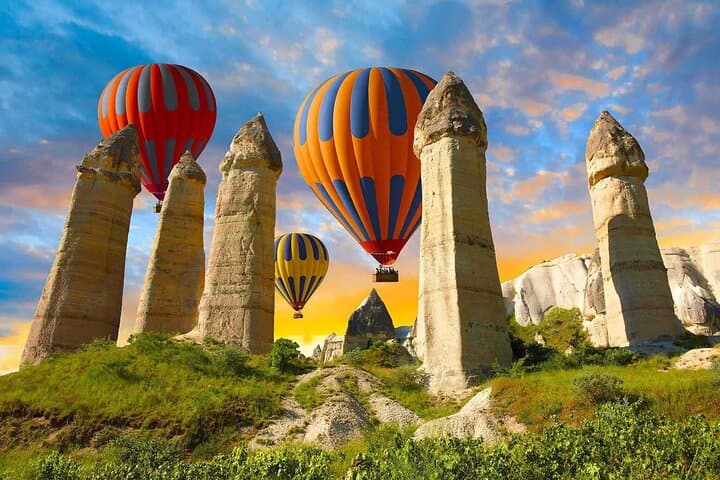
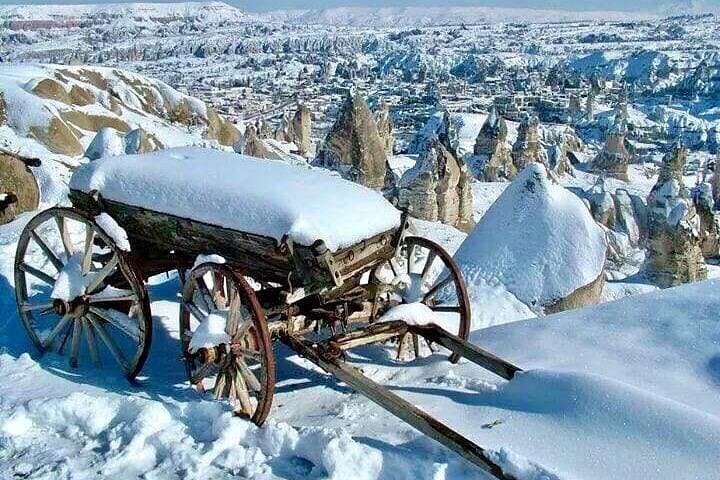
Morning light slices across Cappadocia’s tuff pillars as the group steps from a cave hotel into a landscape shaped by wind and volcanic ash. The air tastes of dry earth and baking stone; low scrub brushes the edges of trails that lead past dovecotes and chimney-like cones. Over three days travelers move from these lunar valleys to the marble streets of Ephesus, where columns and mosaics reintroduce the human scale to the journey.
Morning light slices across Cappadocia’s tuff pillars as the group steps from a cave hotel into a landscape shaped by wind and volcanic ash. The air tastes of dry earth and baking stone; low scrub brushes the edges of trails that lead past dovecotes and chimney-like cones. Over three days travelers move from these lunar valleys to the marble streets of Ephesus, where columns and mosaics reintroduce the human scale to the journey.
Cappadocia’s soft volcanic rock was carved for centuries into churches, homes and pigeon houses; Kaymakli’s underground city descends through eight floors of connected rooms, now reduced to four open levels with tight passages and low ceilings. Geologically the region is young—eroded tuff forms hoodoos and valleys—and culturally it carries Byzantine and early Christian layers visible in frescoes and monastic cells. Ephesus, once a major Roman port, offers the Library of Celsus and a marble-paved main street that reveal urban planning and public life from Antiquity.
Practically, expect several short hikes (Rose Valley’s one-hour route is roughly 2–4 km with minor elevation change) plus extensive walking across uneven archaeological sites. Wear sturdy, treaded shoes, bring 1–2 liters of water, and plan for sun—shade is sparse between rock formations and ruins. Allow time for narrow stairways in underground chambers and a steady pace through Ephesus’s exposed marble lanes.
Timings are tight on a three-day loop that includes domestic flights; packing light, carrying a daypack, and keeping important documents handy will keep transitions smooth.