THE ADVENTURE COLLECTIVE® · Independent discovery and booking for outdoor travel

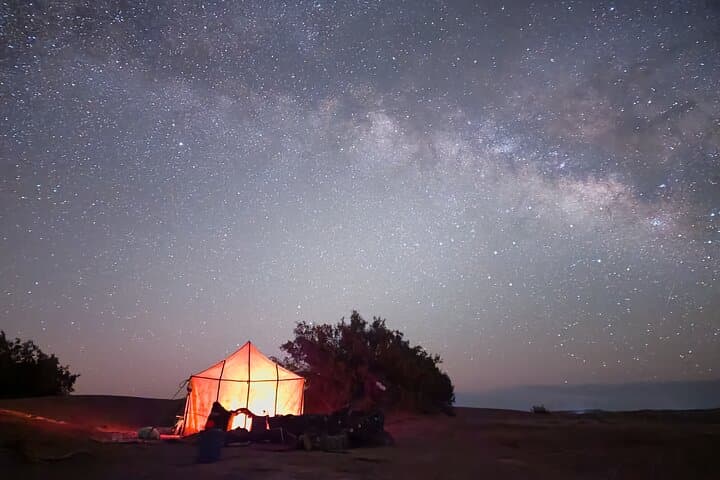
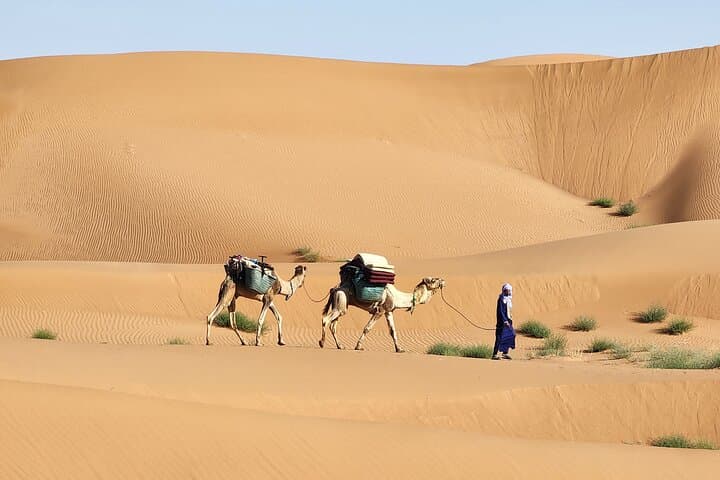
Walk with camels from Mhamid into the Sahara over three days of dunes, hamada and star-filled nights. Local guides lead short daily treks, wild camping at quiet desert spots like Sidi Naji and the Bartham dunes.
Walk with camels from Mhamid into the Sahara over three days of dunes, hamada and star-filled nights. Local guides lead short daily treks, wild camping at quiet desert spots like Sidi Naji and the Bartham dunes.
You step off the camel as the light thins and the dunes cast long, cool shadows—sand sighs underfoot and the sky widens into an impossible vault of stars. Over three days from Mhamid, this trek moves you away from villages and into the grain of the Sahara: open dunes, scattered tamarisk shade, and the hardpan of the hamada where wind has polished stones to glassy facets.
Verified experiences and guided adventures in the surrounding area.
Operated by TREKKING SAHARA · M'Hamid El Ghizlane, Drâa-Tafilalet
You step off the camel as the light thins and the dunes cast long, cool shadows—sand sighs underfoot and the sky widens into an impossible vault of stars. Over three days from Mhamid, this trek moves you away from villages and into the grain of the Sahara: open dunes, scattered tamarisk shade, and the hardpan of the hamada where wind has polished stones to glassy facets.
Mhamid sits at the southern edge of Morocco’s Drâa‑Tafilalet region and has long been a waypoint for nomadic routes across the desert. The landscape here is geologically young: wind‑sculpted erg fields punctuated by gravelly plateaus and occasional oases formed where underground water reaches the surface. Local guides—often from families that still follow seasonal herding patterns—bring knowledge of subtle tracks, water points and where to find sheltered camping beneath low bushes.
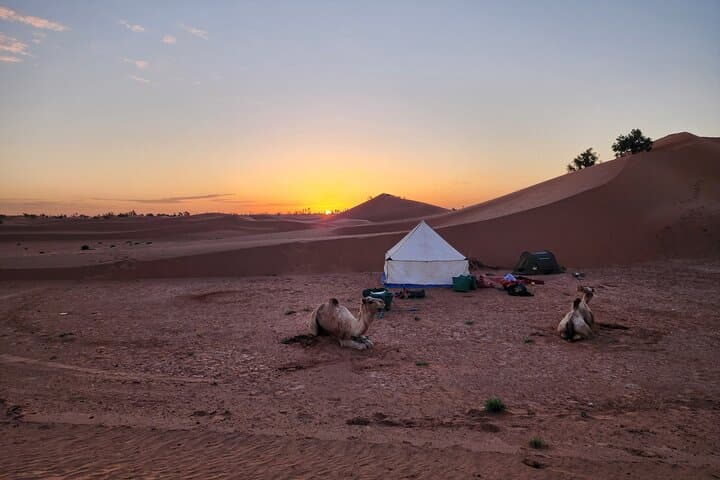
Practically, expect three days of walking accompanied by camels and guides: roughly 4–5 hours on day one, 4 hours on day two, and about 3 hours on the final day. Terrain is loose sand and compacted flats; elevation change is minimal but footing can be uneven. Wild camping under clear skies is part of the rhythm—tents and basic sleeping gear are provided, with communal meals cooked at the bivouac.
Bring sun protection, layered clothing for large diurnal temperature swings, sturdier footwear for sand and rubble, and at least 3–4 liters of water per day. Time your walking to avoid midday heat and be prepared for simple sanitation facilities. Respect local customs, minimize campfire impacts, and carry out all non-biodegradable waste to preserve the fragile desert environment.
moderate.
3 days.
Moderate fitness: able to walk 3–5 hours on loose sand and uneven ground for consecutive days.
Yes; camels accompany the group to carry luggage and allow rest between walking sections, but you will walk on foot each day with guides.
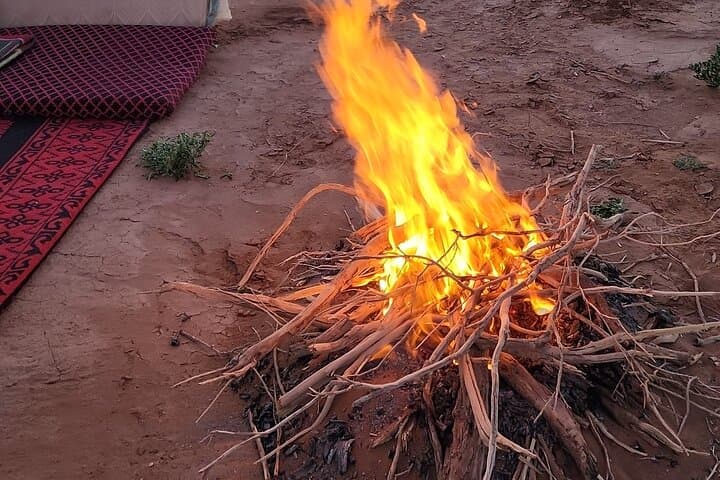
Accommodation is wild camping: small tents and basic bedding are provided; expect communal dining and a simple campfire setup.
Daily walking ranges from about 3 to 5 hours over loose sand and compact flats—physically moderate with low elevation change but tiring under sun and wind.
Not recommended for pregnant travelers or those with serious cardiovascular conditions; children’s suitability depends on fitness and age—check with the operator.
Mhamid has long been a staging point for trans‑Saharan routes; the area retains nomadic cultural links and seasonal grazing patterns.
The Sahara’s soils and microhabitats are fragile—avoid creating new tracks, pack out all waste and minimize fuel wood use to protect vegetation.
TREKKING SAHARA operates guided outdoor trips and adventures with an emphasis on safety, stewardship, and memorable experiences.
You step off the camel as the light thins and the dunes cast long, cool shadows—sand sighs underfoot and the sky widens into an impossible vault of stars. Over three days from Mhamid, this trek moves you away from villages and into the grain of the Sahara: open dunes, scattered tamarisk shade, and the hardpan of the hamada where wind has polished stones to glassy facets.
You step off the camel as the light thins and the dunes cast long, cool shadows—sand sighs underfoot and the sky widens into an impossible vault of stars. Over three days from Mhamid, this trek moves you away from villages and into the grain of the Sahara: open dunes, scattered tamarisk shade, and the hardpan of the hamada where wind has polished stones to glassy facets.
Mhamid sits at the southern edge of Morocco’s Drâa‑Tafilalet region and has long been a waypoint for nomadic routes across the desert. The landscape here is geologically young: wind‑sculpted erg fields punctuated by gravelly plateaus and occasional oases formed where underground water reaches the surface. Local guides—often from families that still follow seasonal herding patterns—bring knowledge of subtle tracks, water points and where to find sheltered camping beneath low bushes.
Practically, expect three days of walking accompanied by camels and guides: roughly 4–5 hours on day one, 4 hours on day two, and about 3 hours on the final day. Terrain is loose sand and compacted flats; elevation change is minimal but footing can be uneven. Wild camping under clear skies is part of the rhythm—tents and basic sleeping gear are provided, with communal meals cooked at the bivouac.
Bring sun protection, layered clothing for large diurnal temperature swings, sturdier footwear for sand and rubble, and at least 3–4 liters of water per day. Time your walking to avoid midday heat and be prepared for simple sanitation facilities. Respect local customs, minimize campfire impacts, and carry out all non-biodegradable waste to preserve the fragile desert environment.