THE ADVENTURE COLLECTIVE® · Independent discovery and booking for outdoor travel

Leave M'hamid behind for three days of camel trekking, star-filled camps, and wind-sculpted dunes at Erg Chegaga. This guided route follows historic caravan paths and ends with sunset views from Morocco's highest desert ridges.
Leave M'hamid behind for three days of camel trekking, star-filled camps, and wind-sculpted dunes at Erg Chegaga. This guided route follows historic caravan paths and ends with sunset views from Morocco's highest desert ridges.
Wind cuts the horizon into a hard line of gold and blue as your camel shoulders a slow rhythm away from M'hamid. The village slips behind — mud-brick houses and the last palm groves — and the plain opens into rolling hummocks of sand that catch light like brushed metal.
Verified experiences and guided adventures in the surrounding area.
Operated by Desert Space Tour · M'hamid El Ghizlane, Drâa-Tafilalet
Wind cuts the horizon into a hard line of gold and blue as your camel shoulders a slow rhythm away from M'hamid. The village slips behind — mud-brick houses and the last palm groves — and the plain opens into rolling hummocks of sand that catch light like brushed metal.
This three-day crossing follows old caravan corridors used for salt and spice, moving past scattered tamarisk, the Mezouaria rest-tree, and low stone ruins that mark Berber routes across the southern Drâa-Tafilalet. Geologically, these are star dunes shaped by seasonal winds; Erg Bartam and the higher ridges at Erg Chegaga change shape daily, giving each sunrise and sunset a new profile.
Culturally, the trek brings you into contact with Saharan nomadic life: simple camp rhythms, Berber teas, and storytelling under a sky where constellations feel near enough to touch. Locally run desert camps emphasize low-impact stays and traditional cooking over coals.
Practical notes: ride times on camelback average 2–3 hours between breaks; expect loose sand footing when you dismount. Temperatures swing widely—hot days and cold nights—so layer for rapid change. Hydrate proactively and protect skin and eyes from reflected sunlight. Camps provide meals and sleeping tents; pack a small daypack, headlamp, sun protection, and a warm midlayer for night. Start early to use cooler morning winds for trekking and time your 4x4 transfers to arrive at dunes for golden-hour light and optional sandboarding.
This trip is an accessible, immersive way to experience Sahara dune ecology and nomadic hospitality with minimal navigation responsibility, perfect for travelers who want time in the silence of the desert without heavy technical demand.
moderate.
3 days.
Suitable for generally fit travelers comfortable with 2–4 hour camel rides and short walks on sand
The trek is rated easy-to-moderate: camels do most of the work and trekking segments are short; be prepared for uneven sand footing and several hours in a saddle each day.
Yes—breakfast, lunch and dinner are included on the itinerary and nights are spent in desert camps with basic sleeping tents and bedding provided.
Yes—Erg Chegaga's high dunes offer optional sandboarding; bring or rent a board locally and expect a short walk to the best runs.
Tours typically include transfers from M'hamid; confirm pickup location and timing when booking and allow flexibility for off-road schedules.
M'hamid sat on historic trans-Saharan caravan routes; local camps preserve Berber traditions tied to seasonal movement and trade.
The dune ecosystems are fragile—stay on established routes, minimize plastics, and follow camp guidance to reduce erosion and disturbance.
Desert Space Tour operates guided outdoor trips and adventures with an emphasis on safety, stewardship, and memorable experiences.
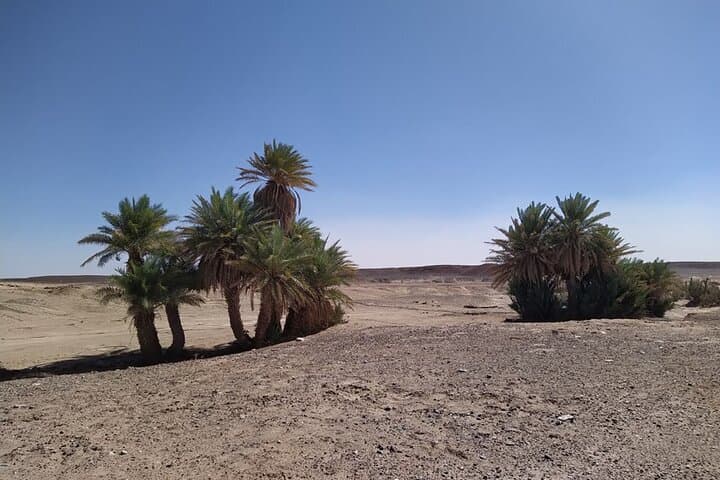
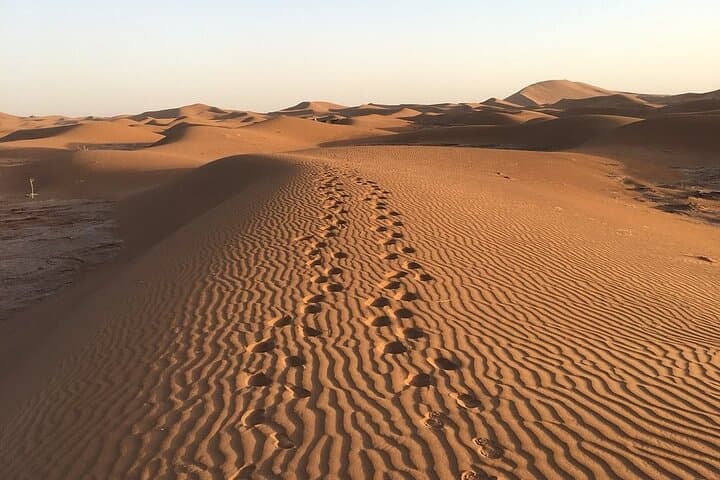
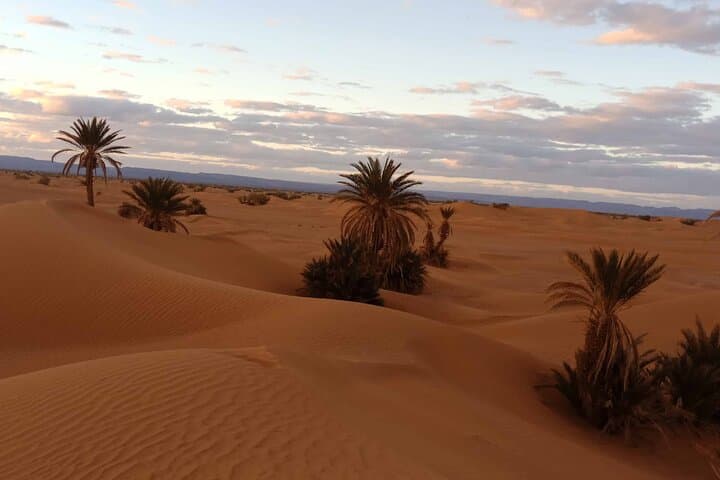
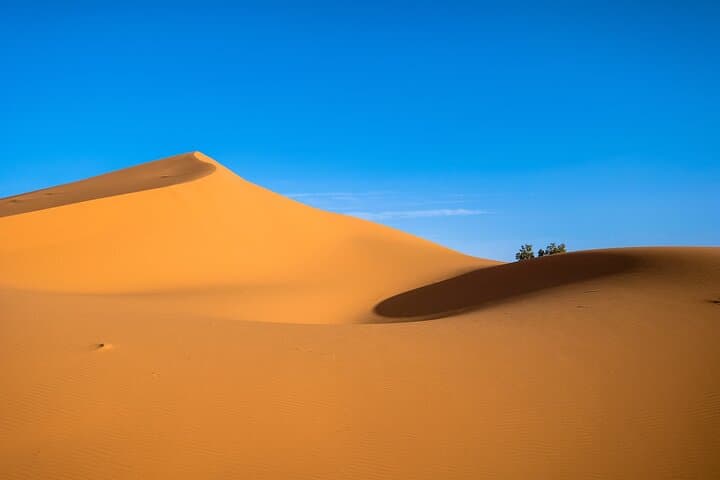
Wind cuts the horizon into a hard line of gold and blue as your camel shoulders a slow rhythm away from M'hamid. The village slips behind — mud-brick houses and the last palm groves — and the plain opens into rolling hummocks of sand that catch light like brushed metal.
Wind cuts the horizon into a hard line of gold and blue as your camel shoulders a slow rhythm away from M'hamid. The village slips behind — mud-brick houses and the last palm groves — and the plain opens into rolling hummocks of sand that catch light like brushed metal.
This three-day crossing follows old caravan corridors used for salt and spice, moving past scattered tamarisk, the Mezouaria rest-tree, and low stone ruins that mark Berber routes across the southern Drâa-Tafilalet. Geologically, these are star dunes shaped by seasonal winds; Erg Bartam and the higher ridges at Erg Chegaga change shape daily, giving each sunrise and sunset a new profile.
Culturally, the trek brings you into contact with Saharan nomadic life: simple camp rhythms, Berber teas, and storytelling under a sky where constellations feel near enough to touch. Locally run desert camps emphasize low-impact stays and traditional cooking over coals.
Practical notes: ride times on camelback average 2–3 hours between breaks; expect loose sand footing when you dismount. Temperatures swing widely—hot days and cold nights—so layer for rapid change. Hydrate proactively and protect skin and eyes from reflected sunlight. Camps provide meals and sleeping tents; pack a small daypack, headlamp, sun protection, and a warm midlayer for night. Start early to use cooler morning winds for trekking and time your 4x4 transfers to arrive at dunes for golden-hour light and optional sandboarding.
This trip is an accessible, immersive way to experience Sahara dune ecology and nomadic hospitality with minimal navigation responsibility, perfect for travelers who want time in the silence of the desert without heavy technical demand.