THE ADVENTURE COLLECTIVE® · Independent discovery and booking for outdoor travel

See the Great Pyramids and the Valley of the Kings on a compact 3-day itinerary that links Cairo and Luxor by overnight train. Expert guides handle logistics while you focus on monuments, museum highlights and the rhythm of the Nile.
See the Great Pyramids and the Valley of the Kings on a compact 3-day itinerary that links Cairo and Luxor by overnight train. Expert guides handle logistics while you focus on monuments, museum highlights and the rhythm of the Nile.
Dawn on the Giza Plateau is a study in angles: the limestone faces of Khufu and Khafre catching the first light while the Sphinx watches the desert wind. Travelers meet an Egyptologist-guided group here, then flow through the Egyptian Museum’s weight of gold and carved stone before boarding an overnight seated train that pushes south under a star-heavy sky toward Luxor.
Verified experiences and guided adventures in the surrounding area.
Operated by Hola Egipto · Cairo, Cairo Governorate
Dawn on the Giza Plateau is a study in angles: the limestone faces of Khufu and Khafre catching the first light while the Sphinx watches the desert wind. Travelers meet an Egyptologist-guided group here, then flow through the Egyptian Museum’s weight of gold and carved stone before boarding an overnight seated train that pushes south under a star-heavy sky toward Luxor.
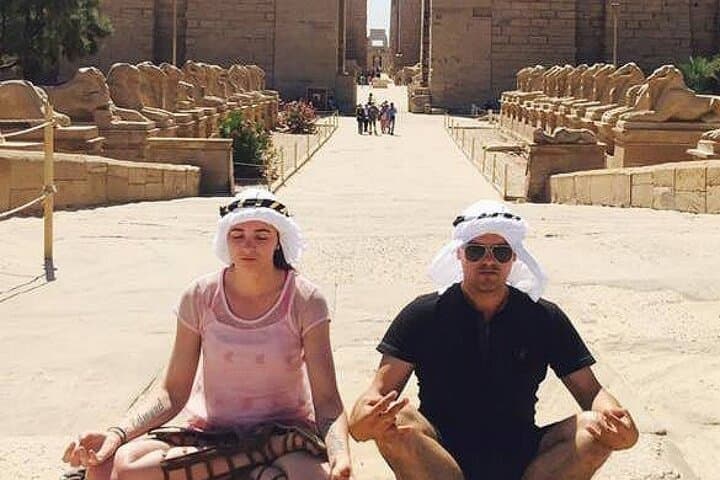
This loop across the Nile’s ancient floodplain visits two pillars of Egypt’s pharaonic story. The pyramids—built of Tura limestone and interior granite during the Old Kingdom—stand as engineering markers; Luxor’s Valley of the Kings is a necropolis hewn into the Theban hills, where New Kingdom pharaohs hid painted tombs from sand and time. On Luxor’s east bank, Karnak’s vast hypostyle hall and Luxor Temple reveal millennia of religious evolution; the Hatshepsut mortuary temple clings to sandstone terraces and the Colossi of Memnon guard the plain.
Expect a mix of short guided walks, stairs and uneven surfaces, plus time in open plazas exposed to sun. The overnight train is efficient—upgrade to a sleeper if you need horizontal rest. Pack for heat and sun protection, carry Egyptian pounds for small purchases and permit extra time for site queues and photo rules. Early mornings and late afternoons provide the best light for photography and cooler walking. This tour condenses key archaeological highlights into three active days: plan comfortable shoes, a light daypack, and a patient pace to absorb both stonework and story.
easy.
3 days (approx. 72 hours).
Suitable for travelers who can walk short distances, climb sets of stairs, and tolerate overnight seated travel; no special fitness training required.
The overnight first-class seated train is a common, safe option for this route; passengers who require full sleep should request a sleeper upgrade when booking.
Standard tour inclusion notes indicate transport and guide services; most entrance tickets (Giza, Egyptian Museum, Valley of the Kings, Karnak) are often charged separately—confirm at booking.
Many sites have uneven ground and steps; the operator lists wheelchair accessibility, but access can be limited at certain tombs and temples—contact the provider to arrange specific support.
Bring Egyptian pounds for small purchases and tips; card acceptance varies at small vendors and ticket booths—tipping local guides and drivers is customary.
The Giza pyramids date to the Fourth Dynasty (~2600 BCE) while Luxor and the Valley of the Kings were major New Kingdom centers (approx. 1550–1069 BCE), reflecting different phases of Egyptian statecraft and burial practice.
High visitor volumes stress fragile painted tombs and temple reliefs—follow photography and access rules, avoid touching surfaces, and use authorized paths to minimize impact.
Hola Egipto operates guided outdoor trips and adventures with an emphasis on safety, stewardship, and memorable experiences.


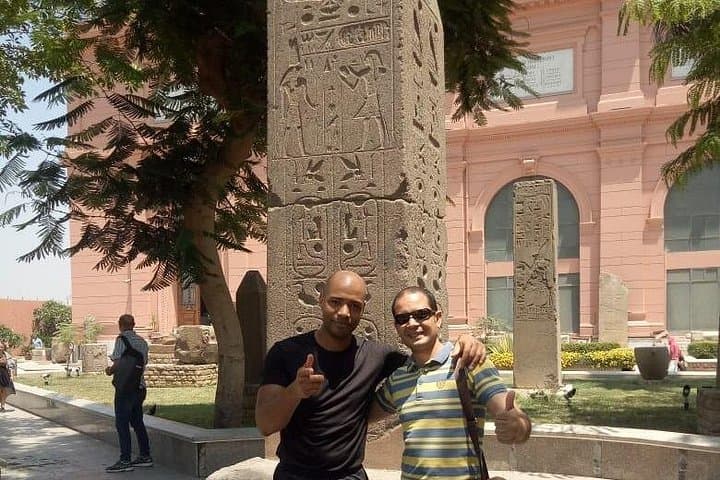
Dawn on the Giza Plateau is a study in angles: the limestone faces of Khufu and Khafre catching the first light while the Sphinx watches the desert wind. Travelers meet an Egyptologist-guided group here, then flow through the Egyptian Museum’s weight of gold and carved stone before boarding an overnight seated train that pushes south under a star-heavy sky toward Luxor.
Dawn on the Giza Plateau is a study in angles: the limestone faces of Khufu and Khafre catching the first light while the Sphinx watches the desert wind. Travelers meet an Egyptologist-guided group here, then flow through the Egyptian Museum’s weight of gold and carved stone before boarding an overnight seated train that pushes south under a star-heavy sky toward Luxor.
This loop across the Nile’s ancient floodplain visits two pillars of Egypt’s pharaonic story. The pyramids—built of Tura limestone and interior granite during the Old Kingdom—stand as engineering markers; Luxor’s Valley of the Kings is a necropolis hewn into the Theban hills, where New Kingdom pharaohs hid painted tombs from sand and time. On Luxor’s east bank, Karnak’s vast hypostyle hall and Luxor Temple reveal millennia of religious evolution; the Hatshepsut mortuary temple clings to sandstone terraces and the Colossi of Memnon guard the plain.
Expect a mix of short guided walks, stairs and uneven surfaces, plus time in open plazas exposed to sun. The overnight train is efficient—upgrade to a sleeper if you need horizontal rest. Pack for heat and sun protection, carry Egyptian pounds for small purchases and permit extra time for site queues and photo rules. Early mornings and late afternoons provide the best light for photography and cooler walking. This tour condenses key archaeological highlights into three active days: plan comfortable shoes, a light daypack, and a patient pace to absorb both stonework and story.