THE ADVENTURE COLLECTIVE® · Independent discovery and booking for outdoor travel

See Egypt’s headline sites in three tightly scheduled days: Giza’s pyramids, Luxor’s temples and Aswan’s Abu Simbel with private transfers and round flights included. Expect early mornings, sandstone monuments, and efficient logistics tailored to travelers who want maximum exposure in minimal time.
See Egypt’s headline sites in three tightly scheduled days: Giza’s pyramids, Luxor’s temples and Aswan’s Abu Simbel with private transfers and round flights included. Expect early mornings, sandstone monuments, and efficient logistics tailored to travelers who want maximum exposure in minimal time.
Dawn light hits the limestone faces of the Great Pyramid as a private van pulls out of central Cairo — the city is already warm, the Nile moving like a patient highway through it. Over the next 72 hours travelers cross Egypt’s historical spine by short domestic flights and private transfer, trading the crowded alleys of Khan el-Khalili for the quiet colonnades of Karnak and the sandstone monoliths of Abu Simbel.
Verified experiences and guided adventures in the surrounding area.
Operated by Koki Egypt Travel · Cairo, Cairo Governorate
Dawn light hits the limestone faces of the Great Pyramid as a private van pulls out of central Cairo — the city is already warm, the Nile moving like a patient highway through it. Over the next 72 hours travelers cross Egypt’s historical spine by short domestic flights and private transfer, trading the crowded alleys of Khan el-Khalili for the quiet colonnades of Karnak and the sandstone monoliths of Abu Simbel.
This compact itinerary threads together Pharaonic highlights: Giza’s pyramids and the Sphinx; the Egyptian Museum’s artifacts and Tutankhamun’s treasures; Philae and the Aswan High Dam; Abu Simbel’s colossal rock-cut temples; and Luxor’s Valley of the Kings, Hatshepsut’s mortuary temple and Karnak’s hypostyle hall. The geology shifts from Nile silt plains to Nubian sandstone at Aswan, where ancient builders carved facades directly from bedrock. Local culture is present in market haggling, street-side tea and the layered history of Coptic, Islamic and Pharaonic Cairo.
Practical edge: flights and private transport are included, and hotel pickup simplifies logistics, but expect early starts (a 3:00 AM pickup for Aswan is possible) and long transfer days. Carry a photocopy of your passport, local currency for tips and snacks, sun protection and a reusable water bottle — hydration is essential in low-lying desert heat. Museums and temples have walking on uneven surfaces; comfortable shoes and moderate mobility are enough for most travelers. Time visits to cooler mornings where possible and confirm included entrance levels for specific tombs. With planning, this three-day circuit delivers dense cultural immersion without the need to navigate Egypt’s transport yourself.
easy.
3 days.
Suitable for travelers in average physical condition; requires walking on uneven ground and handling luggage during transfers.
Yes — round domestic flights between Cairo, Aswan and Luxor are included as specified in the itinerary.
Basic entrance fees are included, but some optional tombs or upgraded exhibits may incur additional charges on site.
The tour is listed as suitable for all fitness levels, but many sites have steps, uneven terrain and minimal ramps; notify the operator beforehand to arrange assistance if needed.
Full refund if canceled at least 6 days before departure; 50% between 2–6 days; no refund within 2 days of departure.
These sites span millennia: Giza’s Old Kingdom pyramids (c. 2600 BCE), New Kingdom Luxor temples (c. 1550–1070 BCE) and rock-cut Abu Simbel moved in the 1960s to avoid Nile inundation from the Aswan High Dam.
Visit with minimal impact: avoid touching reliefs, use designated paths in tombs, and support responsible guides who follow site protection rules.
Koki Egypt Travel operates guided outdoor trips and adventures with an emphasis on safety, stewardship, and memorable experiences.
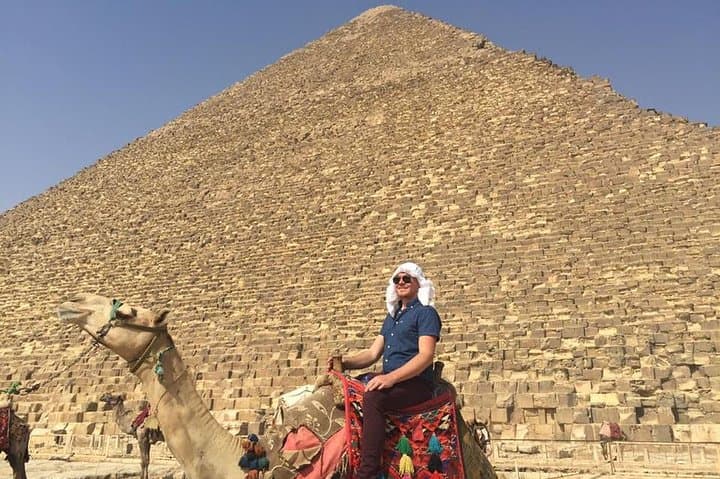
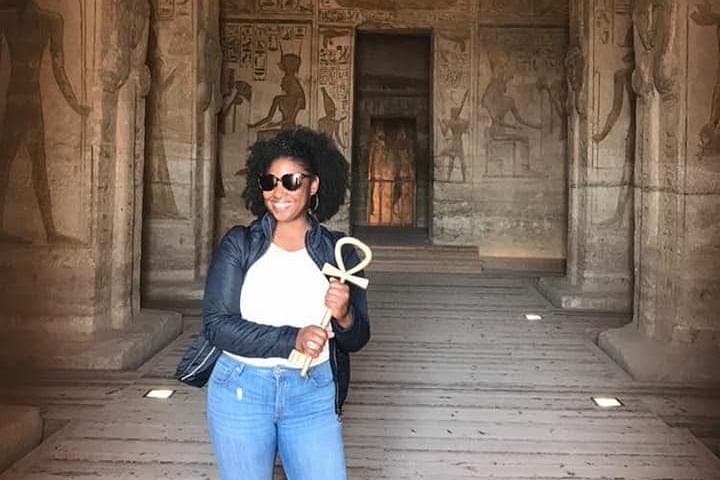
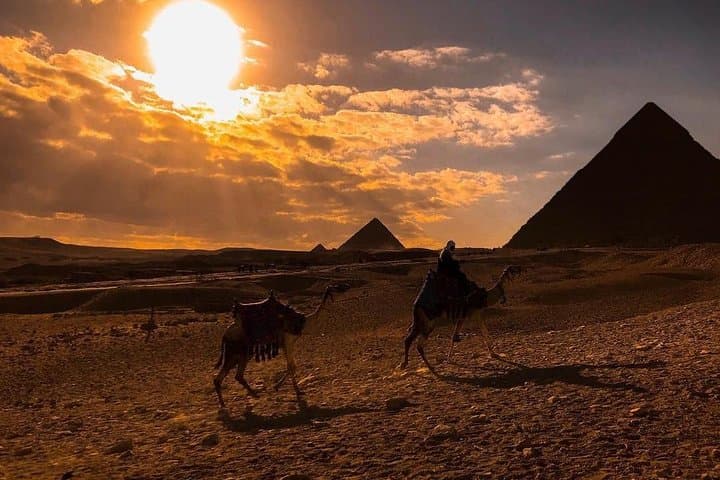
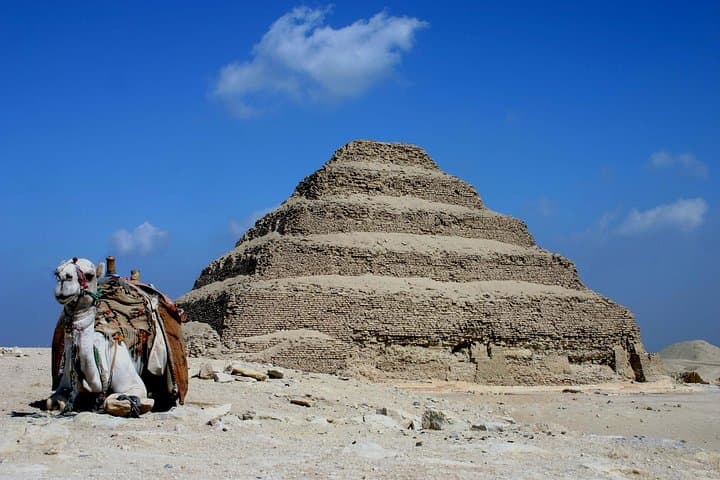
Dawn light hits the limestone faces of the Great Pyramid as a private van pulls out of central Cairo — the city is already warm, the Nile moving like a patient highway through it. Over the next 72 hours travelers cross Egypt’s historical spine by short domestic flights and private transfer, trading the crowded alleys of Khan el-Khalili for the quiet colonnades of Karnak and the sandstone monoliths of Abu Simbel.
Dawn light hits the limestone faces of the Great Pyramid as a private van pulls out of central Cairo — the city is already warm, the Nile moving like a patient highway through it. Over the next 72 hours travelers cross Egypt’s historical spine by short domestic flights and private transfer, trading the crowded alleys of Khan el-Khalili for the quiet colonnades of Karnak and the sandstone monoliths of Abu Simbel.
This compact itinerary threads together Pharaonic highlights: Giza’s pyramids and the Sphinx; the Egyptian Museum’s artifacts and Tutankhamun’s treasures; Philae and the Aswan High Dam; Abu Simbel’s colossal rock-cut temples; and Luxor’s Valley of the Kings, Hatshepsut’s mortuary temple and Karnak’s hypostyle hall. The geology shifts from Nile silt plains to Nubian sandstone at Aswan, where ancient builders carved facades directly from bedrock. Local culture is present in market haggling, street-side tea and the layered history of Coptic, Islamic and Pharaonic Cairo.
Practical edge: flights and private transport are included, and hotel pickup simplifies logistics, but expect early starts (a 3:00 AM pickup for Aswan is possible) and long transfer days. Carry a photocopy of your passport, local currency for tips and snacks, sun protection and a reusable water bottle — hydration is essential in low-lying desert heat. Museums and temples have walking on uneven surfaces; comfortable shoes and moderate mobility are enough for most travelers. Time visits to cooler mornings where possible and confirm included entrance levels for specific tombs. With planning, this three-day circuit delivers dense cultural immersion without the need to navigate Egypt’s transport yourself.