THE ADVENTURE COLLECTIVE® · Independent discovery and booking for outdoor travel

See the Great Pyramids, Saqqara’s Step Pyramid, Cairo’s Citadel and a day in Alexandria in a tightly organized three-day tour. Expect guided walks, AC transfers, and concentrated history across Pharaonic, Roman and Ottoman sites.
See the Great Pyramids, Saqqara’s Step Pyramid, Cairo’s Citadel and a day in Alexandria in a tightly organized three-day tour. Expect guided walks, AC transfers, and concentrated history across Pharaonic, Roman and Ottoman sites.
Morning light slices across the Giza Plateau as stone giants cast long, patient shadows; a guide steers the group through paved approaches and wind-scrubbed viewpoints where the Great Pyramid dominates the horizon.
Verified experiences and guided adventures in the surrounding area.
Operated by Hola Egipto · Cairo, Cairo Governorate
Morning light slices across the Giza Plateau as stone giants cast long, patient shadows; a guide steers the group through paved approaches and wind-scrubbed viewpoints where the Great Pyramid dominates the horizon.
Over three compact days the itinerary moves from Pharaonic tombs to Ottoman citadels and then west along the desert corridor to Alexandria’s limestone shore. Saqqara’s Step Pyramid, cut from Old Kingdom ambition, reveals the early phases of Egyptian funerary architecture; Memphis offers battered colossi and the remains of a city that once organized a civilization. In Cairo, the Citadel and Mohamed Ali’s alabaster mosque show how medieval and early-modern powers reshaped a Nile-side capital, while the Egyptian Museum concentrates five millennia of material culture into galleries you can read like a political map.
Alexandria shifts the tone: Roman columns, the Catacombs, and the compact waterfront tell the story of Hellenistic ambitions and later Mediterranean trade, where the sea pushes a cooler air into the city.
Practicalities are straightforward: tours usually include AC transfers and hotel pickup, but expect multiple short walks on uneven stone, security checks at major sites, and optional lunches in Alexandria. Carry water, sunscreen, and comfortable shoes; plan museum visits early to avoid heat and crowds. With a mix of open-air monuments and indoor collections, this three-day loop is best for travelers who want a dense primer on Egypt’s layered history without heavy trekking.
easy.
3 days.
Light walking fitness required; able to stand and walk for short periods and manage stairs and uneven ground.
This tour description indicates entrance fees are not always included—check the booking page or ask the operator which sites have tickets included.
Yes; the trip includes pickup and drop-off at hotels in Cairo and Giza using air-conditioned vehicles.
The tour lists wheelchair accessibility, but major archaeological sites have uneven terrain—contact the operator ahead to confirm support and accessible routes.
Guides in different languages are available—specify your preferred language when booking to ensure availability.
The itinerary spans Egypt’s long arc—from Old Kingdom funerary complexes at Saqqara and Giza to Ptolemaic and Roman Alexandria and later Mamluk/Ottoman urban development in Cairo.
Archaeological sites are sensitive to foot traffic and climate; visitors should follow barriers, avoid touching reliefs and support licensed guides to reduce impact.
Hola Egipto operates guided outdoor trips and adventures with an emphasis on safety, stewardship, and memorable experiences.

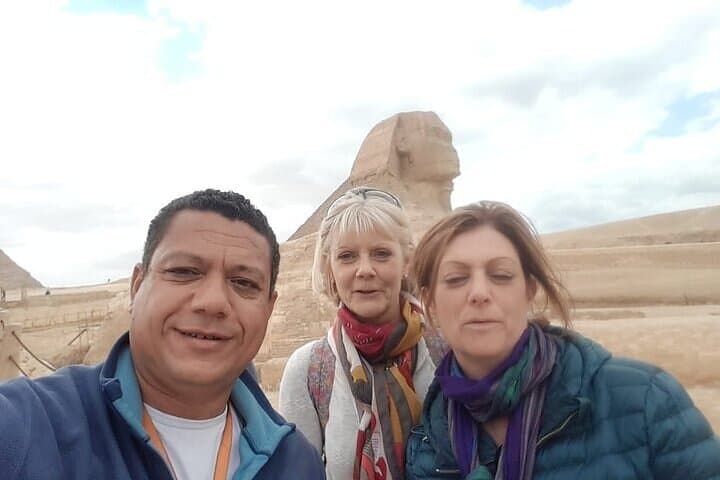


Morning light slices across the Giza Plateau as stone giants cast long, patient shadows; a guide steers the group through paved approaches and wind-scrubbed viewpoints where the Great Pyramid dominates the horizon.
Morning light slices across the Giza Plateau as stone giants cast long, patient shadows; a guide steers the group through paved approaches and wind-scrubbed viewpoints where the Great Pyramid dominates the horizon.
Over three compact days the itinerary moves from Pharaonic tombs to Ottoman citadels and then west along the desert corridor to Alexandria’s limestone shore. Saqqara’s Step Pyramid, cut from Old Kingdom ambition, reveals the early phases of Egyptian funerary architecture; Memphis offers battered colossi and the remains of a city that once organized a civilization. In Cairo, the Citadel and Mohamed Ali’s alabaster mosque show how medieval and early-modern powers reshaped a Nile-side capital, while the Egyptian Museum concentrates five millennia of material culture into galleries you can read like a political map.
Alexandria shifts the tone: Roman columns, the Catacombs, and the compact waterfront tell the story of Hellenistic ambitions and later Mediterranean trade, where the sea pushes a cooler air into the city.
Practicalities are straightforward: tours usually include AC transfers and hotel pickup, but expect multiple short walks on uneven stone, security checks at major sites, and optional lunches in Alexandria. Carry water, sunscreen, and comfortable shoes; plan museum visits early to avoid heat and crowds. With a mix of open-air monuments and indoor collections, this three-day loop is best for travelers who want a dense primer on Egypt’s layered history without heavy trekking.