THE ADVENTURE COLLECTIVE® · Independent discovery and booking for outdoor travel

Spend three days leaving Kigali for the Rushaga sector of Bwindi Impenetrable National Park to track habituated mountain gorillas. Expect steep, muddy trails, a full day of trekking, and up to one hour observing a gorilla family under Uganda Wildlife Authority guidance.
Spend three days leaving Kigali for the Rushaga sector of Bwindi Impenetrable National Park to track habituated mountain gorillas. Expect steep, muddy trails, a full day of trekking, and up to one hour observing a gorilla family under Uganda Wildlife Authority guidance.
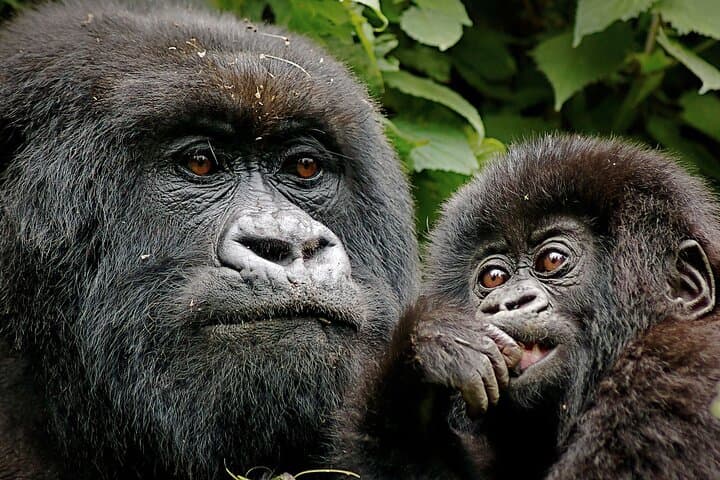
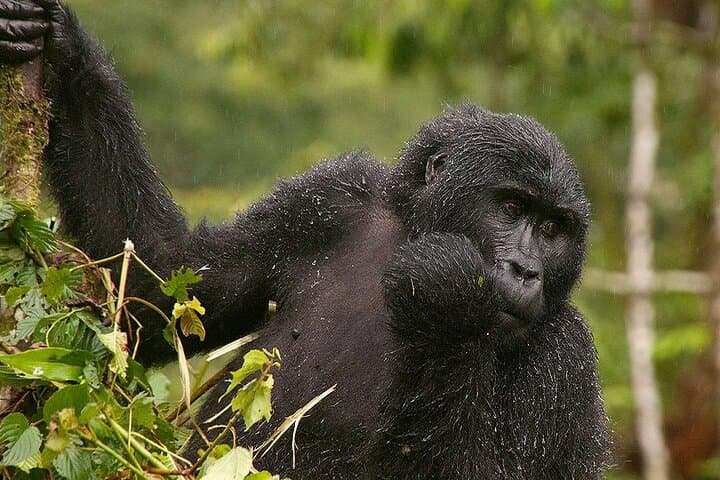
A mist-thin morning shrouds the Rushaga sector as you step from the lodge into a forest that seems to breathe around you. Leaves drip with dew; the trail plunges between buttress roots and moss-slick rocks, and every call from the canopy feels like a dare. This is gorilla country: close, unpredictable, unforgettable.
Verified experiences and guided adventures in the surrounding area.
Operated by Iconic Travel Services · Rushaga (Bwindi), Western Region
A mist-thin morning shrouds the Rushaga sector as you step from the lodge into a forest that seems to breathe around you. Leaves drip with dew; the trail plunges between buttress roots and moss-slick rocks, and every call from the canopy feels like a dare. This is gorilla country: close, unpredictable, unforgettable.
Bwindi Impenetrable National Park—carved from ancient volcanic slopes and scarred by tectonic uplift—holds some of Africa’s oldest rainforest. The forest floor is a collage of ferns and lianas; slopes rise and fall between roughly 1,160–2,600 m in elevation. Human history here includes Batwa hunter-gatherer culture and a complex colonial-era conservation legacy that led to UNESCO protection.
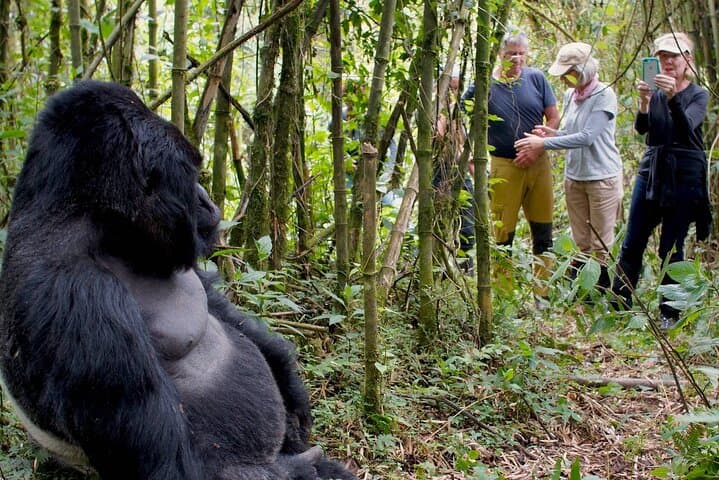
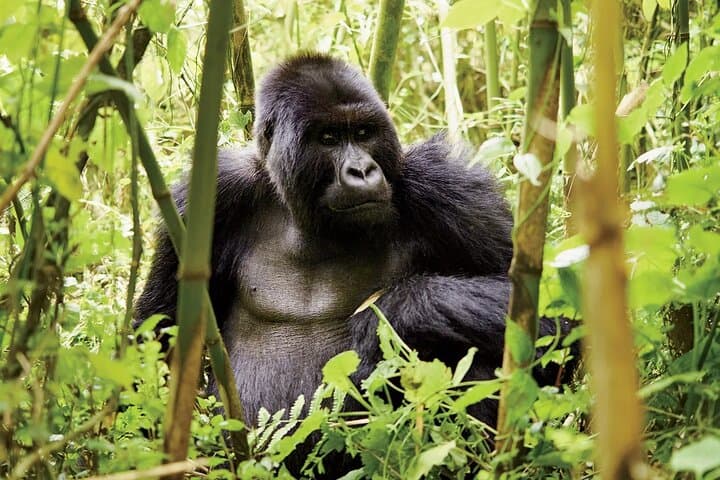
On day two you meet Uganda Wildlife Authority trackers and head into dense, often steep terrain. Treks vary widely: expect 2–8 km one-way with 200–600 m of elevation change depending on gorilla movements; muddy, rooty trails and occasional short bushwhacks are common. When you find a habituated family, you get up to one hour to observe—breath ragged, camera low—while silverbacks survey the clearing like slow-moving boulders.
Practical guidance: start early, eat a solid breakfast, and plan for a full day out with intermittent cell signal. Wear sturdy, broken-in boots with ankle support, gaiters for mud and nettles, and layered clothing for rapid weather swings. Bring water (at least 2 liters), rain protection, and a small pack for essentials. Respect the one-hour visiting rule, keep voices low, and follow guide directions: the gorillas set the rules here, and your safety and their protection depend on discipline.
challenging.
2–12 hours per trek (full-day possible).
Good cardiovascular fitness and strong legs recommended; be comfortable on steep, uneven terrain for several hours.
Once located you may spend up to one hour with a habituated gorilla family under Uganda Wildlife Authority rules.
Gorilla trekking permits are required in advance and are issued by the Ugandan authorities; check visa requirements for Uganda based on your nationality.
Trekking can be physically demanding with steep, muddy, and uneven trails—good fitness and mobility are recommended; the tour notes it is physically hard.
Age restrictions vary by park policy—often children under a specific age are not permitted; consult the tour operator and Uganda Wildlife Authority guidelines.
Bwindi’s protection stems from conservation efforts to preserve habitat for mountain gorillas and the traditional lands of the Batwa people.
Visits are tightly regulated to limit disease transmission and disturbance; follow guide instructions, avoid contact, and consider supporting local community projects.
Iconic Travel Services operates guided outdoor trips and adventures with an emphasis on safety, stewardship, and memorable experiences.
A mist-thin morning shrouds the Rushaga sector as you step from the lodge into a forest that seems to breathe around you. Leaves drip with dew; the trail plunges between buttress roots and moss-slick rocks, and every call from the canopy feels like a dare. This is gorilla country: close, unpredictable, unforgettable.
A mist-thin morning shrouds the Rushaga sector as you step from the lodge into a forest that seems to breathe around you. Leaves drip with dew; the trail plunges between buttress roots and moss-slick rocks, and every call from the canopy feels like a dare. This is gorilla country: close, unpredictable, unforgettable.
Bwindi Impenetrable National Park—carved from ancient volcanic slopes and scarred by tectonic uplift—holds some of Africa’s oldest rainforest. The forest floor is a collage of ferns and lianas; slopes rise and fall between roughly 1,160–2,600 m in elevation. Human history here includes Batwa hunter-gatherer culture and a complex colonial-era conservation legacy that led to UNESCO protection.
On day two you meet Uganda Wildlife Authority trackers and head into dense, often steep terrain. Treks vary widely: expect 2–8 km one-way with 200–600 m of elevation change depending on gorilla movements; muddy, rooty trails and occasional short bushwhacks are common. When you find a habituated family, you get up to one hour to observe—breath ragged, camera low—while silverbacks survey the clearing like slow-moving boulders.
Practical guidance: start early, eat a solid breakfast, and plan for a full day out with intermittent cell signal. Wear sturdy, broken-in boots with ankle support, gaiters for mud and nettles, and layered clothing for rapid weather swings. Bring water (at least 2 liters), rain protection, and a small pack for essentials. Respect the one-hour visiting rule, keep voices low, and follow guide directions: the gorillas set the rules here, and your safety and their protection depend on discipline.