THE ADVENTURE COLLECTIVE® · Independent discovery and booking for outdoor travel

Three days link the surreal Sea of Sand at Mount Bromo with the incandescent blue fire and turquoise lake of Ijen. This compact itinerary mixes pre-dawn sunrise stands, jeep transfers across volcanic plains, and a guided night trek to Ijen’s crater.
Three days link the surreal Sea of Sand at Mount Bromo with the incandescent blue fire and turquoise lake of Ijen. This compact itinerary mixes pre-dawn sunrise stands, jeep transfers across volcanic plains, and a guided night trek to Ijen’s crater.
A chill wind from the Tengger caldera pushes across the Sea of Sand as headlights thread a narrow track toward Penanjakan. At 3 a.m. the world is black except for the silhouettes of jeeps and the slow drift of headlamps; by sunrise Semeru etches a jagged spine behind Bromo while sulfur smoke from Ijen waits on the island’s eastern flank.
Verified experiences and guided adventures in the surrounding area.
Operated by OURTRIP1st Bromo Ijen Tour Operator · Cemoro Lawang, East Java
A chill wind from the Tengger caldera pushes across the Sea of Sand as headlights thread a narrow track toward Penanjakan. At 3 a.m. the world is black except for the silhouettes of jeeps and the slow drift of headlamps; by sunrise Semeru etches a jagged spine behind Bromo while sulfur smoke from Ijen waits on the island’s eastern flank.
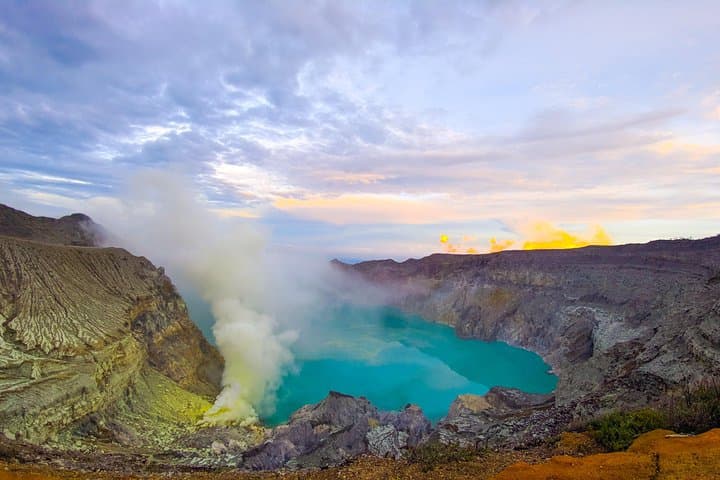
The route strings together two very different volcanic landscapes: the broad, ash-strewn plain and 250-step climb to Bromo’s rim, and the steeper 4km night ascent to Ijen’s crater where blue fire and a turquoise acid lake announce active sulfur chemistry. The Tengger people maintain cultural ties to Bromo — offerings at Pura Luhur Poten continue a centuries-old ritual — while Ijen’s crater has long supported traditional sulfur mining, a practice with visible human cost.
Expect mixed terrain: packed volcanic sand, loose scree, stairs at Bromo, and steep dirt trails on Ijen. Typical elevation changes include short climbs to Bromo’s rim and roughly two hours / 4 km of uphill to the Ijen rim, with sections of steep switchbacks and rocky footing.
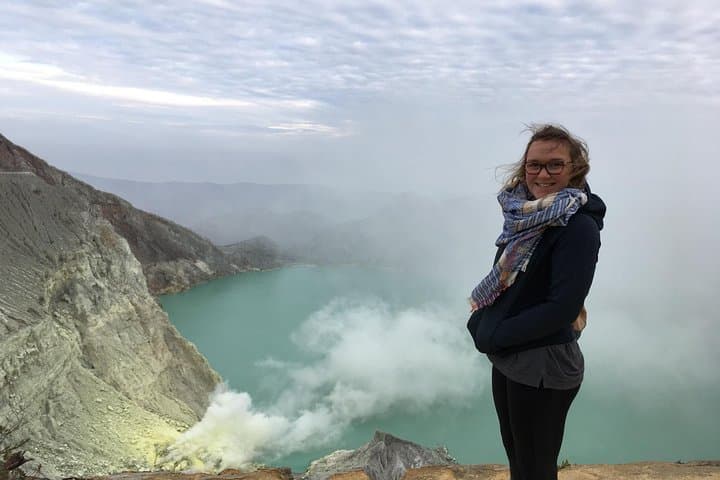
Practically: travel pre-dawn for the views, use a local ranger on Ijen, and budget time for transfers (3+ hours between sites). Bring a headlamp, layered clothing for 0–10°C pre-sunrise, a mask or scarf for sulfur fumes, sturdy boots and at least 2 liters of water. Allow recovery time between sunrise stands — these are sensory, physical days that reward early starts and steady pacing.
moderate.
3 days.
Moderate fitness — able to hike 2–4 hours on uneven, often steep terrain and tolerate early-morning starts and some altitude.
The Ijen trek is about 4 km uphill and takes roughly 1.5–2.5 hours depending on fitness; expect steep switchbacks and loose sections — a steady pace and breaks make it manageable.
Blue fire is a natural sulfur combustion seen after dark; visibility depends on wind and volcanic activity — having a local ranger increases the chance of a good viewing spot.
Yes, the itinerary is designed for a compact experience with early starts and private transfers, but it requires moderate fitness and readiness for long travel days.
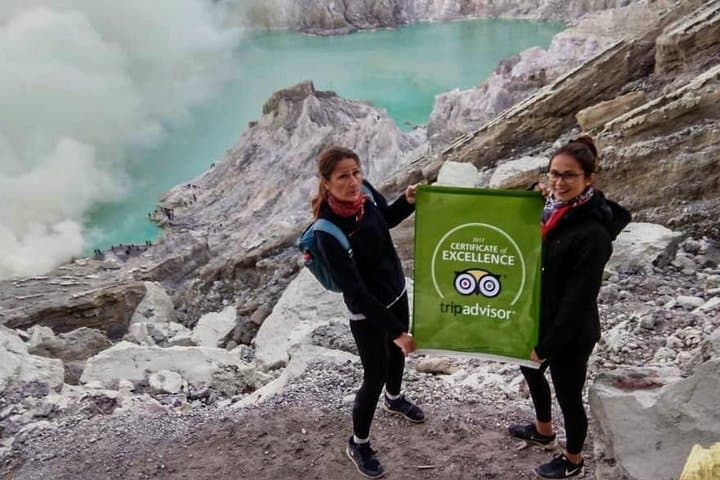
A local ranger is normally required at Ijen for safety and navigation; guides also reduce exposure to fumes and can explain mining practices and geology.
Bromo sits within the Tengger caldera and holds cultural significance for the Tenggerese people, who perform offerings at Pura Luhur Poten; Ijen’s crater has been a traditional sulfur-mining site for generations.
Ijen’s sulfur mining and high visitor numbers strain local ecology and worker health; follow ranger guidance, avoid disturbing mining operations, and support local businesses that practice responsible tourism.
OURTRIP1st Bromo Ijen Tour Operator operates guided outdoor trips and adventures with an emphasis on safety, stewardship, and memorable experiences.
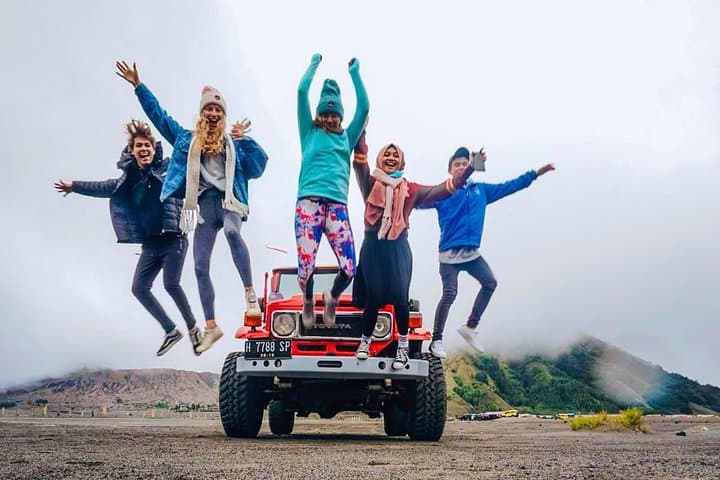
A chill wind from the Tengger caldera pushes across the Sea of Sand as headlights thread a narrow track toward Penanjakan. At 3 a.m. the world is black except for the silhouettes of jeeps and the slow drift of headlamps; by sunrise Semeru etches a jagged spine behind Bromo while sulfur smoke from Ijen waits on the island’s eastern flank.
A chill wind from the Tengger caldera pushes across the Sea of Sand as headlights thread a narrow track toward Penanjakan. At 3 a.m. the world is black except for the silhouettes of jeeps and the slow drift of headlamps; by sunrise Semeru etches a jagged spine behind Bromo while sulfur smoke from Ijen waits on the island’s eastern flank.
The route strings together two very different volcanic landscapes: the broad, ash-strewn plain and 250-step climb to Bromo’s rim, and the steeper 4km night ascent to Ijen’s crater where blue fire and a turquoise acid lake announce active sulfur chemistry. The Tengger people maintain cultural ties to Bromo — offerings at Pura Luhur Poten continue a centuries-old ritual — while Ijen’s crater has long supported traditional sulfur mining, a practice with visible human cost.
Expect mixed terrain: packed volcanic sand, loose scree, stairs at Bromo, and steep dirt trails on Ijen. Typical elevation changes include short climbs to Bromo’s rim and roughly two hours / 4 km of uphill to the Ijen rim, with sections of steep switchbacks and rocky footing.
Practically: travel pre-dawn for the views, use a local ranger on Ijen, and budget time for transfers (3+ hours between sites). Bring a headlamp, layered clothing for 0–10°C pre-sunrise, a mask or scarf for sulfur fumes, sturdy boots and at least 2 liters of water. Allow recovery time between sunrise stands — these are sensory, physical days that reward early starts and steady pacing.