THE ADVENTURE COLLECTIVE® · Independent discovery and booking for outdoor travel

Three days moving from Bromo’s lunar caldera to Kawah Ijen’s turquoise crater lake: pre-dawn jeep climbs, a night hike to blue flames, local guesthouses and hands-on guides. Expect ash plains, steep stair climbs and volcanic sulfur landscapes.
Three days moving from Bromo’s lunar caldera to Kawah Ijen’s turquoise crater lake: pre-dawn jeep climbs, a night hike to blue flames, local guesthouses and hands-on guides. Expect ash plains, steep stair climbs and volcanic sulfur landscapes.
Dawn arrives cold and mineral-scented on the rim of Mount Bromo. Headlamps bob in the pre-dawn air as 4x4 jeeps rattle across the ‘Sea of Sand’ and hikers climb the 250 stone steps to Bromo’s smoking crater. The sunrise fractures the Tengger massif into crisp silhouettes — Batok’s smooth cones, Semeru’s distant plume — and the plain below feels lunar underfoot.
Verified experiences and guided adventures in the surrounding area.
Operated by Indotravelteam · Probolinggo, East Java
Dawn arrives cold and mineral-scented on the rim of Mount Bromo. Headlamps bob in the pre-dawn air as 4x4 jeeps rattle across the ‘Sea of Sand’ and hikers climb the 250 stone steps to Bromo’s smoking crater. The sunrise fractures the Tengger massif into crisp silhouettes — Batok’s smooth cones, Semeru’s distant plume — and the plain below feels lunar underfoot.
These two volcanoes tell a long story: Bromo, part of the Tengger caldera, has been central to the Hindu Tenggerese people and their Yadnya Kasada offerings; Kawah Ijen formed in a younger volcanic complex whose acid lake sits in a deep crater rim. Geologically, you move from wind-scoured ash plains and crater rims at Bromo (≈2,300 m) to the sulfur-stained terraces and steep 400 m ascent of Ijen, where miners extract sulfur by hand.
Culturally the trip threads local homestays, Javanese meals and guides who were once miners or farmers; expect straightforward, clean guesthouses with hot water and Wi‑Fi. The Ijen hike is a night climb: 1.5 hours up from base camp (≈1,900 m) to the rim, then a careful descent to the crater to see blue flames and the turquoise acidic lake at sunrise.
Practicalities: pack warm layers for pre-dawn cold, sturdy shoes for ash and rock, and a refillable water bottle. Breath can be sharp near sulfur vents—guides provide masks but those with respiratory concerns should consult a doctor. Plan for long drives and ferry crossings when starting from Bali; good visibility is likeliest in the dry season (roughly April–October).
moderate.
3 days.
Moderate fitness: able to walk uphill for 1–2 hours, handle stairs and uneven volcanic terrain, and endure early-morning starts.
Blue flames are visible at night and pre-dawn when sulfur gases ignite; clear, dry nights give the best visibility—typically during the drier months (roughly April–October).
The climb from base camp (≈1,900 m) to the rim (≈2,300 m) takes about 1.5 hours and is steep but short; a steady pace and basic fitness are sufficient for most travelers.
Yes—guides supply gas masks and gloves; they significantly reduce exposure to sulfur fumes, which can irritate eyes and airways. Bring your own if you prefer a personal fit.
Two nights in simple, private rooms (even for solo travelers) with hot water and Wi‑Fi—clean, family-run guesthouses typical of the area.
The Tenggerese community around Bromo maintains Hindu rituals such as Yadnya Kasada; Kawah Ijen’s sulfur mining has been practiced for generations by local workers.
These volcanoes are fragile environments—stay on designated paths, support local guides and avoid buying souvenirs made from volcanic rock or wildlife.
Indotravelteam operates guided outdoor trips and adventures with an emphasis on safety, stewardship, and memorable experiences.
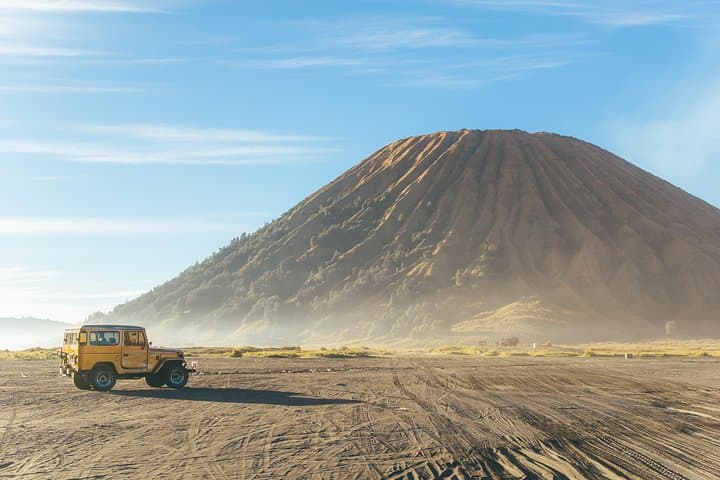
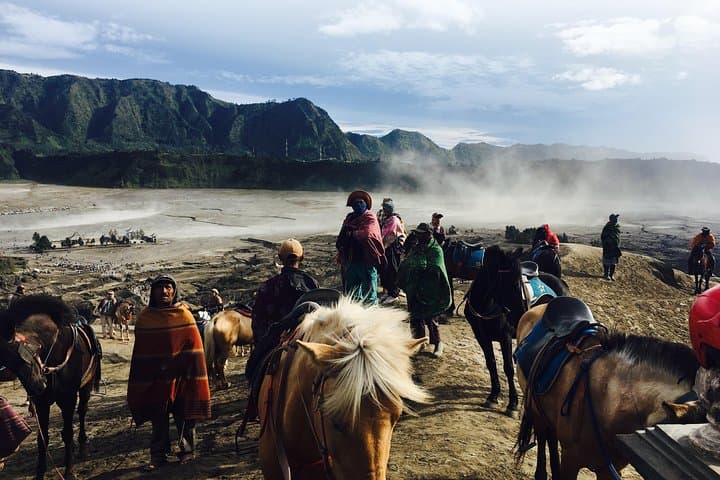
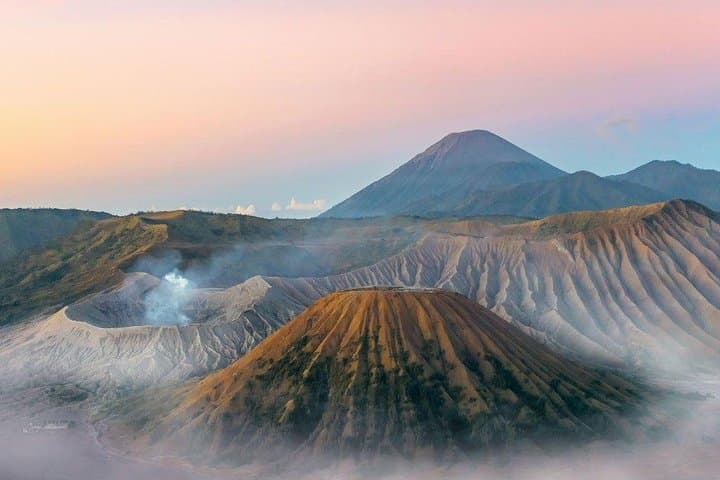
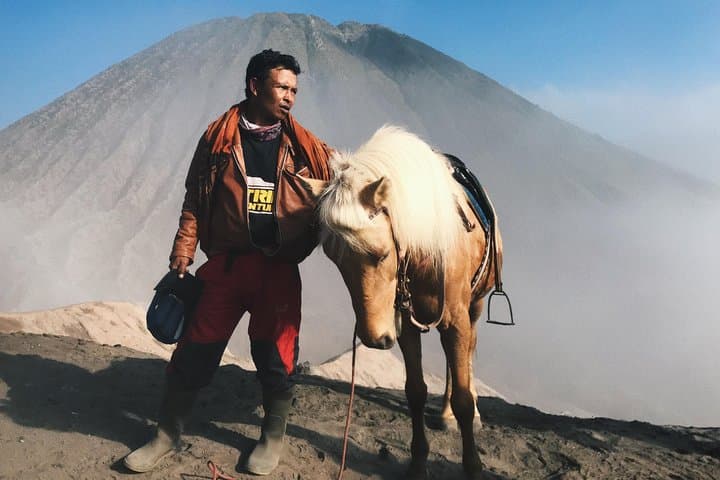
Dawn arrives cold and mineral-scented on the rim of Mount Bromo. Headlamps bob in the pre-dawn air as 4x4 jeeps rattle across the ‘Sea of Sand’ and hikers climb the 250 stone steps to Bromo’s smoking crater. The sunrise fractures the Tengger massif into crisp silhouettes — Batok’s smooth cones, Semeru’s distant plume — and the plain below feels lunar underfoot.
Dawn arrives cold and mineral-scented on the rim of Mount Bromo. Headlamps bob in the pre-dawn air as 4x4 jeeps rattle across the ‘Sea of Sand’ and hikers climb the 250 stone steps to Bromo’s smoking crater. The sunrise fractures the Tengger massif into crisp silhouettes — Batok’s smooth cones, Semeru’s distant plume — and the plain below feels lunar underfoot.
These two volcanoes tell a long story: Bromo, part of the Tengger caldera, has been central to the Hindu Tenggerese people and their Yadnya Kasada offerings; Kawah Ijen formed in a younger volcanic complex whose acid lake sits in a deep crater rim. Geologically, you move from wind-scoured ash plains and crater rims at Bromo (≈2,300 m) to the sulfur-stained terraces and steep 400 m ascent of Ijen, where miners extract sulfur by hand.
Culturally the trip threads local homestays, Javanese meals and guides who were once miners or farmers; expect straightforward, clean guesthouses with hot water and Wi‑Fi. The Ijen hike is a night climb: 1.5 hours up from base camp (≈1,900 m) to the rim, then a careful descent to the crater to see blue flames and the turquoise acidic lake at sunrise.
Practicalities: pack warm layers for pre-dawn cold, sturdy shoes for ash and rock, and a refillable water bottle. Breath can be sharp near sulfur vents—guides provide masks but those with respiratory concerns should consult a doctor. Plan for long drives and ferry crossings when starting from Bali; good visibility is likeliest in the dry season (roughly April–October).