THE ADVENTURE COLLECTIVE® · Independent discovery and booking for outdoor travel

Three days of mountain passes, waterfalls and homestays in the High Atlas. This trek from Imlil combines demanding but approachable hiking with authentic Berber hospitality and sweeping alpine views.
Three days of mountain passes, waterfalls and homestays in the High Atlas. This trek from Imlil combines demanding but approachable hiking with authentic Berber hospitality and sweeping alpine views.
A cold morning busies Imlil as mules click on flagstones and scent of mint tea rises from village courtyards. Within an hour your guide leads you up a stony track where terraces and walnut trees step away from the town and the High Atlas closes in: sharp ridgelines, scree slopes and green hollows that cradle Berber villages. On this three-day loop you cross two main passes—Tizi n'Tamaterte and Tizi Mzik—each offering wide, wind-swept views of jagged summits and distant Marrakech.
Verified experiences and guided adventures in the surrounding area.
Operated by Morocco Tours Toubkal Trek · Imlil, Marrakech-Safi
A cold morning busies Imlil as mules click on flagstones and scent of mint tea rises from village courtyards. Within an hour your guide leads you up a stony track where terraces and walnut trees step away from the town and the High Atlas closes in: sharp ridgelines, scree slopes and green hollows that cradle Berber villages. On this three-day loop you cross two main passes—Tizi n'Tamaterte and Tizi Mzik—each offering wide, wind-swept views of jagged summits and distant Marrakech.
The route threads through small Berber hamlets where traditional guesthouses offer simple, family-run accommodation and communal dinners. Geologically, the High Atlas is young and uplifted; granite and shale form steep valleys that funnel winter streams into seasonal waterfalls like Ighouliden. Culturally, village life remains centred on terraced agriculture, livestock and handmade crafts—expect polite curiosity and opportunities to learn about local bread-baking and irrigation systems.
Practical notes: daily hiking is 4–6 hours on uneven, often loose terrain with cumulative elevation change of 300–700 m per day; trails include steep ascents to alpine-like passes and rocky descents. Good leather boots and trekking poles make steep sections safer. Water is provided, but carry at least 2 litres and a small daypack for layers. Start early to avoid afternoon heat and to catch clearer mountain views. Respect dress customs in villages, and tip guides and muleteers modestly for local economies. The trek balances cultural exchange and sustained walking—compact, intense and reliably rewarding.
moderate.
3 days.
Suitable for regular walkers who can manage 4–6 hours a day with uphill sections; basic endurance required.
The route is classed moderate with daily walks of 4–6 hours; beginners with reasonable fitness who train beforehand can complete it, but tell the operator about any health issues.
Nights are spent in family-run Berber guesthouses with shared facilities and home-cooked meals; standards are simple but warm and culturally immersive.
While not extreme, daily passes reach alpine elevations where exertion feels harder—pacing, hydration and a slow start help avoid symptoms.
Yes; the tour provides all meals during the trek and bottled water, though carrying extra water for hot days is recommended.
The High Atlas has long been home to Amazigh (Berber) communities whose terrace agriculture and stone villages reflect centuries of mountain adaptation.
Stay on established trails to limit erosion, avoid single-use plastics when possible, and support local guesthouses which reinvest tourism income locally.
Morocco Tours Toubkal Trek operates guided outdoor trips and adventures with an emphasis on safety, stewardship, and memorable experiences.
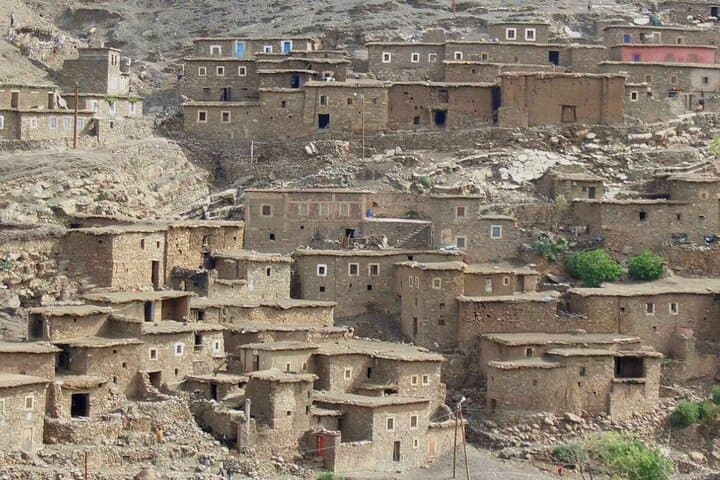
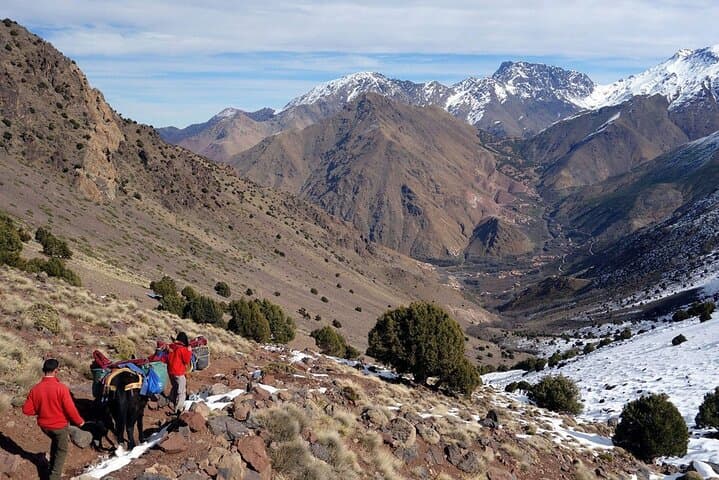

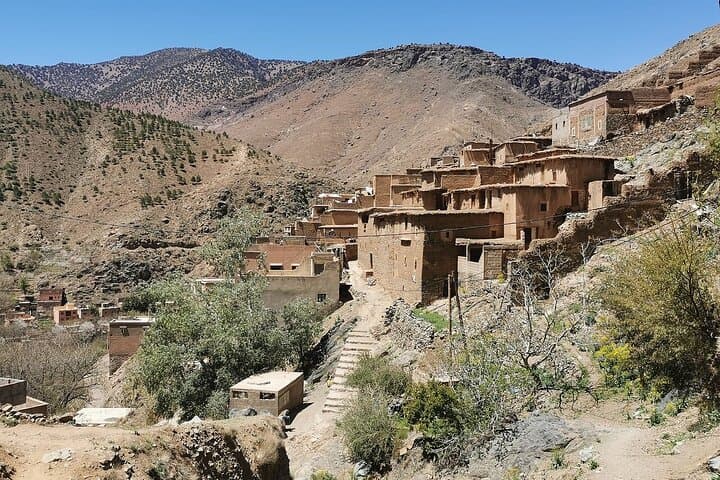
A cold morning busies Imlil as mules click on flagstones and scent of mint tea rises from village courtyards. Within an hour your guide leads you up a stony track where terraces and walnut trees step away from the town and the High Atlas closes in: sharp ridgelines, scree slopes and green hollows that cradle Berber villages. On this three-day loop you cross two main passes—Tizi n'Tamaterte and Tizi Mzik—each offering wide, wind-swept views of jagged summits and distant Marrakech.
A cold morning busies Imlil as mules click on flagstones and scent of mint tea rises from village courtyards. Within an hour your guide leads you up a stony track where terraces and walnut trees step away from the town and the High Atlas closes in: sharp ridgelines, scree slopes and green hollows that cradle Berber villages. On this three-day loop you cross two main passes—Tizi n'Tamaterte and Tizi Mzik—each offering wide, wind-swept views of jagged summits and distant Marrakech.
The route threads through small Berber hamlets where traditional guesthouses offer simple, family-run accommodation and communal dinners. Geologically, the High Atlas is young and uplifted; granite and shale form steep valleys that funnel winter streams into seasonal waterfalls like Ighouliden. Culturally, village life remains centred on terraced agriculture, livestock and handmade crafts—expect polite curiosity and opportunities to learn about local bread-baking and irrigation systems.
Practical notes: daily hiking is 4–6 hours on uneven, often loose terrain with cumulative elevation change of 300–700 m per day; trails include steep ascents to alpine-like passes and rocky descents. Good leather boots and trekking poles make steep sections safer. Water is provided, but carry at least 2 litres and a small daypack for layers. Start early to avoid afternoon heat and to catch clearer mountain views. Respect dress customs in villages, and tip guides and muleteers modestly for local economies. The trek balances cultural exchange and sustained walking—compact, intense and reliably rewarding.