THE ADVENTURE COLLECTIVE® · Independent discovery and booking for outdoor travel

This 3‑day trip links Ba Be Lake’s calm karst waters and the thunder of Ban Gioc waterfall, with homestays, a cave visit, and historical stopovers. Ideal for travelers who want geology and culture on one remote northern Vietnam route.
This 3‑day trip links Ba Be Lake’s calm karst waters and the thunder of Ban Gioc waterfall, with homestays, a cave visit, and historical stopovers. Ideal for travelers who want geology and culture on one remote northern Vietnam route.
Dawn light splits the rice terraces as your driver threads out of Hanoi toward limestone ridges—five hours of road that ease into the wide, calm bowl of Ba Be Lake. On arrival the lake opens like a secret: sheer limestone cliffs, inlets where the water sits still enough to mirror the forest, and a small village where a homestay meal waits.
Verified experiences and guided adventures in the surrounding area.
Operated by Old Quarter Travel · Cao Bang, Cao Bang Province
Dawn light splits the rice terraces as your driver threads out of Hanoi toward limestone ridges—five hours of road that ease into the wide, calm bowl of Ba Be Lake. On arrival the lake opens like a secret: sheer limestone cliffs, inlets where the water sits still enough to mirror the forest, and a small village where a homestay meal waits.
Ba Be’s geology is classic karst—limestone bedrock pocked with caves and sinkholes that hold freshwater systems rich with fish and amphibians. The itinerary pairs a late-afternoon boat on Ba Be (UNESCO‑adjacent Ramsar wetland) with a homestay among Tay or Nung hosts, giving a close look at minority culture, house-style cooking, and simple rural rhythms.
The second day pushes northeast into Cao Bang province: Nguom Ngao Cave’s 2,144 meters of stalactites and narrow passages, then the wide curtain of Ban Gioc waterfall—roughly 300 meters across—where bamboo boats bring you within easy spray of the falls. The last morning visits Pac Bo, a site tied to 20th-century Vietnamese history and a short, low-elevation walk along a shaded stream.
Practical guidance: expect long drives on two-lane mountain roads and short on-foot sections with modest elevation changes (typical one-off climbs under 200 m). Bring sturdy shoes for slippery cave floors, a waterproof layer for the boat at Ban Gioc, and small bills for remote villages. Travel light, charge devices nightly at homestays or hotels, and plan to move at a steady but unhurried pace—this route rewards patience with dramatic water, caves, and cultural exchange.
moderate.
3 days.
Light to moderate fitness; able to handle several hours of travel, short hikes and walking on uneven surfaces
Expect roughly 4–6 hours from Hanoi to Ba Be by road, and another 4–5 hours on day two to reach Ban Gioc area depending on stops and road conditions.
You do not need a visa to view the falls from the Vietnam side, but carry your passport—some checkpoints or boat operators may request ID. Crossing the border is not included in this tour.
Homestays here are simple: private rooms or shared spaces, basic amenities, and home-cooked meals—good for cultural immersion but not five-star comfort.
Local boatmen use traditional craft and life jackets are often available; avoid the ride in heavy rain or high water and follow crew instructions.
The route threads minority Nung and Tay communities and Pac Bo, where Ho Chi Minh lived in the 1940s—mixing natural and 20th‑century historical sites.
Ba Be and Ban Gioc sit in sensitive karst and wetland systems; stick to marked paths, avoid single‑use plastics, and support local guides and homestays to keep economic benefits local.
Old Quarter Travel operates guided outdoor trips and adventures with an emphasis on safety, stewardship, and memorable experiences.


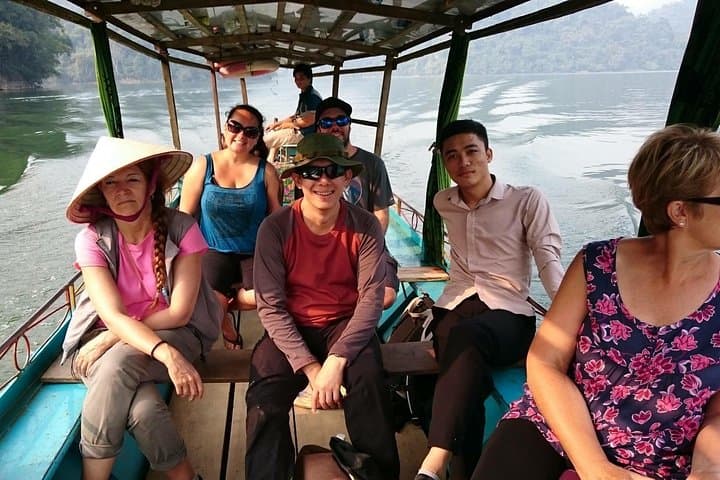
Dawn light splits the rice terraces as your driver threads out of Hanoi toward limestone ridges—five hours of road that ease into the wide, calm bowl of Ba Be Lake. On arrival the lake opens like a secret: sheer limestone cliffs, inlets where the water sits still enough to mirror the forest, and a small village where a homestay meal waits.
Dawn light splits the rice terraces as your driver threads out of Hanoi toward limestone ridges—five hours of road that ease into the wide, calm bowl of Ba Be Lake. On arrival the lake opens like a secret: sheer limestone cliffs, inlets where the water sits still enough to mirror the forest, and a small village where a homestay meal waits.
Ba Be’s geology is classic karst—limestone bedrock pocked with caves and sinkholes that hold freshwater systems rich with fish and amphibians. The itinerary pairs a late-afternoon boat on Ba Be (UNESCO‑adjacent Ramsar wetland) with a homestay among Tay or Nung hosts, giving a close look at minority culture, house-style cooking, and simple rural rhythms.
The second day pushes northeast into Cao Bang province: Nguom Ngao Cave’s 2,144 meters of stalactites and narrow passages, then the wide curtain of Ban Gioc waterfall—roughly 300 meters across—where bamboo boats bring you within easy spray of the falls. The last morning visits Pac Bo, a site tied to 20th-century Vietnamese history and a short, low-elevation walk along a shaded stream.
Practical guidance: expect long drives on two-lane mountain roads and short on-foot sections with modest elevation changes (typical one-off climbs under 200 m). Bring sturdy shoes for slippery cave floors, a waterproof layer for the boat at Ban Gioc, and small bills for remote villages. Travel light, charge devices nightly at homestays or hotels, and plan to move at a steady but unhurried pace—this route rewards patience with dramatic water, caves, and cultural exchange.