THE ADVENTURE COLLECTIVE® · Independent discovery and booking for outdoor travel

A compact three-day journey from Hanoi across Ba Be Lake’s limestone arms to the thunder of Ban Gioc waterfall. Expect boat trips, cave passages and homestay evenings among Nung villages.
A compact three-day journey from Hanoi across Ba Be Lake’s limestone arms to the thunder of Ban Gioc waterfall. Expect boat trips, cave passages and homestay evenings among Nung villages.
Morning light slides across a long, green lake as your minivan departs Hanoi and the city noise thins to a steady hum. By afternoon a local boat cuts through Ba Be Lake's limestone-framed bays, and karst walls lean close enough to feel like company. On day two the landscape tightens into rugged cliffs and wide cascades—Ban Gioc roars along the border, spray daring you closer from a bamboo boat.
Verified experiences and guided adventures in the surrounding area.
Operated by Old Quarter Travel · Cao Bang, Cao Bang
Morning light slides across a long, green lake as your minivan departs Hanoi and the city noise thins to a steady hum. By afternoon a local boat cuts through Ba Be Lake's limestone-framed bays, and karst walls lean close enough to feel like company. On day two the landscape tightens into rugged cliffs and wide cascades—Ban Gioc roars along the border, spray daring you closer from a bamboo boat.
This route threads geology and history: Ba Be’s basin is a karst wetland recognized under the Ramsar Convention, carved from limestone and home to dozens of freshwater fish species. Further north, Nguom Ngao Cave reveals millennia of stalactites, and Pac Bo Cave links the terrain to 20th-century Vietnamese history where Ho Chi Minh returned and organized resistance. Cultural life here is visible in Nung minority villages—stilt houses, rice terraces and kitchen fires that follow age-old patterns.
Expect a mix of slow boat sections, short village walks, and moderate drives on mountain roads. Nights are split between simple homestays and basic hotels; meals focus on local rice, river fish and vegetable dishes. Practical notes: pack quick-dry layers for damp mornings, a lightweight rain shell, sturdy shoes for cave surfaces, and motion-sickness remedies for winding roads and boat rides. Water will be provided but carry a refillable bottle for longer stretches.
This trip balances immersion in remote northern Vietnam with accessible logistics—ideal for travelers who want close contact with river systems, karst geology and minority cultures without technical climbing or heavy trekking.
moderate.
3 days (roughly 72 hours including transit).
Suitable for travelers in average fitness who can manage several short walks, boat rides and uneven surfaces.
Expect several hours of driving each day between sites—Hanoi to Ba Be is about 4–5 hours, and Ba Be to Ban Gioc is another multi-hour drive through mountain roads.
Homestays are simple and clean, offering local meals and basic bedding; those wanting private bathrooms can request a hotel night in Cao Bang instead.
Yes—local bamboo boat rides bring you close enough to feel the spray, though access depends on river levels and safety conditions.
The itinerary is rated easy to moderate and noted suitable for most fitness levels, but travelers with serious mobility or heart issues should consult the operator due to stairs, uneven terrain and long drives.
Ba Be has long been home to Tày and Dao communities; Pac Bo Cave is historically significant as a base used by Ho Chi Minh after his return to Vietnam in 1941.
Ba Be is a Ramsar wetland—visitors should avoid littering, stick to marked paths near caves and waterfalls, and minimize plastic use to protect aquatic habitats.
Old Quarter Travel operates guided outdoor trips and adventures with an emphasis on safety, stewardship, and memorable experiences.
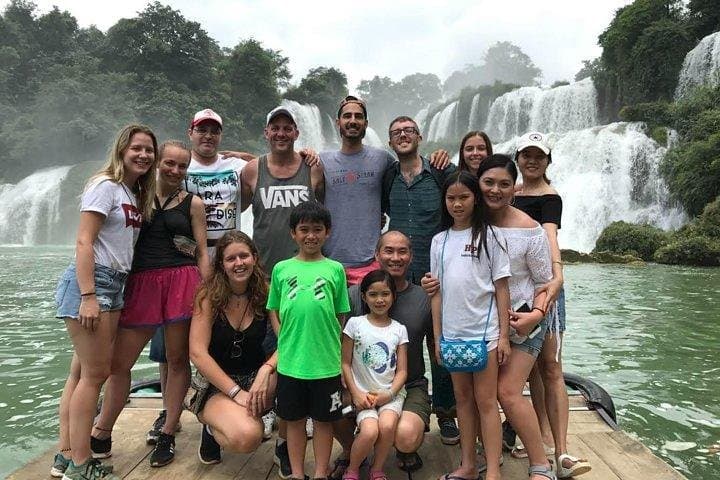
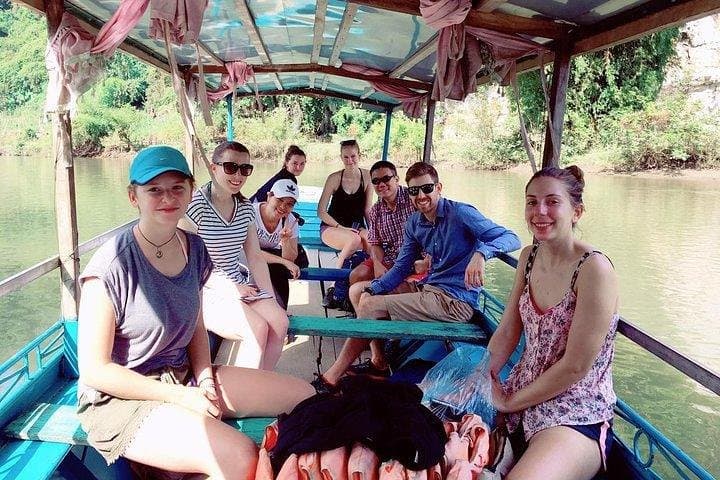
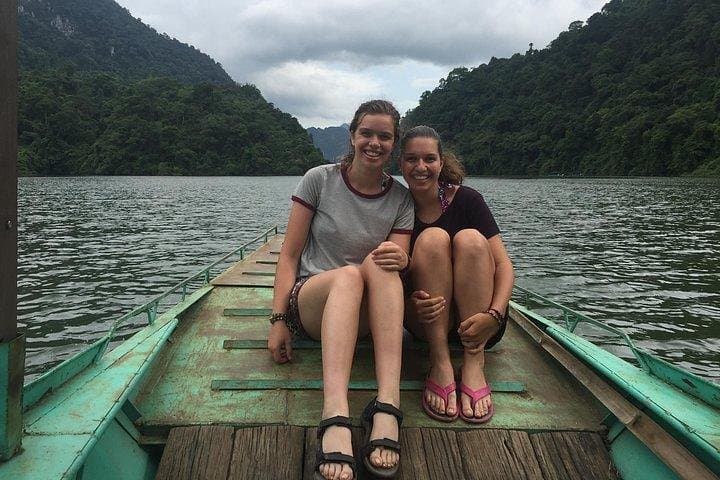
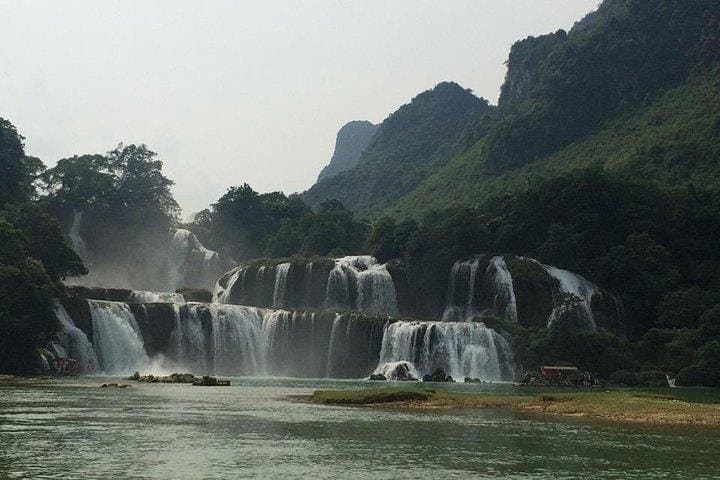
Morning light slides across a long, green lake as your minivan departs Hanoi and the city noise thins to a steady hum. By afternoon a local boat cuts through Ba Be Lake's limestone-framed bays, and karst walls lean close enough to feel like company. On day two the landscape tightens into rugged cliffs and wide cascades—Ban Gioc roars along the border, spray daring you closer from a bamboo boat.
Morning light slides across a long, green lake as your minivan departs Hanoi and the city noise thins to a steady hum. By afternoon a local boat cuts through Ba Be Lake's limestone-framed bays, and karst walls lean close enough to feel like company. On day two the landscape tightens into rugged cliffs and wide cascades—Ban Gioc roars along the border, spray daring you closer from a bamboo boat.
This route threads geology and history: Ba Be’s basin is a karst wetland recognized under the Ramsar Convention, carved from limestone and home to dozens of freshwater fish species. Further north, Nguom Ngao Cave reveals millennia of stalactites, and Pac Bo Cave links the terrain to 20th-century Vietnamese history where Ho Chi Minh returned and organized resistance. Cultural life here is visible in Nung minority villages—stilt houses, rice terraces and kitchen fires that follow age-old patterns.
Expect a mix of slow boat sections, short village walks, and moderate drives on mountain roads. Nights are split between simple homestays and basic hotels; meals focus on local rice, river fish and vegetable dishes. Practical notes: pack quick-dry layers for damp mornings, a lightweight rain shell, sturdy shoes for cave surfaces, and motion-sickness remedies for winding roads and boat rides. Water will be provided but carry a refillable bottle for longer stretches.
This trip balances immersion in remote northern Vietnam with accessible logistics—ideal for travelers who want close contact with river systems, karst geology and minority cultures without technical climbing or heavy trekking.