THE ADVENTURE COLLECTIVE® · Independent discovery and booking for outdoor travel

Three days of Imlil trails, Tamsoult waterfall and Amazigh village life offers a compact mountain immersion from Marrakech. Expect steep climbs, basic refuges and authentic cultural encounters.
Three days of Imlil trails, Tamsoult waterfall and Amazigh village life offers a compact mountain immersion from Marrakech. Expect steep climbs, basic refuges and authentic cultural encounters.
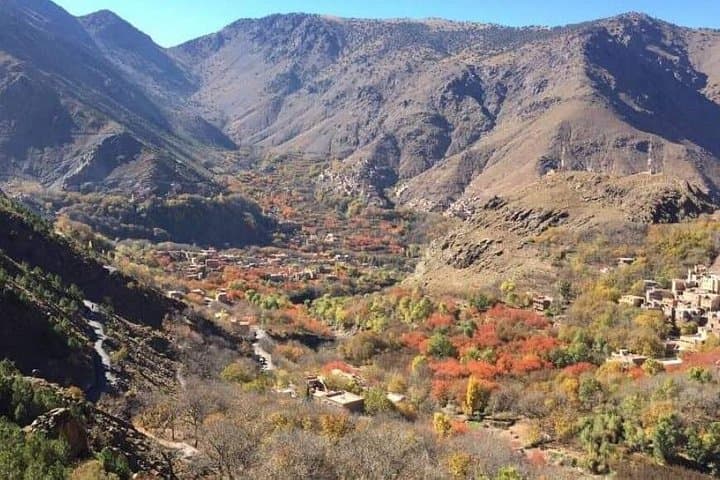
A cool dawn in the High Atlas feels like a reset: brittle air, mule bells in the distance, and terraces stepping down toward the Haouz plain. The road from Marrakech winds past Asni and deposits travelers in Imlil, a stone-strewn village where the trailhead points upriver and the mountains begin to take shape.
Verified experiences and guided adventures in the surrounding area.
Operated by Guides in Morroco · Imlil, Marrakech-Safi
A cool dawn in the High Atlas feels like a reset: brittle air, mule bells in the distance, and terraces stepping down toward the Haouz plain. The road from Marrakech winds past Asni and deposits travelers in Imlil, a stone-strewn village where the trailhead points upriver and the mountains begin to take shape.
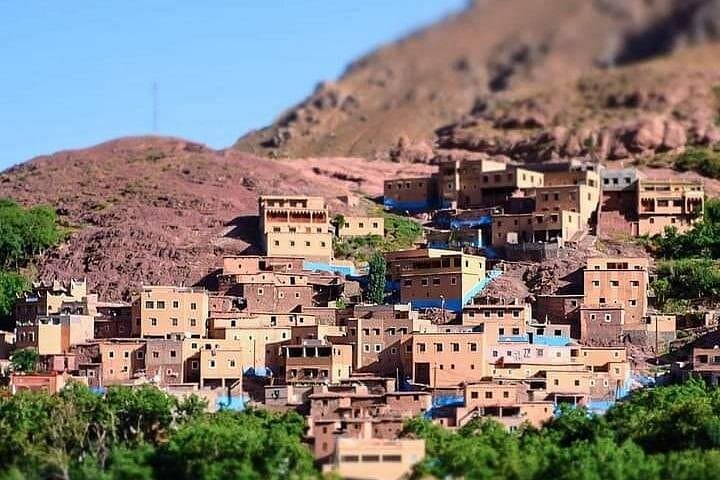
Over three days this route threads traditional Amazigh (Berber) villages, a high-altitude waterfall and the broad shoulders of the Toubkal massif. Geologically the High Atlas is young and jagged—folded limestone and volcanic intrusions pushed up by Africa’s collision with Europe—so trails often alternate between packed earth, scree and rocky switchbacks. Culturally the region is a living landscape; terraced fields, kasbah-like houses and seasonal transhumance tell the story of mountain life driven by water and weather.
Expect long uphill sections (the first day climbs toward Tamsoult refuge for about 5–6 hours), crisp alpine springs, and villages where mint tea marks hospitality. Guides and mule teams carry heavy loads, leaving hikers to focus on footing, views and local conversation.
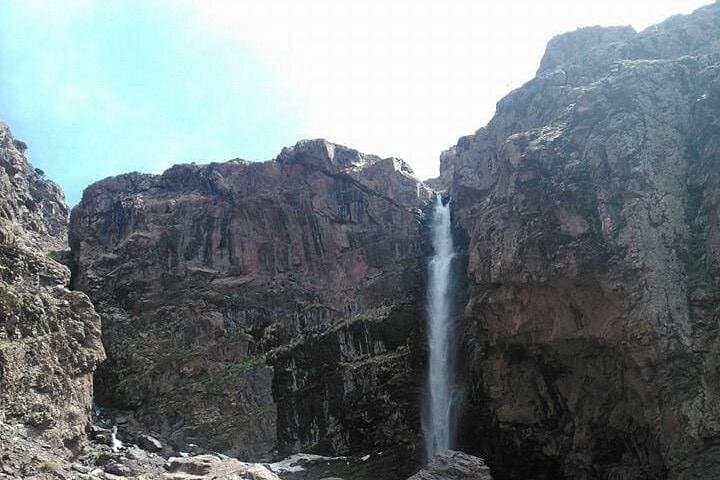
Practical guidance: start early to avoid midday heat, bring layers for high-elevation chill, and plan for basic mountain lodging—refuge beds and family-run guesthouses. Footwear with stiff soles and a waterproof layer will make steep descents more secure. Carry cash for small village purchases and be prepared to move at a hiking pace; the reward is open ridgelines, waterfalls descending like anonymous curtains, and close-up cultural encounters that feel both immediate and grounded.
moderate.
3 days.
Should be able to hike 5–6 hours on uneven terrain and manage sustained uphill sections with a daypack.
Moderate fitness is required—expect 5–6 hour hikes with sustained elevation gain; regular walkers who train on hills will be comfortable.
Overnights alternate between basic mountain refuge dorms and family-run guesthouses in Imlil or nearby villages—amenities are simple but clean.
Guides and mule teams are standard for safety, navigation and to carry luggage; they’re included in the itinerary and make the trek accessible.
Elevation reaches around 2,200–2,400 m on parts of the route; most travelers acclimatize but watch for headache or nausea and descend if symptoms worsen.
The High Atlas is home to Amazigh (Berber) communities whose agricultural terraces and mud-brick houses reflect centuries of mountain adaptation and seasonal grazing routes.
Alpine vegetation and water sources are fragile; stick to trails, avoid single-use plastics, and support local guides who invest in sustainable trekking practices.
Guides in Morroco operates guided outdoor trips and adventures with an emphasis on safety, stewardship, and memorable experiences.
A cool dawn in the High Atlas feels like a reset: brittle air, mule bells in the distance, and terraces stepping down toward the Haouz plain. The road from Marrakech winds past Asni and deposits travelers in Imlil, a stone-strewn village where the trailhead points upriver and the mountains begin to take shape.
A cool dawn in the High Atlas feels like a reset: brittle air, mule bells in the distance, and terraces stepping down toward the Haouz plain. The road from Marrakech winds past Asni and deposits travelers in Imlil, a stone-strewn village where the trailhead points upriver and the mountains begin to take shape.
Over three days this route threads traditional Amazigh (Berber) villages, a high-altitude waterfall and the broad shoulders of the Toubkal massif. Geologically the High Atlas is young and jagged—folded limestone and volcanic intrusions pushed up by Africa’s collision with Europe—so trails often alternate between packed earth, scree and rocky switchbacks. Culturally the region is a living landscape; terraced fields, kasbah-like houses and seasonal transhumance tell the story of mountain life driven by water and weather.
Expect long uphill sections (the first day climbs toward Tamsoult refuge for about 5–6 hours), crisp alpine springs, and villages where mint tea marks hospitality. Guides and mule teams carry heavy loads, leaving hikers to focus on footing, views and local conversation.
Practical guidance: start early to avoid midday heat, bring layers for high-elevation chill, and plan for basic mountain lodging—refuge beds and family-run guesthouses. Footwear with stiff soles and a waterproof layer will make steep descents more secure. Carry cash for small village purchases and be prepared to move at a hiking pace; the reward is open ridgelines, waterfalls descending like anonymous curtains, and close-up cultural encounters that feel both immediate and grounded.