THE ADVENTURE COLLECTIVE® · Independent discovery and booking for outdoor travel

A three-day trek from Marrakech into the High Atlas offers direct encounters with Berber village life, terraced farms and mountain ridgelines. Expect 2–5 hours of daily walking on stony mule tracks and quiet village paths, with home-cooked meals and overnight stays in local guesthouses.
A three-day trek from Marrakech into the High Atlas offers direct encounters with Berber village life, terraced farms and mountain ridgelines. Expect 2–5 hours of daily walking on stony mule tracks and quiet village paths, with home-cooked meals and overnight stays in local guesthouses.
Early morning air from Marrakech hardens into mountain clarity as the minivan climbs toward Imlil. Olive terraces and mule tracks open into steep gullies; the High Atlas rises in layered ridges, wind cutting the blue into sharp edges. You arrive at a guesthouse, lace boots, and set out on trails that have guided Amazigh (Berber) shepherds for generations.
Verified experiences and guided adventures in the surrounding area.
Operated by Targa Travel & Trekkinginmorocco · Imlil, Marrakesh-Safi
Early morning air from Marrakech hardens into mountain clarity as the minivan climbs toward Imlil. Olive terraces and mule tracks open into steep gullies; the High Atlas rises in layered ridges, wind cutting the blue into sharp edges. You arrive at a guesthouse, lace boots, and set out on trails that have guided Amazigh (Berber) shepherds for generations.
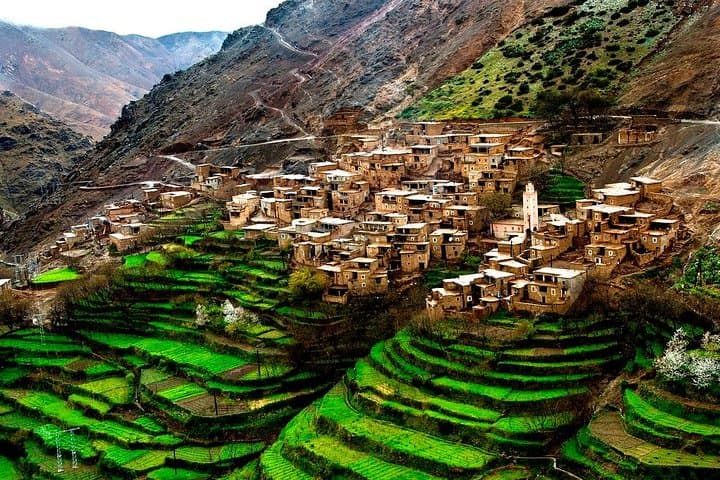
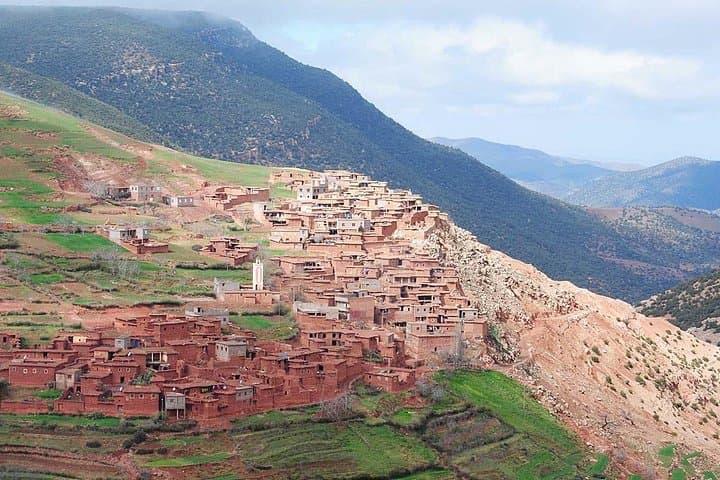
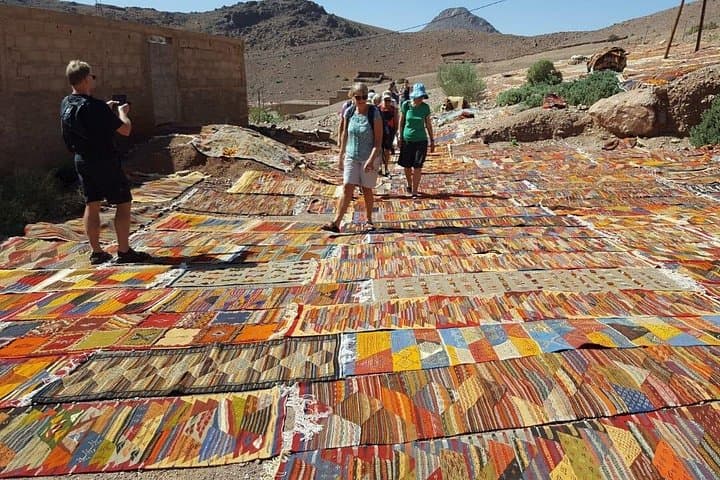
The route threads village to village—Tagadirt, Tacheddirt, Azzaden—where stone houses squat beside irrigated fields. Geologically the High Atlas is folded and faulted limestone and schist; spring runoff feeds narrow streams and seasonal waterfalls that shape the terraces. Cultural encounters center on home hospitality: shared meals of tagine, strong mint tea, and conversations with hosts who maintain traditional crafts and agriculture.
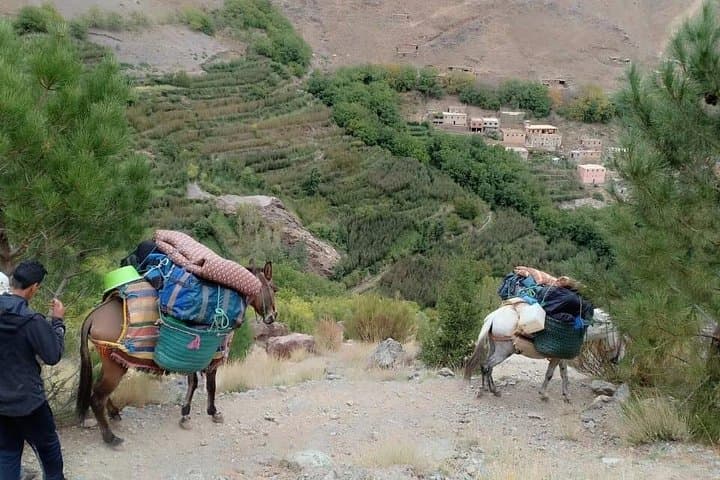
Expect 2–5 hours of walking daily on mixed terrain: switchback dirt tracks, rocky footpaths and cultivated paths with intermittent mule traffic. Elevation ranges from roughly 1,700 m in Imlil to 2,200–2,500 m on higher passes depending on your chosen route, so brief ascents of 300–800 m per day are common. Routes are non-technical but require steady footing and basic navigation.
Practical guidance: start early for cooler conditions, carry 2–3 liters of water, layer for sharp midday sun and chilly evenings, and wear sturdy boots with ankle support. Respect private homes and ask before photographing. A modest level of fitness and comfortable hiking pace make the circuit rewarding—the scenery is honest, the hospitality immediate, and the trails a direct way to meet Atlas life.
moderate.
3 days (approx. 2–5 hours walking per day).
Suitable for hikers in regular aerobic shape who can handle sustained uphill sections and uneven terrain.
Moderate fitness is enough—expect steady uphill walking but no technical climbing; choose the shorter itinerary option if you prefer less walking.
Nights are spent in local guesthouses or mountain lodges in Berber villages, with basic but comfortable rooms and shared facilities.
Yes—meals typically include 2 breakfasts, 3 lunches and 3 dinners featuring regional dishes like tagine and couscous, with mint tea provided.
Minimum age is usually 3; families should select the less demanding itinerary and confirm mule support for young children or heavy bags.
The High Atlas has been inhabited by Amazigh (Berber) communities for millennia; villages maintain traditional agricultural terraces and communal water systems.
Water is scarce and fragile here—use local water sparingly, stick to established trails, and favor local guides and homestays to support the mountain economy.
Targa Travel & Trekkinginmorocco operates guided outdoor trips and adventures with an emphasis on safety, stewardship, and memorable experiences.
Early morning air from Marrakech hardens into mountain clarity as the minivan climbs toward Imlil. Olive terraces and mule tracks open into steep gullies; the High Atlas rises in layered ridges, wind cutting the blue into sharp edges. You arrive at a guesthouse, lace boots, and set out on trails that have guided Amazigh (Berber) shepherds for generations.
Early morning air from Marrakech hardens into mountain clarity as the minivan climbs toward Imlil. Olive terraces and mule tracks open into steep gullies; the High Atlas rises in layered ridges, wind cutting the blue into sharp edges. You arrive at a guesthouse, lace boots, and set out on trails that have guided Amazigh (Berber) shepherds for generations.
The route threads village to village—Tagadirt, Tacheddirt, Azzaden—where stone houses squat beside irrigated fields. Geologically the High Atlas is folded and faulted limestone and schist; spring runoff feeds narrow streams and seasonal waterfalls that shape the terraces. Cultural encounters center on home hospitality: shared meals of tagine, strong mint tea, and conversations with hosts who maintain traditional crafts and agriculture.
Expect 2–5 hours of walking daily on mixed terrain: switchback dirt tracks, rocky footpaths and cultivated paths with intermittent mule traffic. Elevation ranges from roughly 1,700 m in Imlil to 2,200–2,500 m on higher passes depending on your chosen route, so brief ascents of 300–800 m per day are common. Routes are non-technical but require steady footing and basic navigation.
Practical guidance: start early for cooler conditions, carry 2–3 liters of water, layer for sharp midday sun and chilly evenings, and wear sturdy boots with ankle support. Respect private homes and ask before photographing. A modest level of fitness and comfortable hiking pace make the circuit rewarding—the scenery is honest, the hospitality immediate, and the trails a direct way to meet Atlas life.