THE ADVENTURE COLLECTIVE® · Independent discovery and booking for outdoor travel

Three days of mountain and valley riding from Marrakech into the High Atlas, linking Berber villages, high passes and guest‑house stays. Expect long days on mixed terrain with mechanical support and optional e‑bikes.
Three days of mountain and valley riding from Marrakech into the High Atlas, linking Berber villages, high passes and guest‑house stays. Expect long days on mixed terrain with mechanical support and optional e‑bikes.
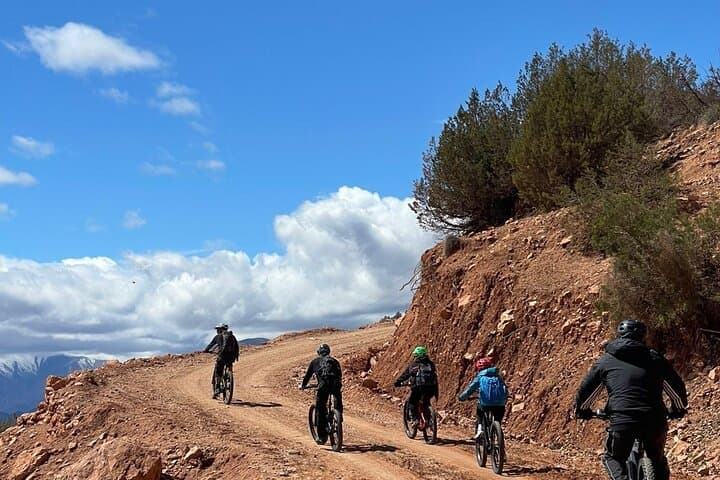
On the first morning the road peels away from the ochre maze of Marrakech and the Atlas foothills close around the group: olive terraces, dry-stone fields and low Berber villages punctuate a rising horizon. Cyclists mount mountain bikes or e-bikes, pedals answering to the rhythm of hairpin climbs and sudden descents toward Imlil.
Verified experiences and guided adventures in the surrounding area.
Operated by Morocco Treks and Tours · Imlil, Marrakech-Safi
On the first morning the road peels away from the ochre maze of Marrakech and the Atlas foothills close around the group: olive terraces, dry-stone fields and low Berber villages punctuate a rising horizon. Cyclists mount mountain bikes or e-bikes, pedals answering to the rhythm of hairpin climbs and sudden descents toward Imlil.
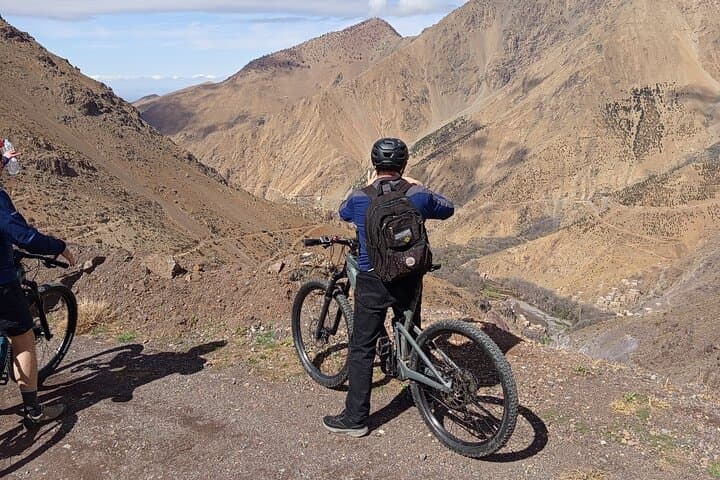
The route threads ancestral trade tracks and seasonal farming benches shaped by Atlas geology — folded schists and volcanic intrusions that lift the High Atlas into sharp cols such as Tizi Tamatert and Tizi Tadmamt. Villages speak a living Rif of Berber culture: mule paths, rooftop drying racks and muleteers moving goods the same way for generations. Guides introduce local crafts and the simple logic of guest‑house hospitality in Imlil and Ourika.
Technically the days are long: expect 50–70 km rides over mixed tarmac and rough mountain tracks, steady climbs to high passes and rewarding descents into river valleys. The assistance vehicle runs luggage and support; e-bikes reduce the effort on sustained climbs but do not remove the need for basic fitness and bike handling.
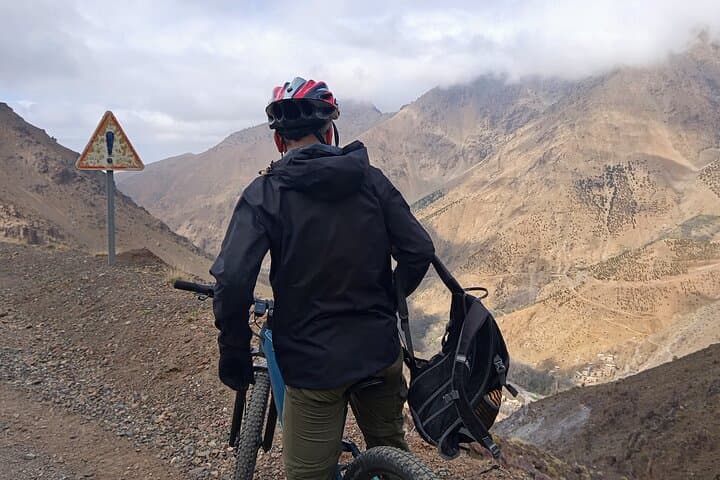
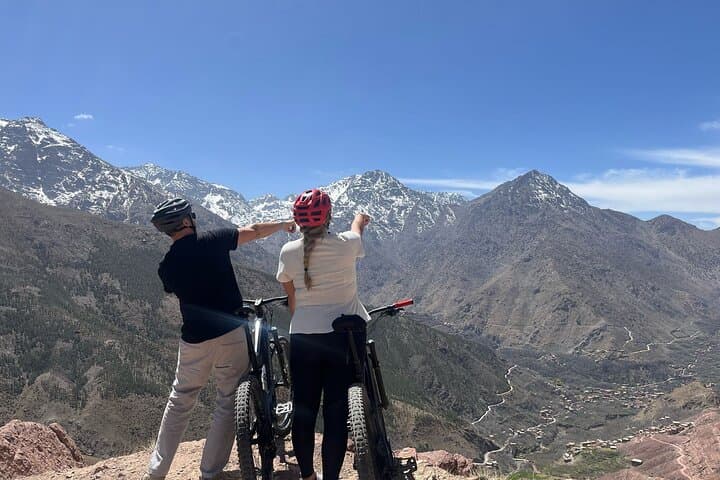
Practical notes: ride early to avoid midday heat, carry a layered windproof for exposed cols, and keep water and snacks accessible for remote sections. Bookings typically include transfers, two guest‑house nights, meals and a local guide. For first‑time Atlas riders, accept a measured pace — the mountains demand patience but repay it with sweeping valley views, approachable remote culture and terrain that invites exploration.
moderate.
3 days.
Good aerobic fitness for sustained climbs and the ability to ride 50–70 km per day on mixed surfaces; comfortable with continuous effort.
Yes—e‑bikes are offered and help on sustained climbs, but riders should still be comfortable pedaling and handling varied terrain.
Days range 50–70 km with significant climbing; fit riders will manage comfortably, beginners should choose the e‑bike option and pace themselves.
Two nights in authentic local guest houses (shared or private rooms depending on booking) with included meals.
Yes—an assistance vehicle carries luggage, provides technical support and can transport riders if needed.
The High Atlas region has long been traveled by Berber communities whose trans‑mountain routes linked Marrakech to alpine pastures and trade networks.
Stick to marked tracks, avoid disturbing water sources and support local guesthouses to encourage sustainable tourism that benefits mountain communities.
Morocco Treks and Tours operates guided outdoor trips and adventures with an emphasis on safety, stewardship, and memorable experiences.
On the first morning the road peels away from the ochre maze of Marrakech and the Atlas foothills close around the group: olive terraces, dry-stone fields and low Berber villages punctuate a rising horizon. Cyclists mount mountain bikes or e-bikes, pedals answering to the rhythm of hairpin climbs and sudden descents toward Imlil.
On the first morning the road peels away from the ochre maze of Marrakech and the Atlas foothills close around the group: olive terraces, dry-stone fields and low Berber villages punctuate a rising horizon. Cyclists mount mountain bikes or e-bikes, pedals answering to the rhythm of hairpin climbs and sudden descents toward Imlil.
The route threads ancestral trade tracks and seasonal farming benches shaped by Atlas geology — folded schists and volcanic intrusions that lift the High Atlas into sharp cols such as Tizi Tamatert and Tizi Tadmamt. Villages speak a living Rif of Berber culture: mule paths, rooftop drying racks and muleteers moving goods the same way for generations. Guides introduce local crafts and the simple logic of guest‑house hospitality in Imlil and Ourika.
Technically the days are long: expect 50–70 km rides over mixed tarmac and rough mountain tracks, steady climbs to high passes and rewarding descents into river valleys. The assistance vehicle runs luggage and support; e-bikes reduce the effort on sustained climbs but do not remove the need for basic fitness and bike handling.
Practical notes: ride early to avoid midday heat, carry a layered windproof for exposed cols, and keep water and snacks accessible for remote sections. Bookings typically include transfers, two guest‑house nights, meals and a local guide. For first‑time Atlas riders, accept a measured pace — the mountains demand patience but repay it with sweeping valley views, approachable remote culture and terrain that invites exploration.