THE ADVENTURE COLLECTIVE® · Independent discovery and booking for outdoor travel

Three days of temple circuits and a cool mountain waterfall: watch sunrise over Angkor Wat, explore the small and big circuits, and swim beneath Phnom Kulen’s falls. This guided, private tour combines iconic sites with local craft stops and practical logistics for first-time visitors.
Three days of temple circuits and a cool mountain waterfall: watch sunrise over Angkor Wat, explore the small and big circuits, and swim beneath Phnom Kulen’s falls. This guided, private tour combines iconic sites with local craft stops and practical logistics for first-time visitors.
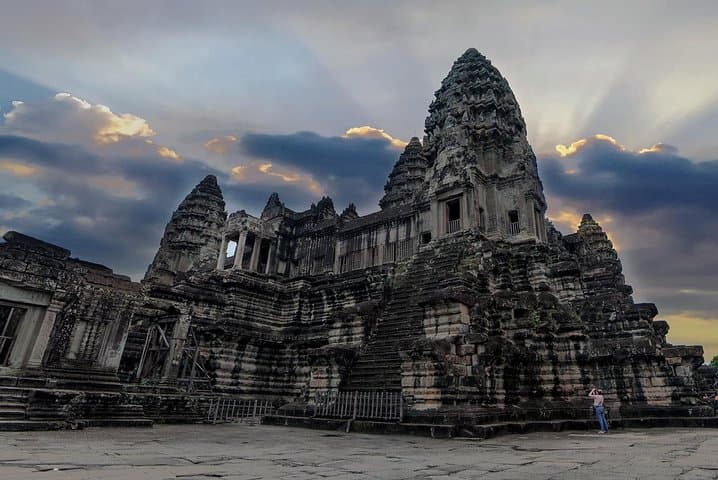
Dawn drags a thin ribbon of light across the Angkor moat as you stand where centuries of pilgrims once watched the sun rise over carved sandstone. Reflections shiver in the shallow pools; the forest around Ta Prohm breathes and the roots press like hands against ancient walls.
Verified experiences and guided adventures in the surrounding area.
Operated by Happy Angkor Tour · Siem Reap, Siem Reap
Dawn drags a thin ribbon of light across the Angkor moat as you stand where centuries of pilgrims once watched the sun rise over carved sandstone. Reflections shiver in the shallow pools; the forest around Ta Prohm breathes and the roots press like hands against ancient walls.
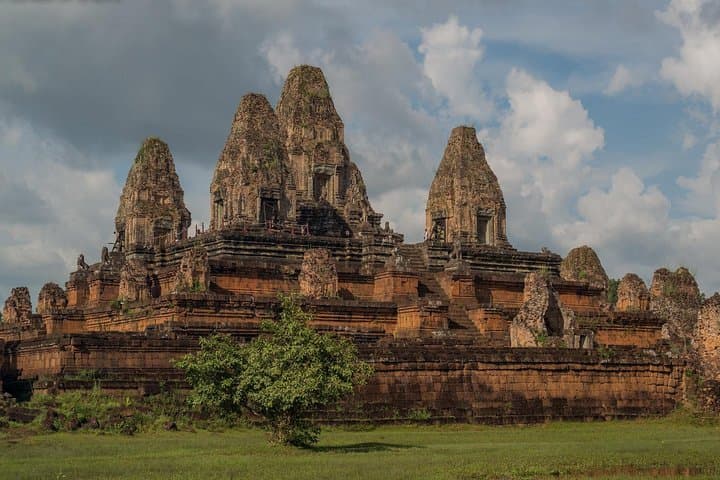
The three-day loop moves from Angkor Wat’s monumental bas-reliefs through Angkor Thom’s face-towered Bayon to the pink sandstone carvings of Banteay Srei and the upland cool of Phnom Kulen. Geologically the region is a low karst plain cut by laterite and sandstone; Phnom Kulen is a higher, forested plateau where a riverbed bears the carved 1000 Lingas—an act of religious engineering meant to sanctify water.
Culturally this itinerary traces Khmer history: Hindu foundations give way to the Buddhist reforms of Jayavarman VII, and small village workshops around Siem Reap still practice stone carving and silk weaving. Expect local markets and Artisan d'Angkor visits if you want crafts and food stalls.
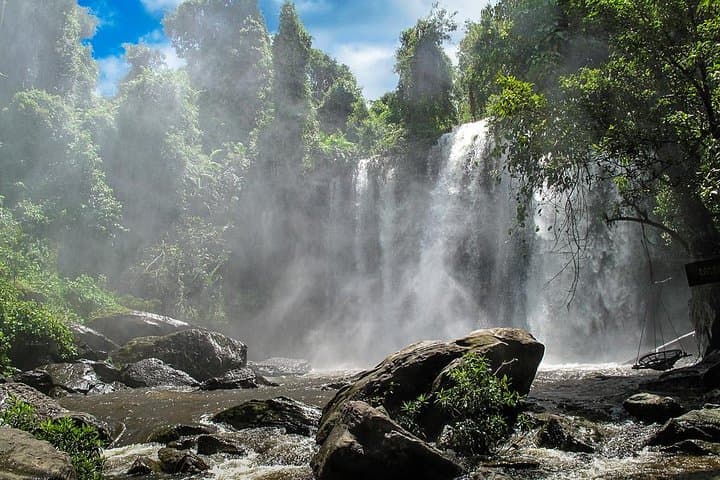
Practically, plan on early starts (sunrise pickups at ~5:00am), buying a 3-day Angkor pass in town, and wearing modest clothing that covers shoulders and knees in temples. Footing is uneven: sturdy walking shoes are essential, and shaded hydration is constant need in the lowland heat. Phnom Kulen is about 60 km from the park and offers a swim-friendly waterfall—enter at your own risk and watch slippery rocks. Respect barrier ropes, avoid touching carvings, carry cash for small meals and tips, and allow time for short waits at Phnom Bakheng and other restricted viewpoints.
easy.
3 days (approx. 8–10 hours touring per day).
Suitable for travelers with basic mobility; comfortable walking over uneven temple stones and short steps required.
Yes — the Angkor Archaeological Park requires a pass; the guide can stop in Siem Reap for you to purchase a 3-day pass if you don’t already have one.
Many visitors swim at Phnom Kulen, but water levels and currents vary; check with your guide, enter slowly, and avoid areas with strong flow or algae-covered rocks.
Yes — the itinerary includes an early pickup (~5:00am) for sunrise; arrive with warm, respectful behavior and expect crowds in peak season.
Meals are generally not included; guides will stop at local restaurants and suggest dishes—budget around US$5–10 per meal depending on choices.
The Angkor region was the heart of the Khmer Empire (9th–15th centuries); Jayavarman VII’s 12th-century building spree left major Buddhist sites like Ta Prohm and Bayon.
Visitor numbers stress ancient sandstone and jungle soils—stay on marked paths, avoid touching bas-reliefs, and use local guides to support preservation efforts.
Happy Angkor Tour operates guided outdoor trips and adventures with an emphasis on safety, stewardship, and memorable experiences.

Dawn drags a thin ribbon of light across the Angkor moat as you stand where centuries of pilgrims once watched the sun rise over carved sandstone. Reflections shiver in the shallow pools; the forest around Ta Prohm breathes and the roots press like hands against ancient walls.
Dawn drags a thin ribbon of light across the Angkor moat as you stand where centuries of pilgrims once watched the sun rise over carved sandstone. Reflections shiver in the shallow pools; the forest around Ta Prohm breathes and the roots press like hands against ancient walls.
The three-day loop moves from Angkor Wat’s monumental bas-reliefs through Angkor Thom’s face-towered Bayon to the pink sandstone carvings of Banteay Srei and the upland cool of Phnom Kulen. Geologically the region is a low karst plain cut by laterite and sandstone; Phnom Kulen is a higher, forested plateau where a riverbed bears the carved 1000 Lingas—an act of religious engineering meant to sanctify water.
Culturally this itinerary traces Khmer history: Hindu foundations give way to the Buddhist reforms of Jayavarman VII, and small village workshops around Siem Reap still practice stone carving and silk weaving. Expect local markets and Artisan d'Angkor visits if you want crafts and food stalls.
Practically, plan on early starts (sunrise pickups at ~5:00am), buying a 3-day Angkor pass in town, and wearing modest clothing that covers shoulders and knees in temples. Footing is uneven: sturdy walking shoes are essential, and shaded hydration is constant need in the lowland heat. Phnom Kulen is about 60 km from the park and offers a swim-friendly waterfall—enter at your own risk and watch slippery rocks. Respect barrier ropes, avoid touching carvings, carry cash for small meals and tips, and allow time for short waits at Phnom Bakheng and other restricted viewpoints.