THE ADVENTURE COLLECTIVE® · Independent discovery and booking for outdoor travel

A compact, three‑day circuit through Angkor’s major temples and a Tonle Sap boat trip that balances sunrise photography with cultural context. Ideal for first‑time visitors who want a paced, informative introduction to the archaeological park.
A compact, three‑day circuit through Angkor’s major temples and a Tonle Sap boat trip that balances sunrise photography with cultural context. Ideal for first‑time visitors who want a paced, informative introduction to the archaeological park.
You step from the air-conditioned van into a wash of warm light and the carved stone faces of Bayon watch you like a city of patient gods. Morning light sharpens bas-reliefs; later the mangled roots of silk‑cotton trees at Ta Prohm reach down and tug at the temple as if trying to keep it awake. Over three days this classic circuit moves from the compact grandeur of Angkor Wat to Angkor Thom’s cavernous galleries and, on the last afternoon, across the wide, restless water of Tonle Sap to floating villages.
Verified experiences and guided adventures in the surrounding area.
Operated by Cambodia Voluntour - Day Tours · Siem Reap, Siem Reap Province
You step from the air-conditioned van into a wash of warm light and the carved stone faces of Bayon watch you like a city of patient gods. Morning light sharpens bas-reliefs; later the mangled roots of silk‑cotton trees at Ta Prohm reach down and tug at the temple as if trying to keep it awake. Over three days this classic circuit moves from the compact grandeur of Angkor Wat to Angkor Thom’s cavernous galleries and, on the last afternoon, across the wide, restless water of Tonle Sap to floating villages.
These monuments record the apex of the Khmer Empire: Angkor Wat built by Suryavarman II in the 12th century, Bayon’s enigmatic faces from Jayavarman VII, and Ta Prohm’s famous tree-overgrowth from later reclamation. Geologically the area is low-lying alluvial plain fed by the Tonle Sap and Siem Reap River, which swells dramatically during monsoon months and shaped the ancient reservoirs that supported Angkor’s hydraulic city.
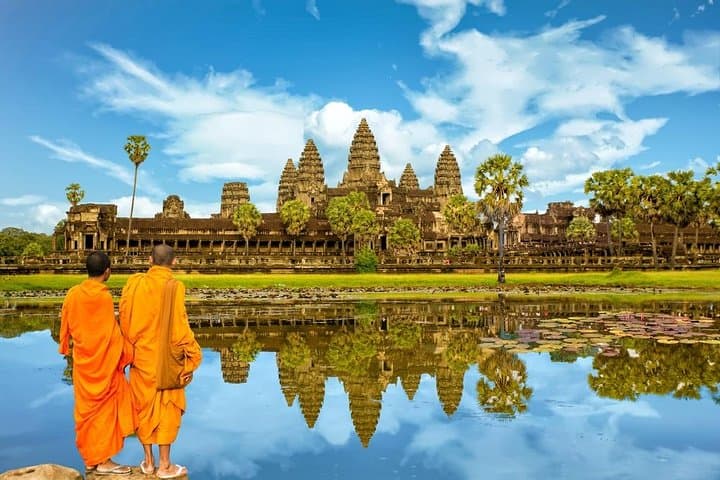
Culture here is tactile—monks’ saffron robes along causeways, local artisans repairing sandstone, villagers on their boat platforms. Conservation is visible in controlled access and APSARA-managed zones; avoid touching bas‑reliefs and remain on marked paths.
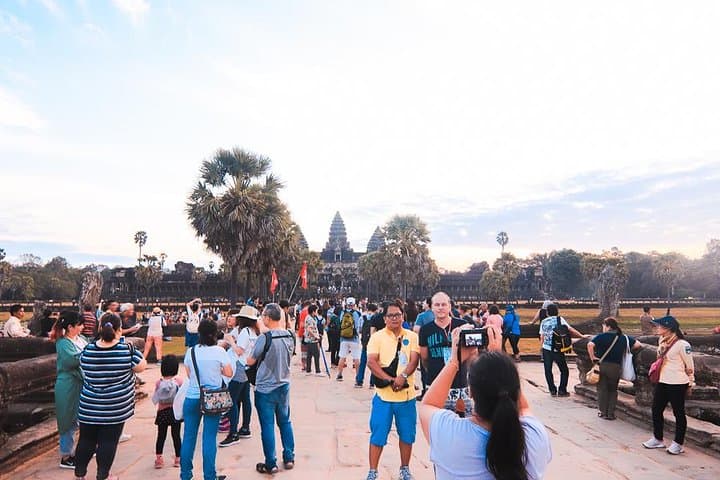
Practical guidance: plan early starts to beat heat and crowds, bring a lightweight rain layer for sudden showers, and wear sturdy, breathable shoes for uneven sandstone and wooden walkways on Tonle Sap. Expect guided walking of up to a few hours each day with short vehicle transfers; camera batteries, respectful clothing (shoulders and knees covered) and hydration are the essentials for a satisfying, low‑impact visit.
easy.
3 days.
Light to moderate—suitable for travelers who can walk 1–3 miles over uneven ground and climb short flights of steps.
Yes—buy a pass at the official ticket center (near Angkor Archaeological Park) or arrange it through your operator; multi‑day passes cover consecutive days.
Operators normally provide life jackets and follow calm‑water routes; pick licensed boats and avoid travel during rough weather warnings.
You can visit independently, but local guides add historical context, help navigate the site efficiently, and enhance safety in crowded spots.
Modest clothing that covers shoulders and knees; lightweight fabrics are best for Cambodia’s heat and humidity.
Angkor’s temple complex grew around a sophisticated water‑management system that supported the Khmer capital between the 9th and 15th centuries, reflecting both religious and hydraulic engineering achievements.
APSARA Authority manages visitor flows and restoration to limit erosion and vandalism; stick to marked paths, avoid climbing on carvings, and minimize single‑use plastics.
Cambodia Voluntour - Day Tours operates guided outdoor trips and adventures with an emphasis on safety, stewardship, and memorable experiences.
You step from the air-conditioned van into a wash of warm light and the carved stone faces of Bayon watch you like a city of patient gods. Morning light sharpens bas-reliefs; later the mangled roots of silk‑cotton trees at Ta Prohm reach down and tug at the temple as if trying to keep it awake. Over three days this classic circuit moves from the compact grandeur of Angkor Wat to Angkor Thom’s cavernous galleries and, on the last afternoon, across the wide, restless water of Tonle Sap to floating villages.
You step from the air-conditioned van into a wash of warm light and the carved stone faces of Bayon watch you like a city of patient gods. Morning light sharpens bas-reliefs; later the mangled roots of silk‑cotton trees at Ta Prohm reach down and tug at the temple as if trying to keep it awake. Over three days this classic circuit moves from the compact grandeur of Angkor Wat to Angkor Thom’s cavernous galleries and, on the last afternoon, across the wide, restless water of Tonle Sap to floating villages.
These monuments record the apex of the Khmer Empire: Angkor Wat built by Suryavarman II in the 12th century, Bayon’s enigmatic faces from Jayavarman VII, and Ta Prohm’s famous tree-overgrowth from later reclamation. Geologically the area is low-lying alluvial plain fed by the Tonle Sap and Siem Reap River, which swells dramatically during monsoon months and shaped the ancient reservoirs that supported Angkor’s hydraulic city.
Culture here is tactile—monks’ saffron robes along causeways, local artisans repairing sandstone, villagers on their boat platforms. Conservation is visible in controlled access and APSARA-managed zones; avoid touching bas‑reliefs and remain on marked paths.
Practical guidance: plan early starts to beat heat and crowds, bring a lightweight rain layer for sudden showers, and wear sturdy, breathable shoes for uneven sandstone and wooden walkways on Tonle Sap. Expect guided walking of up to a few hours each day with short vehicle transfers; camera batteries, respectful clothing (shoulders and knees covered) and hydration are the essentials for a satisfying, low‑impact visit.