THE ADVENTURE COLLECTIVE® · Independent discovery and booking for outdoor travel

Travel from Nairobi to Amboseli for a three-day guided safari that maximizes wildlife viewing beneath Kilimanjaro’s peak. Expect relaxed game drives, Observation Hill panoramas, and repeated chances to photograph elephant herds across wetlands and open plains.
Travel from Nairobi to Amboseli for a three-day guided safari that maximizes wildlife viewing beneath Kilimanjaro’s peak. Expect relaxed game drives, Observation Hill panoramas, and repeated chances to photograph elephant herds across wetlands and open plains.
You step out of the vehicle as dawn pries open the sky and Kilimanjaro’s white crown pins the horizon. The air in Amboseli is dry and sharp, the plain wide and low: elephants moving with deliberate ease, zebra stripes cutting across ochre grass, and the shallow swamps reflecting a pale, high sun.
Verified experiences and guided adventures in the surrounding area.
Operated by day to day Tours and safaris, Kenya · Amboseli, Kajiado County
You step out of the vehicle as dawn pries open the sky and Kilimanjaro’s white crown pins the horizon. The air in Amboseli is dry and sharp, the plain wide and low: elephants moving with deliberate ease, zebra stripes cutting across ochre grass, and the shallow swamps reflecting a pale, high sun.
Amboseli sits at roughly 1,050–1,200 m elevation at the foot of Kilimanjaro and covers about 392 km² of savannah, seasonal wetlands, and salt flats. The park’s soils are volcanic ash and silt washed down from Kilimanjaro over millennia, creating the mosaic of swamp channels and hardpan plains that attract megafauna. The Maasai have grazed these lowlands for generations; cultural encounters with local communities are part of the landscape’s human story.
Over three days you move with the park’s rhythm: an early morning drive when predators and grazers converge, a midday lull at the lodge, and golden-hour tracking of elephant herds with the mountain looming like an enormous weathered wall. Observation Hill offers a brief climb for panorama rather than a technical ascent—expect only modest elevation gain but expansive sightlines.
Practical guidance: Nairobi to Amboseli is about a 4–5 hour drive (roughly 240 km) on a mix of tarmac and graded roads. Pack sun protection, a mid-weight layer for cool mornings, binoculars and a camera with a telephoto lens, and plan for dusty conditions. Hydrate, carry cash for park tips and incidental fees, and limit noise on drives—wildlife responds to stillness. Three days gives time to photograph, track different habitats, and enjoy a relaxed pace inside the park.
easy.
3 days.
Light fitness required—long periods in a vehicle with short guided walks and occasional steps on uneven ground.
Expect about 4–5 hours (≈240 km) depending on traffic and road conditions; the route combines tarmac and graded sections.
This specific tour typically includes accommodation and game drives; confirm entrance fees and any additional conservation levies with the operator at booking.
Yes—this itinerary is rated easy and accommodates most ages, but long vehicle rides may be tiring for very young children or travelers with limited mobility.
Amboseli is renowned for large elephant herds, and visitors commonly see buffalo, zebra, giraffe and predators like lions and cheetahs; rarer sightings can include wild dogs and hyenas.
Amboseli has long been part of Maasai grazing lands; it was designated a national park in 1974 to protect the unique wetland–savannah ecosystem at Kilimanjaro’s foothills.
Conservation efforts focus on protecting elephant migration corridors, managing water flow in the swamps, and working with Maasai communities to balance wildlife protection and pastoral livelihoods.
day to day Tours and safaris, Kenya operates guided outdoor trips and adventures with an emphasis on safety, stewardship, and memorable experiences.


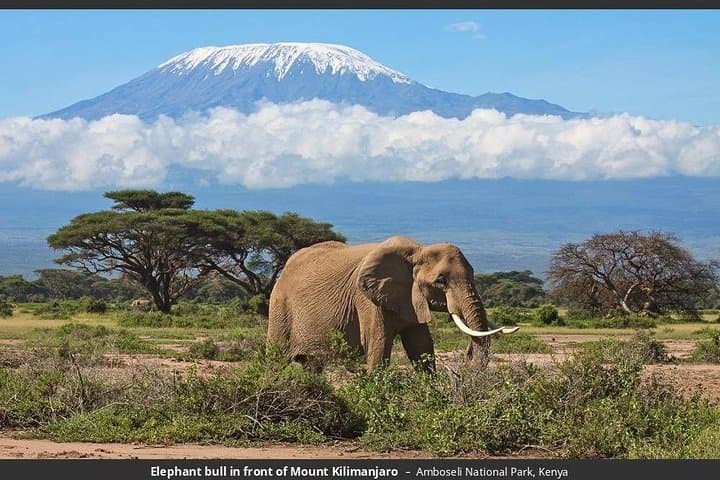

You step out of the vehicle as dawn pries open the sky and Kilimanjaro’s white crown pins the horizon. The air in Amboseli is dry and sharp, the plain wide and low: elephants moving with deliberate ease, zebra stripes cutting across ochre grass, and the shallow swamps reflecting a pale, high sun.
You step out of the vehicle as dawn pries open the sky and Kilimanjaro’s white crown pins the horizon. The air in Amboseli is dry and sharp, the plain wide and low: elephants moving with deliberate ease, zebra stripes cutting across ochre grass, and the shallow swamps reflecting a pale, high sun.
Amboseli sits at roughly 1,050–1,200 m elevation at the foot of Kilimanjaro and covers about 392 km² of savannah, seasonal wetlands, and salt flats. The park’s soils are volcanic ash and silt washed down from Kilimanjaro over millennia, creating the mosaic of swamp channels and hardpan plains that attract megafauna. The Maasai have grazed these lowlands for generations; cultural encounters with local communities are part of the landscape’s human story.
Over three days you move with the park’s rhythm: an early morning drive when predators and grazers converge, a midday lull at the lodge, and golden-hour tracking of elephant herds with the mountain looming like an enormous weathered wall. Observation Hill offers a brief climb for panorama rather than a technical ascent—expect only modest elevation gain but expansive sightlines.
Practical guidance: Nairobi to Amboseli is about a 4–5 hour drive (roughly 240 km) on a mix of tarmac and graded roads. Pack sun protection, a mid-weight layer for cool mornings, binoculars and a camera with a telephoto lens, and plan for dusty conditions. Hydrate, carry cash for park tips and incidental fees, and limit noise on drives—wildlife responds to stillness. Three days gives time to photograph, track different habitats, and enjoy a relaxed pace inside the park.