THE ADVENTURE COLLECTIVE® · Independent discovery and booking for outdoor travel

A three-day overland route from Agadir to Merzouga that mixes highland passes, UNESCO kasbahs, and an overnight in the Erg Chebbi dunes. Expect long drives, a camel trek to a desert camp, sunrise over rippled sand, and cultural stops through Ouarzazate and the Draa Valley.
A three-day overland route from Agadir to Merzouga that mixes highland passes, UNESCO kasbahs, and an overnight in the Erg Chebbi dunes. Expect long drives, a camel trek to a desert camp, sunrise over rippled sand, and cultural stops through Ouarzazate and the Draa Valley.
The morning sun lifts off the Atlantic as the minivan peels out of Agadir and climbs toward the Sirwa and Anti-Atlas foothills—rocky ridgelines that push you inland and into a different Morocco. By midday you stand outside the adobe folds of Ait Ben Haddou, a UNESCO kasbah that has watched caravans and cameras pass for centuries. The road keeps giving: palm-fringed oases, rose-scented valleys, and the sudden, vertical walls of Todra Gorge that seem to challenge you to keep driving.
Verified experiences and guided adventures in the surrounding area.
Operated by Marrakech day Trip · Merzouga, Drâa-Tafilalet
The morning sun lifts off the Atlantic as the minivan peels out of Agadir and climbs toward the Sirwa and Anti-Atlas foothills—rocky ridgelines that push you inland and into a different Morocco. By midday you stand outside the adobe folds of Ait Ben Haddou, a UNESCO kasbah that has watched caravans and cameras pass for centuries. The road keeps giving: palm-fringed oases, rose-scented valleys, and the sudden, vertical walls of Todra Gorge that seem to challenge you to keep driving.
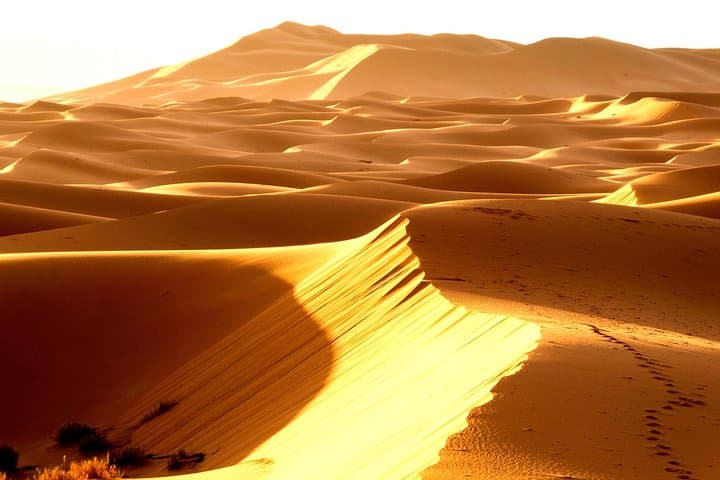
Geology here reads like a field manual—folded sedimentary layers, eroded spines of the High Atlas, and the sweeping sand sea of Erg Chebbi where dunes reach roughly 100–150 meters and reshape with every wind. Culturally, the route traces historic caravan corridors: saffron farms near Taliouine, fortified kasbahs in Skoura, and market towns where dates and silver trade hands.
On arrival in Merzouga you swap wheels for camels: a 60–90 minute trek across shifting sand to a camp where tents, Berber music, and a wide sky frame sunrise and moonrise. Expect long driving stretches, short hikes around gorges, and one night under desert stars.
Practical notes: pack layers for cold desert nights, bring sun protection and a reusable water bottle, and plan for multi-hour transfers on narrow mountain roads. Mobile service can be sporadic beyond towns—download maps and keep cash for remote stops. This is a travel-first tour: manageable walking, immersive landscapes, and an easy way to experience Sahara terrain without technical gear.
moderate.
3 days.
Suitable for travelers in average fitness: prolonged vehicle time with short walks, a camel ride and moderate mobility required for dunes and gorges.
The camel ride to camp is gentle and suitable for most people; you’ll sit in a saddle for 60–90 minutes and dismount onto sand—no riding skills required.
Temperatures can drop significantly—bring a warm midlayer, long pants, and closed shoes; a hat and gloves may be useful in colder months.
The itinerary is family-friendly and listed as easy in terms of fitness, but long vehicle days and sand travel may be tiring—check accessibility needs beforehand.
Signal is intermittent outside towns like Ouarzazate and Merzouga; carry cash for small purchases as ATMs are limited between major towns.
The route follows historic trans-Saharan corridors; Ait Ben Haddou and oasis kasbahs were strategic posts on caravan routes connecting sub-Saharan trade to coastal cities.
The Sahara’s fragile dunes and oases are sensitive to vehicle traffic and waste—use established camel routes, avoid disturbing flora, and pack out refuse to minimize impact.
Marrakech day Trip operates guided outdoor trips and adventures with an emphasis on safety, stewardship, and memorable experiences.
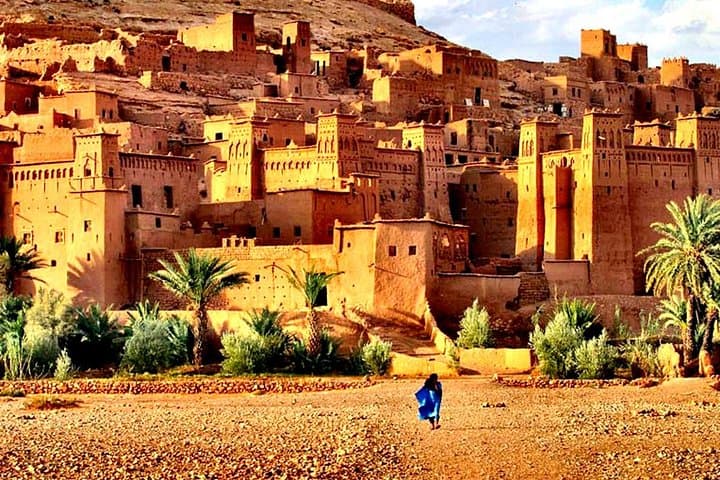
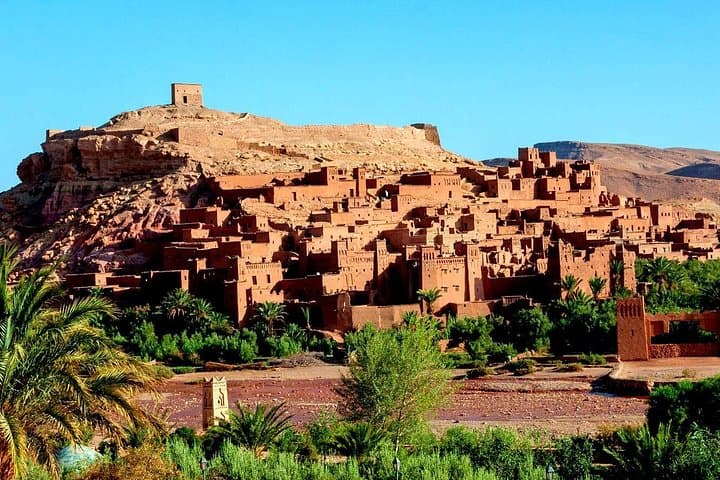
The morning sun lifts off the Atlantic as the minivan peels out of Agadir and climbs toward the Sirwa and Anti-Atlas foothills—rocky ridgelines that push you inland and into a different Morocco. By midday you stand outside the adobe folds of Ait Ben Haddou, a UNESCO kasbah that has watched caravans and cameras pass for centuries. The road keeps giving: palm-fringed oases, rose-scented valleys, and the sudden, vertical walls of Todra Gorge that seem to challenge you to keep driving.
The morning sun lifts off the Atlantic as the minivan peels out of Agadir and climbs toward the Sirwa and Anti-Atlas foothills—rocky ridgelines that push you inland and into a different Morocco. By midday you stand outside the adobe folds of Ait Ben Haddou, a UNESCO kasbah that has watched caravans and cameras pass for centuries. The road keeps giving: palm-fringed oases, rose-scented valleys, and the sudden, vertical walls of Todra Gorge that seem to challenge you to keep driving.
Geology here reads like a field manual—folded sedimentary layers, eroded spines of the High Atlas, and the sweeping sand sea of Erg Chebbi where dunes reach roughly 100–150 meters and reshape with every wind. Culturally, the route traces historic caravan corridors: saffron farms near Taliouine, fortified kasbahs in Skoura, and market towns where dates and silver trade hands.
On arrival in Merzouga you swap wheels for camels: a 60–90 minute trek across shifting sand to a camp where tents, Berber music, and a wide sky frame sunrise and moonrise. Expect long driving stretches, short hikes around gorges, and one night under desert stars.
Practical notes: pack layers for cold desert nights, bring sun protection and a reusable water bottle, and plan for multi-hour transfers on narrow mountain roads. Mobile service can be sporadic beyond towns—download maps and keep cash for remote stops. This is a travel-first tour: manageable walking, immersive landscapes, and an easy way to experience Sahara terrain without technical gear.