THE ADVENTURE COLLECTIVE® · Independent discovery and booking for outdoor travel

Cross from Agadir’s Atlantic plain to the rippling dunes of Merzouga in three days of kasbahs, gorges, and Atlas passes. Expect long drives, dramatic geology, and a night under desert stars.
Cross from Agadir’s Atlantic plain to the rippling dunes of Merzouga in three days of kasbahs, gorges, and Atlas passes. Expect long drives, dramatic geology, and a night under desert stars.
Dust from the Atlantic still clings to the windows as the road peels away from Agadir and climbs toward the High Atlas, a spine of rock that forces climates and cultures to split and reconfigure.
Verified experiences and guided adventures in the surrounding area.
Operated by Tours Around Morocco · Merzouga, Drâa-Tafilalet
Dust from the Atlantic still clings to the windows as the road peels away from Agadir and climbs toward the High Atlas, a spine of rock that forces climates and cultures to split and reconfigure.
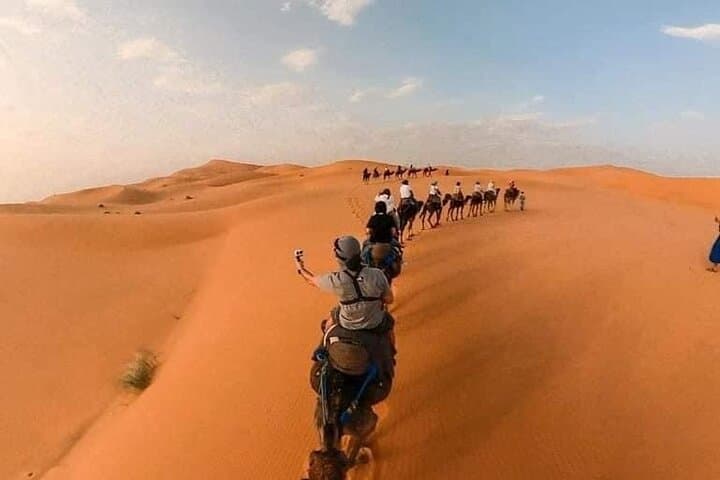
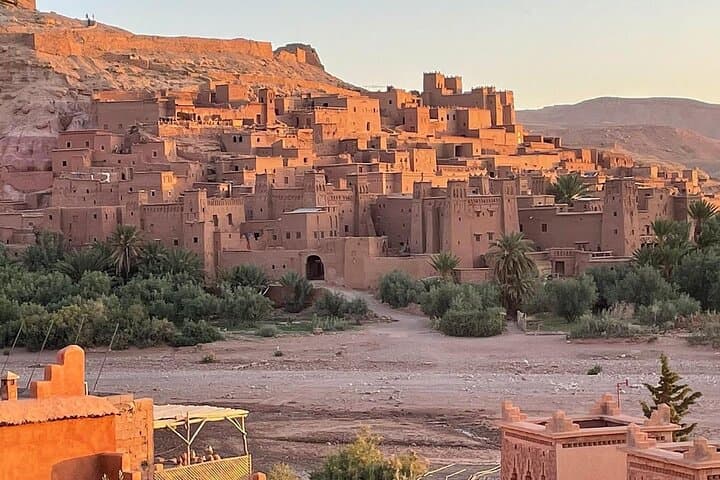
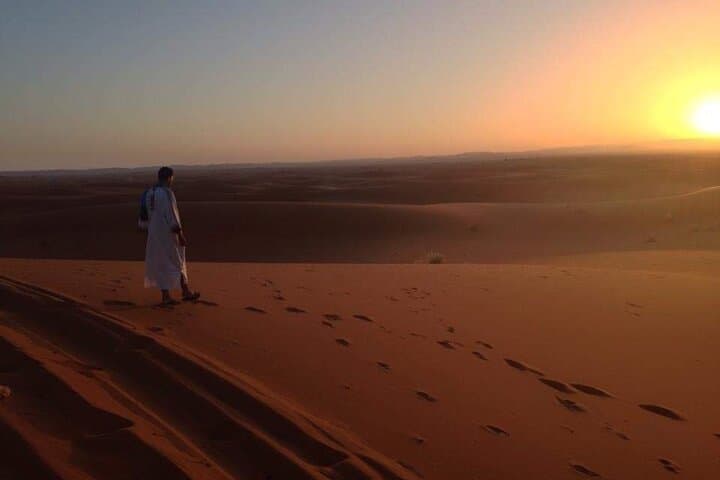
Over three days, you move from blue coast to ochre sand: low farmland and saffron fields around Taliouine give way to fortified kasbahs at Ouarzazate, then the vertical walls of Todra Gorge, and finally the rippling sea of dunes at Merzouga where camels tread in patient lines and the sand seems to inhale at sunset.
This route threads centuries of trade and empire — caravan tracks, ksar clusters, and kasbah architecture marking routes once used for salt and saffron. Geologically, the Atlas is an uplifted, folded range while the Erg Chebbi dunes near Merzouga are wind-built, migrating ridges of quartz and feldspar that shift with seasonal winds.
Culturally, travelers encounter Berber villages, palm oases, and roadside fossil workshops in Erfoud; local cuisine centers on tagine, mint tea, and roasted lamb. Nights in a desert camp offer clear skies and a working knowledge of desert rhythm: long days, cold nights, and astonishing stars.
Practical guidance: prepare for long drives (several 4–6 hour legs), bring layered clothes for temperature swings, and prioritize sun protection and hydration. Wear sturdy shoes for short hikes in Todra Gorge and on dune flanks, and time dune visits for sunrise or sunset to avoid midday heat. Expect basic three-star hotels in towns and a standard desert camp for the night in Merzouga. The trip rewards patient travelers with varied terrain, tactile culture, and stark, moving landscapes that change with every mile.
moderate.
3 days.
Moderate fitness recommended—able to handle multi-hour drives, short hikes, and uneven terrain.
Yes—camel treks to the camp are short and guided; staff help mount/dismount and pace is steady, but let them know if you have back problems.
Expect driving days of roughly 4–6 hours between stops, with the longest transfer (Merzouga to Marrakech) around 9–10 hours total including stops.
Standard desert camps include sleeping tents with basic bedding and shared sanitation; upscale options may have private facilities—check the itinerary.
Breakfast and two dinners are included per the itinerary; bring snacks for long transfers or dietary preferences and notify of any restrictions ahead of booking.
The route follows ancient caravan and trans-Saharan trade corridors; fortified kasbahs served as caravan stops and family strongholds for regional tribes.
Stick to established tracks and camps; desert soils and oases are fragile, so avoid trampling dune vegetation and pack out rubbish to minimize impact.
Tours Around Morocco operates guided outdoor trips and adventures with an emphasis on safety, stewardship, and memorable experiences.
Dust from the Atlantic still clings to the windows as the road peels away from Agadir and climbs toward the High Atlas, a spine of rock that forces climates and cultures to split and reconfigure.
Dust from the Atlantic still clings to the windows as the road peels away from Agadir and climbs toward the High Atlas, a spine of rock that forces climates and cultures to split and reconfigure.
Over three days, you move from blue coast to ochre sand: low farmland and saffron fields around Taliouine give way to fortified kasbahs at Ouarzazate, then the vertical walls of Todra Gorge, and finally the rippling sea of dunes at Merzouga where camels tread in patient lines and the sand seems to inhale at sunset.
This route threads centuries of trade and empire — caravan tracks, ksar clusters, and kasbah architecture marking routes once used for salt and saffron. Geologically, the Atlas is an uplifted, folded range while the Erg Chebbi dunes near Merzouga are wind-built, migrating ridges of quartz and feldspar that shift with seasonal winds.
Culturally, travelers encounter Berber villages, palm oases, and roadside fossil workshops in Erfoud; local cuisine centers on tagine, mint tea, and roasted lamb. Nights in a desert camp offer clear skies and a working knowledge of desert rhythm: long days, cold nights, and astonishing stars.
Practical guidance: prepare for long drives (several 4–6 hour legs), bring layered clothes for temperature swings, and prioritize sun protection and hydration. Wear sturdy shoes for short hikes in Todra Gorge and on dune flanks, and time dune visits for sunrise or sunset to avoid midday heat. Expect basic three-star hotels in towns and a standard desert camp for the night in Merzouga. The trip rewards patient travelers with varied terrain, tactile culture, and stark, moving landscapes that change with every mile.