THE ADVENTURE COLLECTIVE® · Independent discovery and booking for outdoor travel

Three days across the Aegean coast take you from the Dardanelles and Troy to the marble streets of Ephesus and the travertine pools of Pamukkale. This compact route mixes iconic archaeology, mineral springs and Cretan-to-Roman layers with practical travel over three active days.
Three days across the Aegean coast take you from the Dardanelles and Troy to the marble streets of Ephesus and the travertine pools of Pamukkale. This compact route mixes iconic archaeology, mineral springs and Cretan-to-Roman layers with practical travel over three active days.
You step off the minivan in a warm breeze that smells of sea salt and olive oil; limestone terraces glimmer to your left, and the ruins of a once-mighty city open like a book to your right. Over three days this loop across western Turkey moves from the narrow waters of the Dardanelles through Homeric Troy, past the marble streets of Ephesus, and up to the milky cascades of Pamukkale.
Verified experiences and guided adventures in the surrounding area.
Operated by TRAVELIUM · Selçuk, İzmir Province
You step off the minivan in a warm breeze that smells of sea salt and olive oil; limestone terraces glimmer to your left, and the ruins of a once-mighty city open like a book to your right. Over three days this loop across western Turkey moves from the narrow waters of the Dardanelles through Homeric Troy, past the marble streets of Ephesus, and up to the milky cascades of Pamukkale.
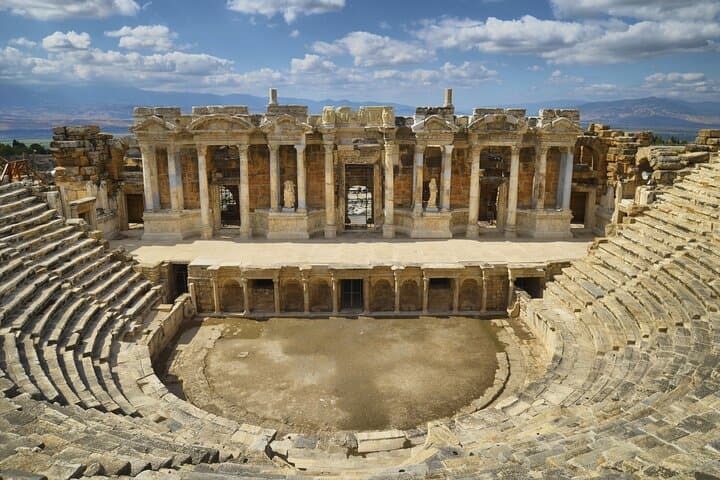
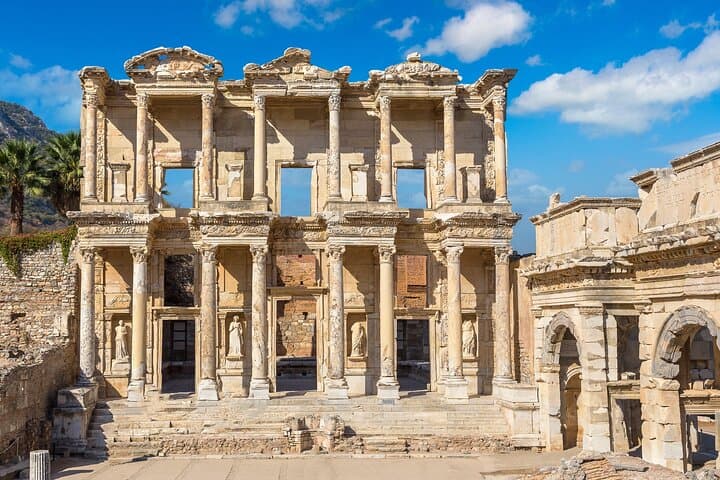
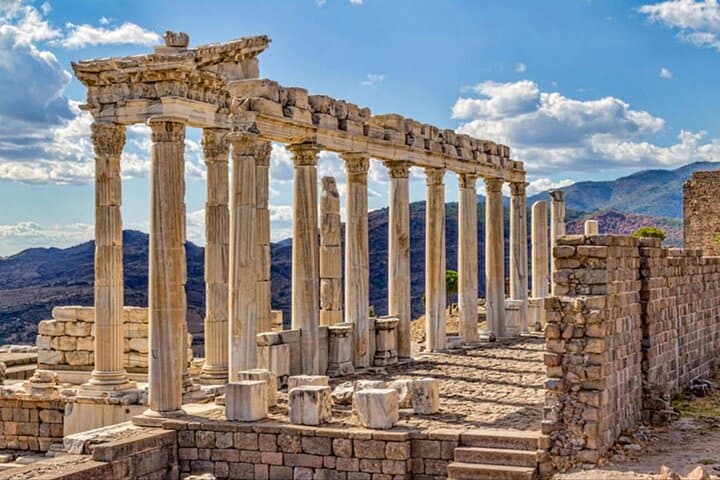
These places are lived-in layers of history and geology. Troy’s hill (Hisarlik) bears Bronze Age and Roman phases tied to epic memory; Pergamum’s acropolis rose where tectonic uplift carved steep terraces and city planners stacked theaters and temples into the slope. Ephesus preserves a Roman urban grid — marble roads, the Celsus façade and a theatre that once held 25,000 — while Pamukkale’s travertine terraces were built by calcium-rich springs depositing mineral curtains over millennia.
Culture here is direct: small-town hospitality in İzmir province, olive groves that still supply local presses, and villages where you’ll hear a mix of Turkish and Aegean coastal English. Guides mix archaeology with practical route knowledge; transport is by private vehicle with an included domestic flight between Istanbul and İzmir.
Practical guidance: expect three active days with museum-park walking, uneven stone and heat in summer. Bring sturdy walking shoes, sun protection and a refillable water bottle; modest dress for religious shrines; and a light waterproof in spring/fall. Start early to avoid the crowds at Ephesus, and allow 1–3 hours at major sites. The tour combines direct access to top monuments with the rhythm and pace of coastal Turkey — historically dense, geologically dramatic, and quietly hospitable.
moderate.
3 days.
Moderate — able to walk several kilometers over uneven surfaces and climb stairs; not technically demanding.
Yes — the itinerary indicates a private tour with transport and a dedicated guide.
Inclusions list guide, private transport, two nights’ accommodation and a domestic flight; most archaeological site admissions and meals are typically not included unless specified.
Expect multiple short-to-moderate walks (1–4 km) across uneven ancient surfaces and stairs; plan for 2–4 hours of on-foot sightseeing each day.
Yes — international travelers need a valid passport for domestic flights and border entry checks; bring copies and note passport details during booking.
This corridor of western Anatolia hosted Bronze Age Troy, Hellenistic Pergamum and Roman Ephesus; each site reflects different urban planning and imperial influence across millennia.
Sites are managed to balance public access and preservation—stay on marked paths, avoid climbing ruins, and minimize single-use plastics to reduce local impact.
TRAVELIUM operates guided outdoor trips and adventures with an emphasis on safety, stewardship, and memorable experiences.

You step off the minivan in a warm breeze that smells of sea salt and olive oil; limestone terraces glimmer to your left, and the ruins of a once-mighty city open like a book to your right. Over three days this loop across western Turkey moves from the narrow waters of the Dardanelles through Homeric Troy, past the marble streets of Ephesus, and up to the milky cascades of Pamukkale.
You step off the minivan in a warm breeze that smells of sea salt and olive oil; limestone terraces glimmer to your left, and the ruins of a once-mighty city open like a book to your right. Over three days this loop across western Turkey moves from the narrow waters of the Dardanelles through Homeric Troy, past the marble streets of Ephesus, and up to the milky cascades of Pamukkale.
These places are lived-in layers of history and geology. Troy’s hill (Hisarlik) bears Bronze Age and Roman phases tied to epic memory; Pergamum’s acropolis rose where tectonic uplift carved steep terraces and city planners stacked theaters and temples into the slope. Ephesus preserves a Roman urban grid — marble roads, the Celsus façade and a theatre that once held 25,000 — while Pamukkale’s travertine terraces were built by calcium-rich springs depositing mineral curtains over millennia.
Culture here is direct: small-town hospitality in İzmir province, olive groves that still supply local presses, and villages where you’ll hear a mix of Turkish and Aegean coastal English. Guides mix archaeology with practical route knowledge; transport is by private vehicle with an included domestic flight between Istanbul and İzmir.
Practical guidance: expect three active days with museum-park walking, uneven stone and heat in summer. Bring sturdy walking shoes, sun protection and a refillable water bottle; modest dress for religious shrines; and a light waterproof in spring/fall. Start early to avoid the crowds at Ephesus, and allow 1–3 hours at major sites. The tour combines direct access to top monuments with the rhythm and pace of coastal Turkey — historically dense, geologically dramatic, and quietly hospitable.