THE ADVENTURE COLLECTIVE® · Independent discovery and booking for outdoor travel

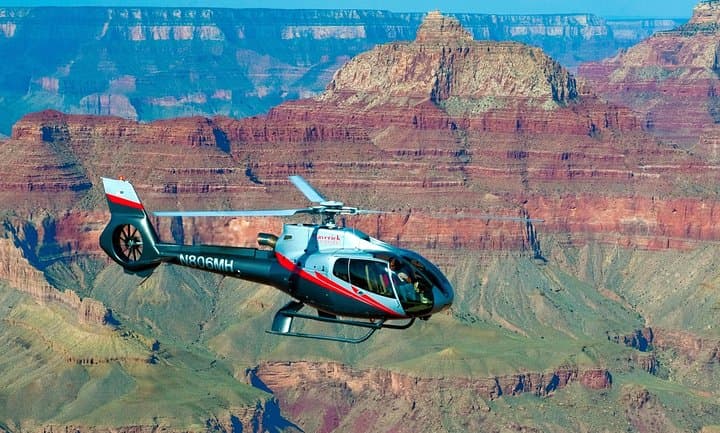
A 25-minute ECO-Star helicopter flight lifts you from Tusayan over the Kaibab National Forest into the Dragon Corridor, offering panoramic views of the Colorado River, the Tower of Ra and exposed Vishnu Schist. Ideal for travelers short on time who want a concentrated, dramatic perspective of the Grand Canyon.
A 25-minute ECO-Star helicopter flight lifts you from Tusayan over the Kaibab National Forest into the Dragon Corridor, offering panoramic views of the Colorado River, the Tower of Ra and exposed Vishnu Schist. Ideal for travelers short on time who want a concentrated, dramatic perspective of the Grand Canyon.
The helicopter rises with a measured, machine-like patience; the ECO-Star’s rotors carve the thin air above Tusayan and the world of highways and gift shops shrinks into a miniature diorama. Glass curves around every seat, so the first inhale is of scale: a sudden gape at the Kaibab National Forest, where ponderosa pines crowd the plateau and the land leans toward the Canyon like a city leaning over a cliff.
Verified experiences and guided adventures in the surrounding area.
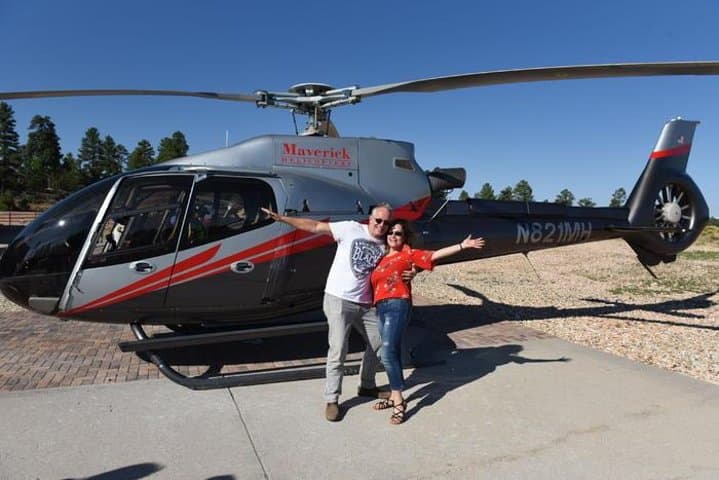
Operated by Maverick Helicopters AZ · Tusayan, Arizona
The helicopter rises with a measured, machine-like patience; the ECO-Star’s rotors carve the thin air above Tusayan and the world of highways and gift shops shrinks into a miniature diorama. Glass curves around every seat, so the first inhale is of scale: a sudden gape at the Kaibab National Forest, where ponderosa pines crowd the plateau and the land leans toward the Canyon like a city leaning over a cliff.
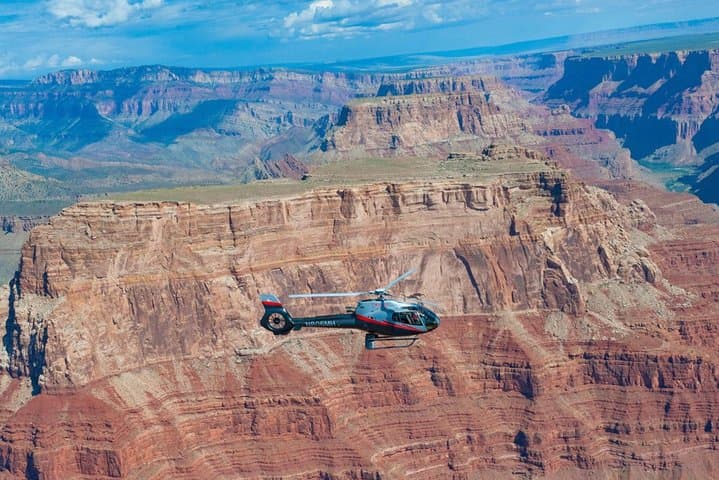
In 25 minutes you cross the rim and are folded into geologic time. The Dragon Corridor opens beneath you—wide and fierce—where the Colorado River threads a ribbon of green and steel through layers of stone. From above the Tower of Ra juts like a pillar of argument, and the dark, ancient Vishnu Schist reads like the Canyon’s oldest chapter: nearly two billion years made visible in banded, hard light.
This is a flight shaped by place and people. The South Rim around Tusayan was long traversed and watched by tribes including the Paiute and Hopi whose connections to the Canyon predate park status. The Kaibab National Forest that feeds the rim shelters the largest stand of ponderosa pines in the world, a backdrop that shifts with altitude and season.
The short duration concentrates the experience: there is little time for chatter once the helicopter leans north. Pilots aim the HD windows through the Dragon Corridor toward the North Rim and the Kaibab Plateau, rising to the edge at roughly 9,241 feet above sea level. For photographers and first-timers the effect is almost cinematic—light folding across strata, the river daring you to follow it downstream.
Practicalities keep this thrill accessible. Departure is from Grand Canyon National Park Airport in Tusayan; you must arrive at least 40 minutes before takeoff for check-in and weight-and-balance seating. Government photo ID is required, and passengers over 300 lbs will need to purchase an extra seat on-site for safety. Infants sit on laps; the aircraft is wheelchair accessible if someone in your party can assist with boarding.
Weather or minimum-passenger rules can cancel flights; the company offers a 45-minute upgrade for deeper canyon access if you want more air time. Pack windproof layers—the helicopter amplifies high-country chill—and a camera with a fast shutter and polarizer to cut glare from the river below. Above all, listen to crew briefings: they keep rhythm with FAA rules, and in the Grand Canyon, safety is the other kind of guide.
For a tight, unfiltered encounter with one of North America’s most elemental landscapes, the 25-minute Grand Canyon Dancer flight is a precise, airborne lens into geology, forest, and river—compact, intense, and unforgettable.
easy.
25 minutes.
No special fitness required beyond basic mobility to board a helicopter; passengers should be able to climb a small step and sit unassisted.
Yes—per FAA rules, passengers 18 and older must show government-issued photo ID that matches the booking name.
Yes—upgrades are typically offered for an additional fee; check availability when booking or ask at the terminal.
Infants are allowed but must sit on an adult’s lap; seats and weight must be declared at booking.
If canceled by the operator you’ll be offered a refund or alternative; if you cancel within three days of departure there is no refund per policy.
Seating is assigned after check-in based on weight and balance; operators cannot guarantee seats next to one another.
Yes, provided someone in your party can assist with boarding and disembarking; wheelchairs remain at the terminal during flight.
The Grand Canyon region has long historical ties to Native American tribes including the Paiute and Hopi; exposed rock layers like Vishnu Schist record nearly two billion years of Earth’s history.
The Grand Canyon and surrounding forests are federally managed—stay on designated paths, respect wildlife, and note that drones are prohibited to protect visitor safety and wildlife.
Maverick Helicopters AZ operates guided outdoor trips and adventures with an emphasis on safety, stewardship, and memorable experiences.
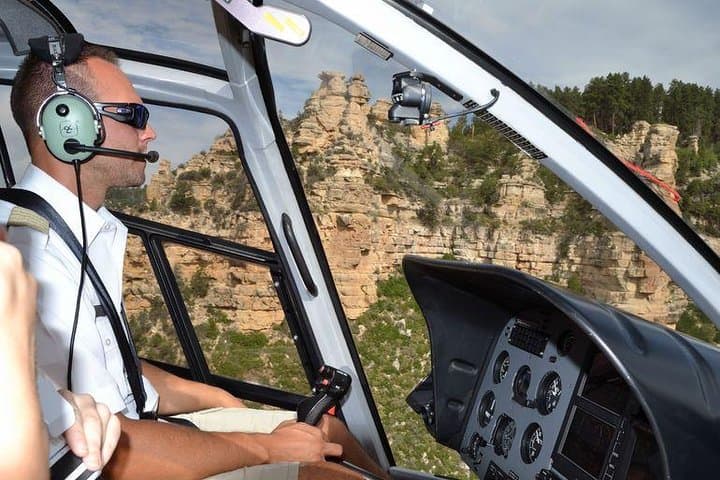
The helicopter rises with a measured, machine-like patience; the ECO-Star’s rotors carve the thin air above Tusayan and the world of highways and gift shops shrinks into a miniature diorama. Glass curves around every seat, so the first inhale is of scale: a sudden gape at the Kaibab National Forest, where ponderosa pines crowd the plateau and the land leans toward the Canyon like a city leaning over a cliff.
The helicopter rises with a measured, machine-like patience; the ECO-Star’s rotors carve the thin air above Tusayan and the world of highways and gift shops shrinks into a miniature diorama. Glass curves around every seat, so the first inhale is of scale: a sudden gape at the Kaibab National Forest, where ponderosa pines crowd the plateau and the land leans toward the Canyon like a city leaning over a cliff.
In 25 minutes you cross the rim and are folded into geologic time. The Dragon Corridor opens beneath you—wide and fierce—where the Colorado River threads a ribbon of green and steel through layers of stone. From above the Tower of Ra juts like a pillar of argument, and the dark, ancient Vishnu Schist reads like the Canyon’s oldest chapter: nearly two billion years made visible in banded, hard light.
This is a flight shaped by place and people. The South Rim around Tusayan was long traversed and watched by tribes including the Paiute and Hopi whose connections to the Canyon predate park status. The Kaibab National Forest that feeds the rim shelters the largest stand of ponderosa pines in the world, a backdrop that shifts with altitude and season.
The short duration concentrates the experience: there is little time for chatter once the helicopter leans north. Pilots aim the HD windows through the Dragon Corridor toward the North Rim and the Kaibab Plateau, rising to the edge at roughly 9,241 feet above sea level. For photographers and first-timers the effect is almost cinematic—light folding across strata, the river daring you to follow it downstream.
Practicalities keep this thrill accessible. Departure is from Grand Canyon National Park Airport in Tusayan; you must arrive at least 40 minutes before takeoff for check-in and weight-and-balance seating. Government photo ID is required, and passengers over 300 lbs will need to purchase an extra seat on-site for safety. Infants sit on laps; the aircraft is wheelchair accessible if someone in your party can assist with boarding.
Weather or minimum-passenger rules can cancel flights; the company offers a 45-minute upgrade for deeper canyon access if you want more air time. Pack windproof layers—the helicopter amplifies high-country chill—and a camera with a fast shutter and polarizer to cut glare from the river below. Above all, listen to crew briefings: they keep rhythm with FAA rules, and in the Grand Canyon, safety is the other kind of guide.
For a tight, unfiltered encounter with one of North America’s most elemental landscapes, the 25-minute Grand Canyon Dancer flight is a precise, airborne lens into geology, forest, and river—compact, intense, and unforgettable.