THE ADVENTURE COLLECTIVE® · Independent discovery and booking for outdoor travel

Trace Prague’s most consequential 20th‑century moments on a close‑quarters, three‑hour walking tour. Visit sites of resistance, memorials, and public art that map the city’s path from independence through occupation to peaceful revolution.
Trace Prague’s most consequential 20th‑century moments on a close‑quarters, three‑hour walking tour. Visit sites of resistance, memorials, and public art that map the city’s path from independence through occupation to peaceful revolution.
Stand beneath the gilded façade of Municipal House as trams sigh past and the city’s cobbles carry footprints of a tumultuous century. The air here holds the echo of declarations and the hush of memorials — you move from the pomp of 1918 to the shadows of occupation, then into the charged streets of dissent.
Verified experiences and guided adventures in the surrounding area.
Operated by Heart of Europe · Prague, Prague
Stand beneath the gilded façade of Municipal House as trams sigh past and the city’s cobbles carry footprints of a tumultuous century. The air here holds the echo of declarations and the hush of memorials — you move from the pomp of 1918 to the shadows of occupation, then into the charged streets of dissent.
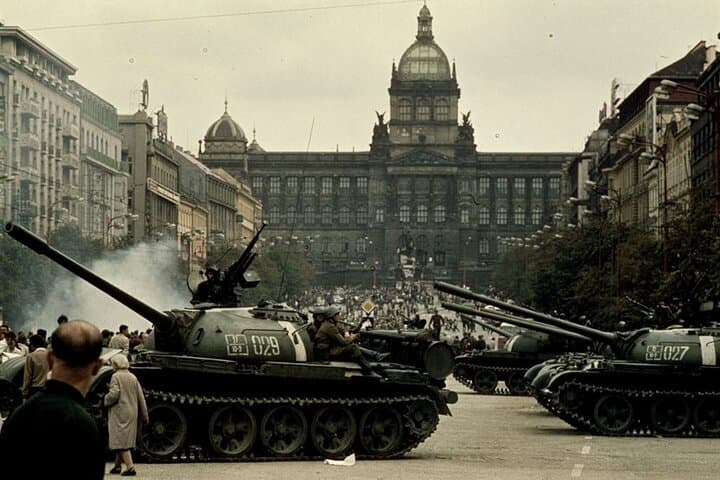
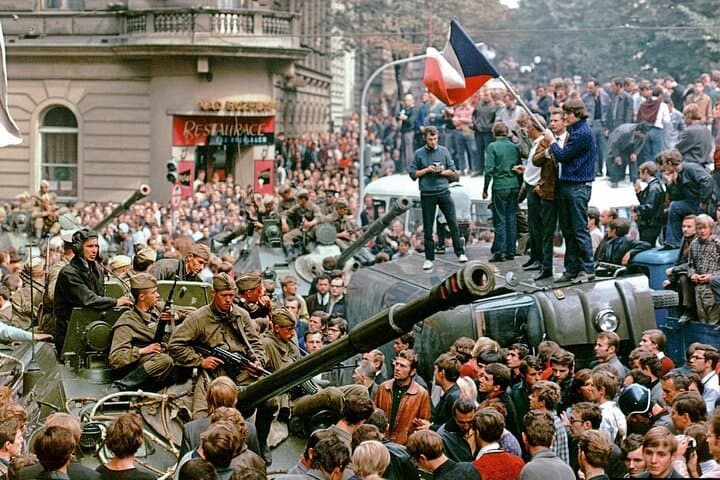
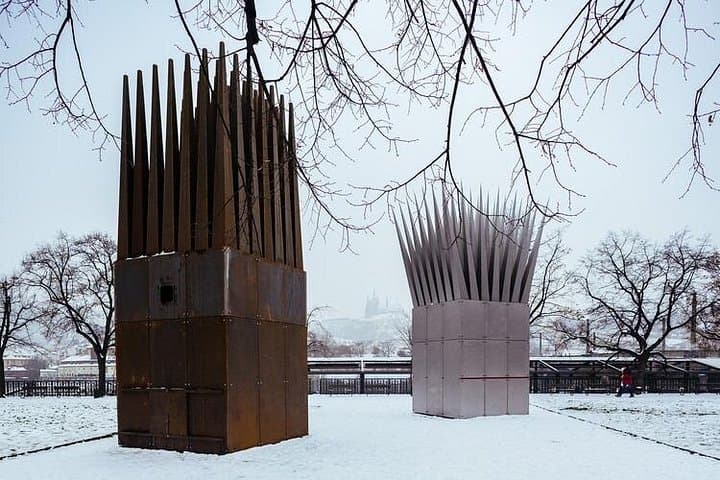
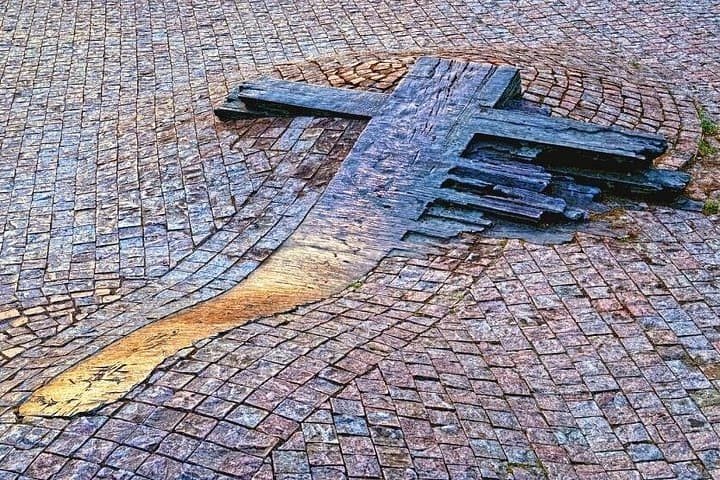
This three‑hour walk threads sites that shaped modern Czechoslovakia: the birth of the republic, the Nazi occupation and Operation Anthropoid (the assassination of Reinhard Heydrich), the failed liberalizing attempt of 1968 known as the Prague Spring, Jan Palach’s sacrifice that jolted a nation, and the peaceful mass protests of the 1989 Velvet Revolution that brought down one‑party rule. Prague’s built landscape — river terraces, Baroque squares and interwar modernism — is the stage for those events; public art like David Černý’s spinning head and monuments to Václav Havel appear as punctuation marks in the narrative.
Expect urban terrain: paved streets, short stairways and occasional tram crossings. The guide stops at plazas, memorials and inside passageways such as Lucerna Palace to illustrate social and cultural threads — literary life, dissident theater and the role of samizdat press.
Practicalities: meet at Municipal House, allow three hours, and bring a public transport ticket if you plan to hop on nearby trams afterwards (one is included). The tour is limited to 10 people for an intimate pace; it’s stroller‑friendly and accessible for most fitness levels. Wear comfortable shoes, carry water, and be prepared to listen closely — this is a walking lesson in 20th‑century Europe where stones speak and the city asks you to remember.
easy.
3 hours.
Suitable for most fitness levels — involves continuous walking on paved surfaces and brief stair sections.
The meeting point is at the main entrance of Municipal House (Obecní dům) near Náměstí Republiky; the tour finishes near the crypt associated with the Operation Anthropoid sites.
Yes — the provider notes stroller accessibility and a generally easy pace, though some streets have cobblestones.
Language offerings vary by operator; check the booking page for available languages and confirm at booking.
This walking tour focuses on exterior sites and public memorials; individual museum admissions are typically not included.
Prague’s 20th century was shaped by rapid political shifts—from 1918 independence to Nazi occupation, the 1968 Prague Spring clampdown, and the nonviolent Velvet Revolution of 1989 that ended communist rule.
Historic sites require respectful visitation: stay on designated paths, avoid touching memorial plaques and help reduce wear by following group size limits and local guidance.
Heart of Europe operates guided outdoor trips and adventures with an emphasis on safety, stewardship, and memorable experiences.
Stand beneath the gilded façade of Municipal House as trams sigh past and the city’s cobbles carry footprints of a tumultuous century. The air here holds the echo of declarations and the hush of memorials — you move from the pomp of 1918 to the shadows of occupation, then into the charged streets of dissent.
Stand beneath the gilded façade of Municipal House as trams sigh past and the city’s cobbles carry footprints of a tumultuous century. The air here holds the echo of declarations and the hush of memorials — you move from the pomp of 1918 to the shadows of occupation, then into the charged streets of dissent.
This three‑hour walk threads sites that shaped modern Czechoslovakia: the birth of the republic, the Nazi occupation and Operation Anthropoid (the assassination of Reinhard Heydrich), the failed liberalizing attempt of 1968 known as the Prague Spring, Jan Palach’s sacrifice that jolted a nation, and the peaceful mass protests of the 1989 Velvet Revolution that brought down one‑party rule. Prague’s built landscape — river terraces, Baroque squares and interwar modernism — is the stage for those events; public art like David Černý’s spinning head and monuments to Václav Havel appear as punctuation marks in the narrative.
Expect urban terrain: paved streets, short stairways and occasional tram crossings. The guide stops at plazas, memorials and inside passageways such as Lucerna Palace to illustrate social and cultural threads — literary life, dissident theater and the role of samizdat press.
Practicalities: meet at Municipal House, allow three hours, and bring a public transport ticket if you plan to hop on nearby trams afterwards (one is included). The tour is limited to 10 people for an intimate pace; it’s stroller‑friendly and accessible for most fitness levels. Wear comfortable shoes, carry water, and be prepared to listen closely — this is a walking lesson in 20th‑century Europe where stones speak and the city asks you to remember.