THE ADVENTURE COLLECTIVE® · Independent discovery and booking for outdoor travel

A concise two-hour cruise from Clayton that threads narrow channels and circles islands of the St. Lawrence—no passport required for U.S. departures. Ideal for birders, photographers and anyone seeking a close-up look at the Thousand Islands’ geology and history.
A concise two-hour cruise from Clayton that threads narrow channels and circles islands of the St. Lawrence—no passport required for U.S. departures. Ideal for birders, photographers and anyone seeking a close-up look at the Thousand Islands’ geology and history.
You step onto a low-profile cruiser at Clayton’s blue ticket booth and the river opens like a room of islands—granite knuckles, narrow channels, and bays that keep their own quiet. The captain threads the boat into channels that feel private, skimming past tiny sandy spits and cottages whose docks point like outstretched hands toward Canada just across the current.
Verified experiences and guided adventures in the surrounding area.
Operated by Clayton Island Tours, LLC · Clayton, New York
You step onto a low-profile cruiser at Clayton’s blue ticket booth and the river opens like a room of islands—granite knuckles, narrow channels, and bays that keep their own quiet. The captain threads the boat into channels that feel private, skimming past tiny sandy spits and cottages whose docks point like outstretched hands toward Canada just across the current.
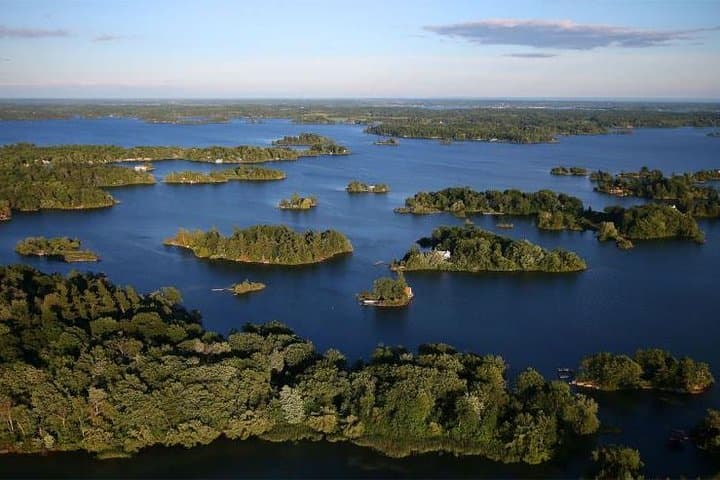
This archipelago was Manitoana to Indigenous peoples and later became a contested borderland shaped by the War of 1812; today the islands are a patchwork of private camps, state parks and conservation parcels. Geologically the Thousand Islands are exposed St. Lawrence gneiss and granite scoured by glaciers, then sculpted by lake levels into hundreds of small, irregular isles with thin soil and scrubby forest.
Expect a two-hour loop that gets closer to islands few larger tour boats reach, including a circumnavigation near Grindstone Island. Wildlife and birdlife are prominent—herons, kingfishers, and the occasional seal in season—and the tour blends natural history with local stories about fishing, vintage summer camps and small-scale farming.
Practical guidance: arrive 30 minutes early to exchange your voucher for a boarding pass; the vessel has restrooms and is wheelchair-accessible. No passport is required for this particular US-departure cruise, but carry government photo ID and be prepared to show it. Dress in layers—the river breeze amplifies chill—and bring binoculars, a windproof jacket, sunscreen and a small camera.
This outing is low-effort but rich in scenery: an accessible way to sample the St. Lawrence’s island-dotted shoreline, good for families, photographers and anyone wanting a compact, informative river experience.
easy.
2 hours.
Suitable for most fitness levels; involves boarding stairs and standing on deck for extended periods.
No—this tour departs from the U.S. and is advertised as not requiring passports, but bring government photo ID for check-in.
Yes; the vessel is equipped with onboard restrooms for passenger use during the two-hour cruise.
The operator states the boat and boarding process offer wheelchair-accessible options—contact them ahead for any special assistance needs.
Infants and small children in strollers are permitted; service animals are allowed but check the operator’s specific pet policy for non-service animals.
The islands were known as Manitoana to Indigenous peoples; post-contact border lines and the War of 1812 later defined waterways and ownership across the St. Lawrence.
Many islands are fragmented private holdings and protected parcels; stay on designated paths and avoid landing on private or ecologically sensitive islands to limit disturbance.
Clayton Island Tours, LLC operates guided outdoor trips and adventures with an emphasis on safety, stewardship, and memorable experiences.
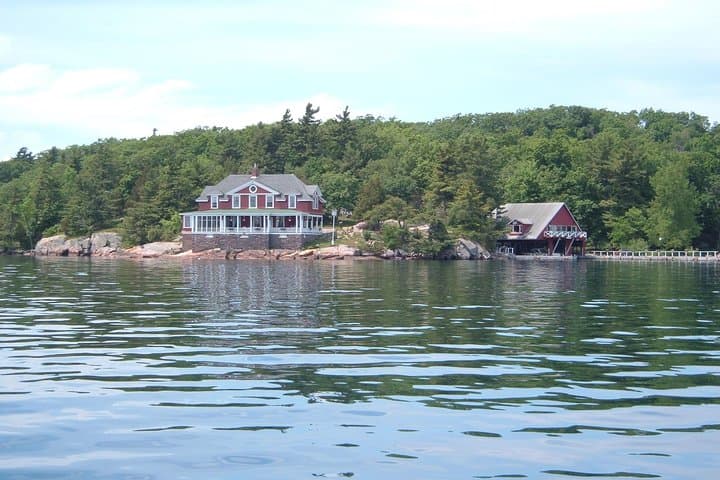
You step onto a low-profile cruiser at Clayton’s blue ticket booth and the river opens like a room of islands—granite knuckles, narrow channels, and bays that keep their own quiet. The captain threads the boat into channels that feel private, skimming past tiny sandy spits and cottages whose docks point like outstretched hands toward Canada just across the current.
You step onto a low-profile cruiser at Clayton’s blue ticket booth and the river opens like a room of islands—granite knuckles, narrow channels, and bays that keep their own quiet. The captain threads the boat into channels that feel private, skimming past tiny sandy spits and cottages whose docks point like outstretched hands toward Canada just across the current.
This archipelago was Manitoana to Indigenous peoples and later became a contested borderland shaped by the War of 1812; today the islands are a patchwork of private camps, state parks and conservation parcels. Geologically the Thousand Islands are exposed St. Lawrence gneiss and granite scoured by glaciers, then sculpted by lake levels into hundreds of small, irregular isles with thin soil and scrubby forest.
Expect a two-hour loop that gets closer to islands few larger tour boats reach, including a circumnavigation near Grindstone Island. Wildlife and birdlife are prominent—herons, kingfishers, and the occasional seal in season—and the tour blends natural history with local stories about fishing, vintage summer camps and small-scale farming.
Practical guidance: arrive 30 minutes early to exchange your voucher for a boarding pass; the vessel has restrooms and is wheelchair-accessible. No passport is required for this particular US-departure cruise, but carry government photo ID and be prepared to show it. Dress in layers—the river breeze amplifies chill—and bring binoculars, a windproof jacket, sunscreen and a small camera.
This outing is low-effort but rich in scenery: an accessible way to sample the St. Lawrence’s island-dotted shoreline, good for families, photographers and anyone wanting a compact, informative river experience.