THE ADVENTURE COLLECTIVE® · Independent discovery and booking for outdoor travel

Cover Seville’s highlights in two hours by electric bike: cathedral shadows, Plaza de España, Triana’s ceramics, and the Expo ’92 corridor. A guided small‑group ride makes the city’s history and layout accessible without exhausting your feet.
Cover Seville’s highlights in two hours by electric bike: cathedral shadows, Plaza de España, Triana’s ceramics, and the Expo ’92 corridor. A guided small‑group ride makes the city’s history and layout accessible without exhausting your feet.
The morning air in Seville feels warm before the sun fully rises, and the Guadalquivir nudges the city awake as you glide past bridges on an electric bike. In two hours a small group can thread through narrow Calle Sierpes, roll by the cathedral’s shadow, and open into the broad horseshoe of Plaza de España — all while a guide shapes the route to city rhythm.
Verified experiences and guided adventures in the surrounding area.
Operated by Tickets4u · Seville, Andalusia
The morning air in Seville feels warm before the sun fully rises, and the Guadalquivir nudges the city awake as you glide past bridges on an electric bike. In two hours a small group can thread through narrow Calle Sierpes, roll by the cathedral’s shadow, and open into the broad horseshoe of Plaza de España — all while a guide shapes the route to city rhythm.
Seville’s layers of history are visible from the saddle: Roman gridlines under Moorish patios, Gothic spires beside Baroque façades. Geology here is subtle — the river valley’s alluvial plain made the city a trade hub; soft clay and sand explain why the old center sits slightly raised above floodplains. Culture is a living thing: flamenco pulses in Triana, ceramic workshops line its streets, and the Expo ’92 sites recall a modern rewrite of urban space.
Practicalities matter on a fast urban circuit. The tour uses fat‑tire electric and folding bikes to handle cobbles and bike lanes; expect stops at the Alcázar edge, Torre del Oro, the old tobacco factory, and a 10–15 minute visit to Plaza de España. Guides handle navigation and local context — you bring pace and awareness.
Plan for sun and cobbles: helmets and a short safety briefing are standard, and mornings or late afternoons are best in summer. Keep ID and a small card for museum entry if you plan to extend your visit afterward. Hydrate, choose closed‑toe shoes, and let the current of the Guadalquivir pull you through Seville’s compact, layered streets.
easy.
2 hours.
Suitable for most fitness levels; participants should be comfortable pedaling at a relaxed to brisk pace for short bursts.
No — the tour is designed for all levels; electric assistance helps with acceleration and hills.
Yes, guides typically supply helmets and a brief safety orientation before departure.
Small daypacks are fine; keep them low and secured to maintain balance and comfort while riding.
Most groups are conducted in English and Spanish; check the tour listing for language specifics.
Seville’s prominence rose under Roman rule and expanded dramatically during the Islamic period; its river position made it a gateway for trade and exploration in the Age of Discovery.
Stick to marked lanes and avoid littering; the Guadalquivir and parklands benefit from low‑impact tourism and respectful routing to reduce wear on historic cobbles.
Tickets4u operates guided outdoor trips and adventures with an emphasis on safety, stewardship, and memorable experiences.
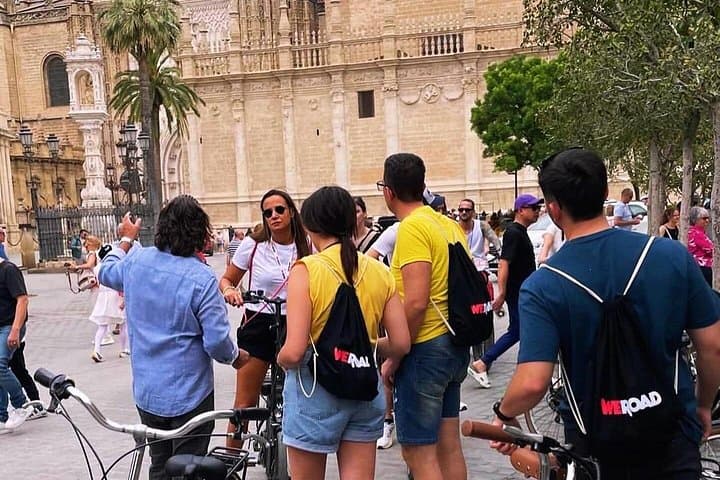
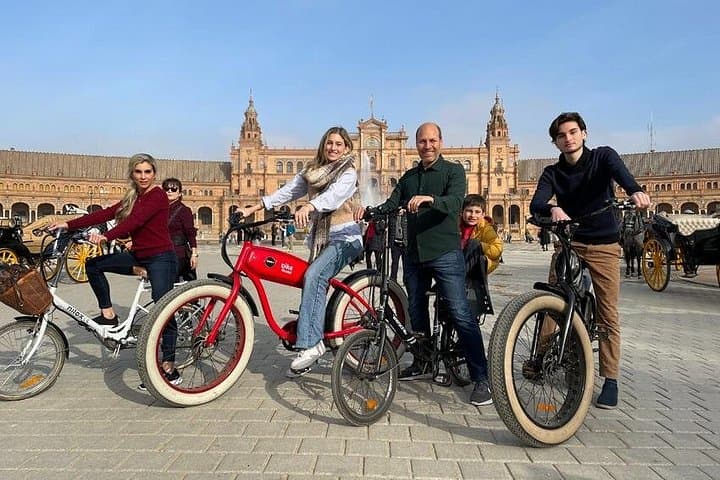
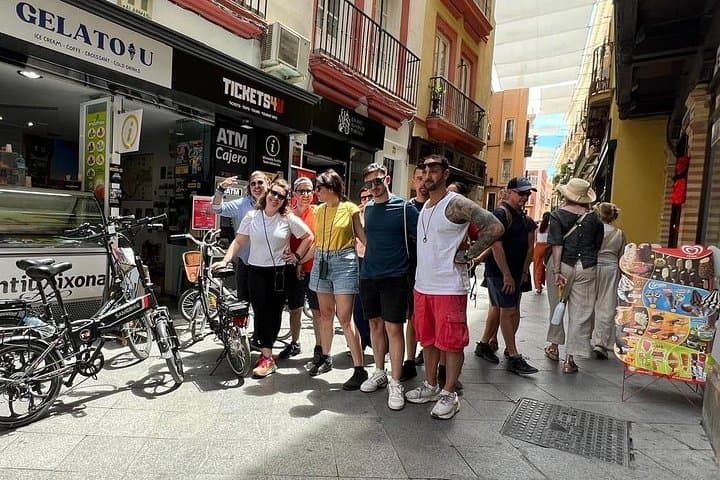
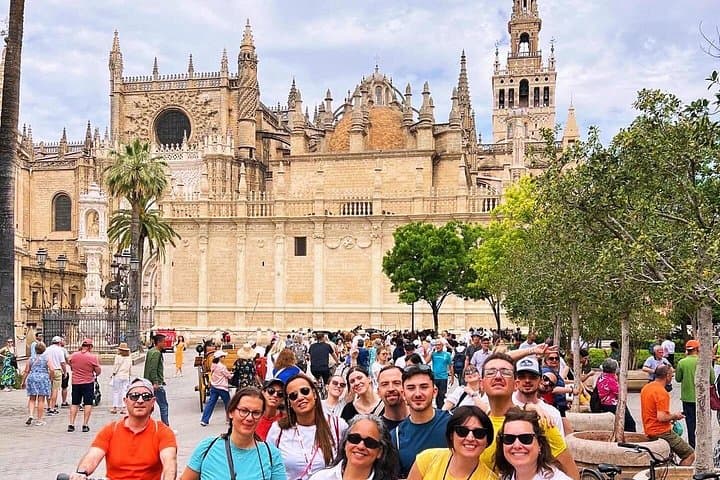
The morning air in Seville feels warm before the sun fully rises, and the Guadalquivir nudges the city awake as you glide past bridges on an electric bike. In two hours a small group can thread through narrow Calle Sierpes, roll by the cathedral’s shadow, and open into the broad horseshoe of Plaza de España — all while a guide shapes the route to city rhythm.
The morning air in Seville feels warm before the sun fully rises, and the Guadalquivir nudges the city awake as you glide past bridges on an electric bike. In two hours a small group can thread through narrow Calle Sierpes, roll by the cathedral’s shadow, and open into the broad horseshoe of Plaza de España — all while a guide shapes the route to city rhythm.
Seville’s layers of history are visible from the saddle: Roman gridlines under Moorish patios, Gothic spires beside Baroque façades. Geology here is subtle — the river valley’s alluvial plain made the city a trade hub; soft clay and sand explain why the old center sits slightly raised above floodplains. Culture is a living thing: flamenco pulses in Triana, ceramic workshops line its streets, and the Expo ’92 sites recall a modern rewrite of urban space.
Practicalities matter on a fast urban circuit. The tour uses fat‑tire electric and folding bikes to handle cobbles and bike lanes; expect stops at the Alcázar edge, Torre del Oro, the old tobacco factory, and a 10–15 minute visit to Plaza de España. Guides handle navigation and local context — you bring pace and awareness.
Plan for sun and cobbles: helmets and a short safety briefing are standard, and mornings or late afternoons are best in summer. Keep ID and a small card for museum entry if you plan to extend your visit afterward. Hydrate, choose closed‑toe shoes, and let the current of the Guadalquivir pull you through Seville’s compact, layered streets.