THE ADVENTURE COLLECTIVE® · Independent discovery and booking for outdoor travel

Learn to paddle on Lady Bird Lake with a two-hour lesson that pairs instruction with a self-guided skyline loop. Expect guided safety, views of downtown Austin, and the chance to watch bats emerge from the Congress Avenue Bridge.
Learn to paddle on Lady Bird Lake with a two-hour lesson that pairs instruction with a self-guided skyline loop. Expect guided safety, views of downtown Austin, and the chance to watch bats emerge from the Congress Avenue Bridge.
The morning sun finds Lady Bird Lake like a mirror someone has left to warm: the downtown skyline leans toward the water as if to check its reflection, while the river’s slow current nudges kayaks away from the concrete edge and out into open light. You push off from a public boat launch on East Avenue, feet steady in a bright plastic cockpit, and the city's noise compresses into clicks and distant hums. The first strokes set a rhythm; water parts politely and then closes again, as if the lake is testing your attention.
Verified experiences and guided adventures in the surrounding area.
Operated by Longhorn Kayak Tours · Austin, Texas
The morning sun finds Lady Bird Lake like a mirror someone has left to warm: the downtown skyline leans toward the water as if to check its reflection, while the river’s slow current nudges kayaks away from the concrete edge and out into open light. You push off from a public boat launch on East Avenue, feet steady in a bright plastic cockpit, and the city's noise compresses into clicks and distant hums. The first strokes set a rhythm; water parts politely and then closes again, as if the lake is testing your attention.
Lady Bird Lake is not a glacial gorge or a mountain tarn — it is an engineered widening of the Colorado River, created by Longhorn Dam in 1939 and later renamed to honor Lady Bird Johnson for her urban beautification efforts. Geologically, the lake sits on the Edwards Plateau’s edge; limestone shelves fall away into silted shallows that line many of the river bends. Culturally, this stretch of water is Austin: live music on the shore, joggers on the Ann and Roy Butler Hike-and-Bike Trail, and the nightly exodus of Mexican free-tailed bats from under the Congress Avenue Bridge.
A two-hour lesson here is part skill session, part orientation to the water’s personality. Instructors cover paddling basics — forward and reverse strokes, bracing, and simple turns — then point you toward routes that match your goals: a skyline loop beneath tower reflections, a wildlife stalk near shoals where herons feed, or a late-afternoon drift below the bat bridge when the sky fills with motion.
Practical guidance matters. Plan a morning or golden-hour paddle to avoid midday heat; bring a dry bag and an extra layer because the lake holds a chill after cool nights. Life jackets and paddles are provided, but shoes that stay on in water and a secure bottle of water are essential. Watch for motorized craft near boat ramps and for the narrow current shifts around bridges; an instructor will show you how to read wakes and choose sheltered lines.
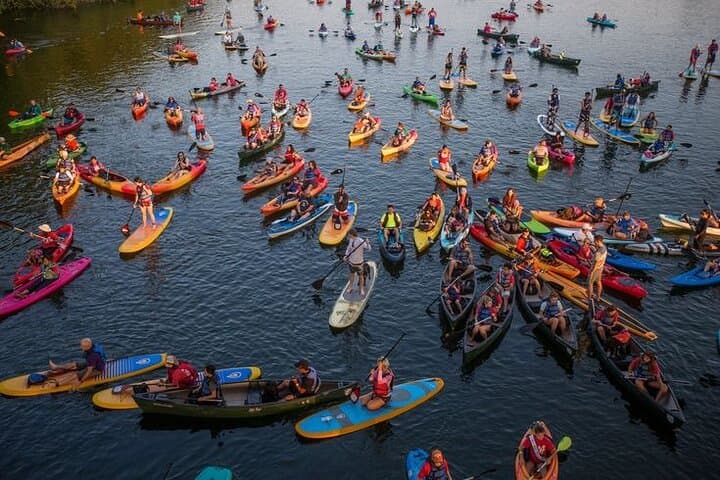
Routes are flexible: expect gentle flats with occasional crosswind that calls for angled strokes. Wildlife is abundant — herons, turtles, and the occasional cormorant inspect strangers with the patience of locals — and the bat emergence after sunset is a spectacle best timed with your guide’s recommendation.
For the first-timer this rental-lesson combo balances safety and freedom: a professional checks your setup, gives a short tutorial, and then lets you explore the lake at your own pace. Two hours is long enough to learn a skill, see the downtown skyline from the water, and still return with sun on your neck and a clearer sense of how the river, city, and sky negotiate this shared space.
easy.
2 hours.
Suitable for most fitness levels; should be able to walk short distances and hold basic balance.
No — lessons cover basic strokes, safety, and route selection; the activity is designed for beginners.
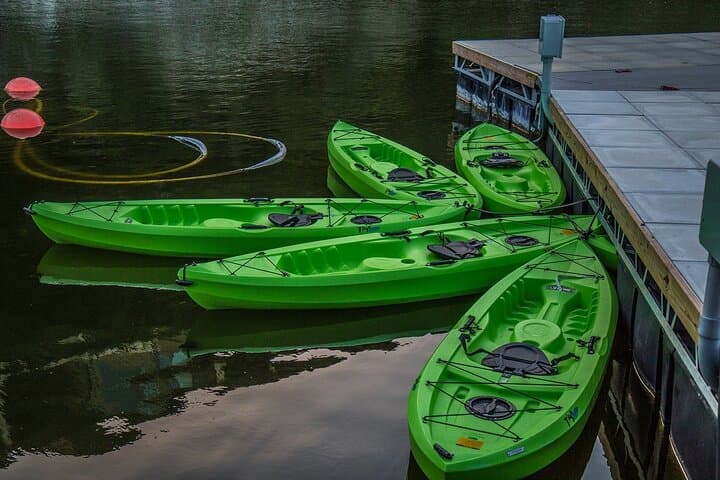
Meet at the public boat launch on East Avenue across from the Holiday Inn; look for the grey pickup with green kayaks.
Yes — personal flotation devices are provided and required for all paddlers.
Children are allowed but must meet the operator’s age or supervision requirements; disclose ages during booking.
Trips are canceled for bad weather; you can receive a full refund if you cancel at least 24 hours in advance or the operator cancels due to conditions.
Bats are most visible at dusk from March through November; the operator can advise exact timings based on season and sunset.
The lake was formed by the Longhorn Dam in 1939 to regulate the Colorado River; it was renamed Lady Bird Lake to honor Lady Bird Johnson’s efforts to restore and beautify Austin’s urban edge.
Local groups run regular cleanups and monitor water quality; avoid single-use plastics and follow ‘pack it in, pack it out’ to reduce litter and disturbance to wildlife.
Longhorn Kayak Tours operates guided outdoor trips and adventures with an emphasis on safety, stewardship, and memorable experiences.
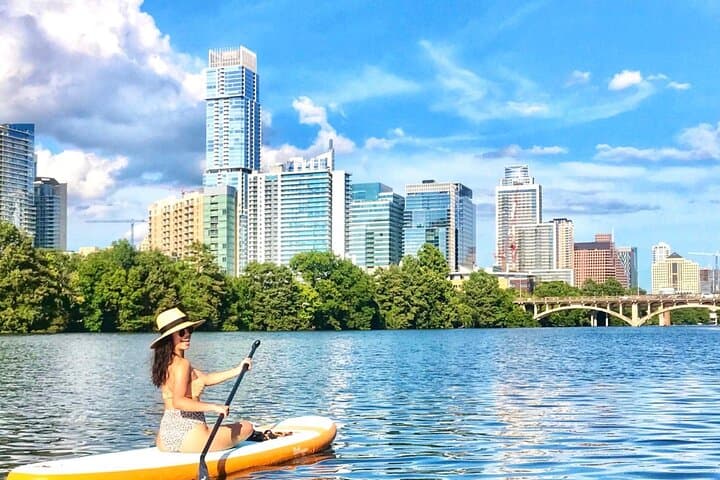
The morning sun finds Lady Bird Lake like a mirror someone has left to warm: the downtown skyline leans toward the water as if to check its reflection, while the river’s slow current nudges kayaks away from the concrete edge and out into open light. You push off from a public boat launch on East Avenue, feet steady in a bright plastic cockpit, and the city's noise compresses into clicks and distant hums. The first strokes set a rhythm; water parts politely and then closes again, as if the lake is testing your attention.
The morning sun finds Lady Bird Lake like a mirror someone has left to warm: the downtown skyline leans toward the water as if to check its reflection, while the river’s slow current nudges kayaks away from the concrete edge and out into open light. You push off from a public boat launch on East Avenue, feet steady in a bright plastic cockpit, and the city's noise compresses into clicks and distant hums. The first strokes set a rhythm; water parts politely and then closes again, as if the lake is testing your attention.
Lady Bird Lake is not a glacial gorge or a mountain tarn — it is an engineered widening of the Colorado River, created by Longhorn Dam in 1939 and later renamed to honor Lady Bird Johnson for her urban beautification efforts. Geologically, the lake sits on the Edwards Plateau’s edge; limestone shelves fall away into silted shallows that line many of the river bends. Culturally, this stretch of water is Austin: live music on the shore, joggers on the Ann and Roy Butler Hike-and-Bike Trail, and the nightly exodus of Mexican free-tailed bats from under the Congress Avenue Bridge.
A two-hour lesson here is part skill session, part orientation to the water’s personality. Instructors cover paddling basics — forward and reverse strokes, bracing, and simple turns — then point you toward routes that match your goals: a skyline loop beneath tower reflections, a wildlife stalk near shoals where herons feed, or a late-afternoon drift below the bat bridge when the sky fills with motion.
Practical guidance matters. Plan a morning or golden-hour paddle to avoid midday heat; bring a dry bag and an extra layer because the lake holds a chill after cool nights. Life jackets and paddles are provided, but shoes that stay on in water and a secure bottle of water are essential. Watch for motorized craft near boat ramps and for the narrow current shifts around bridges; an instructor will show you how to read wakes and choose sheltered lines.
Routes are flexible: expect gentle flats with occasional crosswind that calls for angled strokes. Wildlife is abundant — herons, turtles, and the occasional cormorant inspect strangers with the patience of locals — and the bat emergence after sunset is a spectacle best timed with your guide’s recommendation.
For the first-timer this rental-lesson combo balances safety and freedom: a professional checks your setup, gives a short tutorial, and then lets you explore the lake at your own pace. Two hours is long enough to learn a skill, see the downtown skyline from the water, and still return with sun on your neck and a clearer sense of how the river, city, and sky negotiate this shared space.