THE ADVENTURE COLLECTIVE® · Independent discovery and booking for outdoor travel

Walk two hours through Dublin’s layered history with a local guide who brings St. Patrick’s Cathedral, Trinity College and Temple Bar to life. This compact tour covers Viking origins, Anglo‑Norman architecture and modern cultural shifts—ideal for first-time visitors who want context before exploring further.
Walk two hours through Dublin’s layered history with a local guide who brings St. Patrick’s Cathedral, Trinity College and Temple Bar to life. This compact tour covers Viking origins, Anglo‑Norman architecture and modern cultural shifts—ideal for first-time visitors who want context before exploring further.
The tour opens on a brisk Dublin street, guide leading a small group past cobbled corners where stone facades hold the echoes of merchants and marauders. You move at a steady pace—two hours of compact, readable history—stopping often enough to let the city breathe: the spire of Christ Church slicing the skyline, the hush at the gate of Trinity College, and the energetic clatter of Temple Bar’s lanes.
Verified experiences and guided adventures in the surrounding area.
Operated by Dublin Walking Tours · Dublin, Dublin
The tour opens on a brisk Dublin street, guide leading a small group past cobbled corners where stone facades hold the echoes of merchants and marauders. You move at a steady pace—two hours of compact, readable history—stopping often enough to let the city breathe: the spire of Christ Church slicing the skyline, the hush at the gate of Trinity College, and the energetic clatter of Temple Bar’s lanes.
This walk threads through nearly a millennium of history. Foundational Viking settlements became Anglo‑Norman strongholds; medieval cathedrals were reshaped by centuries of politics and philanthropy. You’ll hear about the Book of Kells, the Guinness family's civic role, and the city’s part in the 1916 Easter Rising, all set against Dublin’s Georgian squares and reclaimed riverbanks.
Geologically there’s little vertical drama—the route follows low-lying limestone plains shaped by glacial melt and the River Liffey’s slow course—so the focus is architectural texture and urban storytelling rather than alpine views. Cultural notes include Temple Bar’s shift from working neighborhood to arts and nightlife hub, plus how public green spaces like St Stephen’s Green evolved from private estates.
Practical guidance: wear comfortable walking shoes and layers for sudden weather changes; expect 1.5–3 miles of walking on paved streets and light inclines. Guides typically point out exterior features only; most entrance fees are separate. Morning or late-afternoon departures avoid peak crowds and give better light for photos. Bring a small bottle of water and an umbrella—Dublin’s weather likes to surprise.
easy.
2 hours.
Moderate level of fitness; able to walk continuously for up to two hours with short stops
The tour lasts two hours and typically covers about 1.5–3 miles (2.5–5 km) on paved city streets with light inclines.
No—this sightseeing tour focuses on exterior views and storytelling; admission fees to sites like Trinity College are separate.
Many parts of the city center are accessible and the operator lists the tour as wheelchair accessible, but check specifics with the provider for individual needs and route adjustments.
This is a guided shared tour in English with small group sizes—typically up to 10 travelers—so there’s time to ask questions and interact with the guide.
Dublin grew from a Viking trading settlement to an Anglo‑Norman administrative center; major landmarks reflect layers of political and religious change, including restorations funded by local patrons like the Guinness family.
High foot traffic can stress historic stonework and green spaces—stay on paths, avoid touching fragile masonry, and support local conservation efforts by following guide instructions.
Dublin Walking Tours operates guided outdoor trips and adventures with an emphasis on safety, stewardship, and memorable experiences.
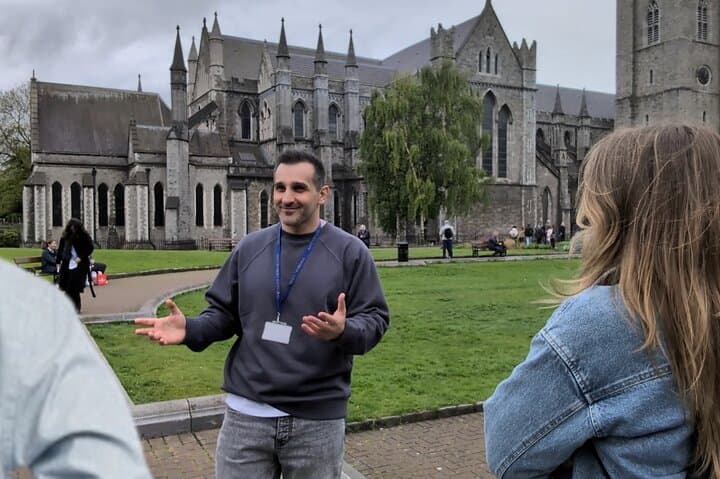
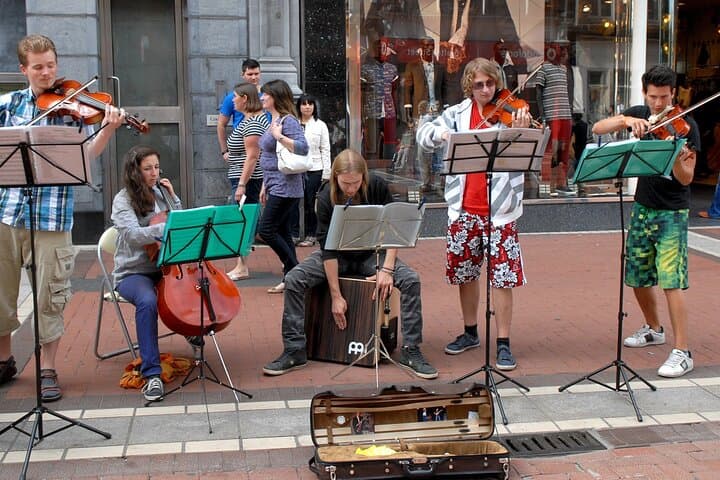
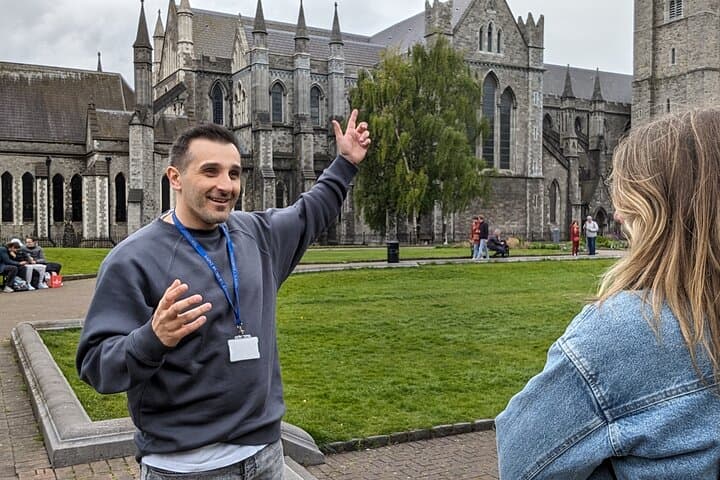
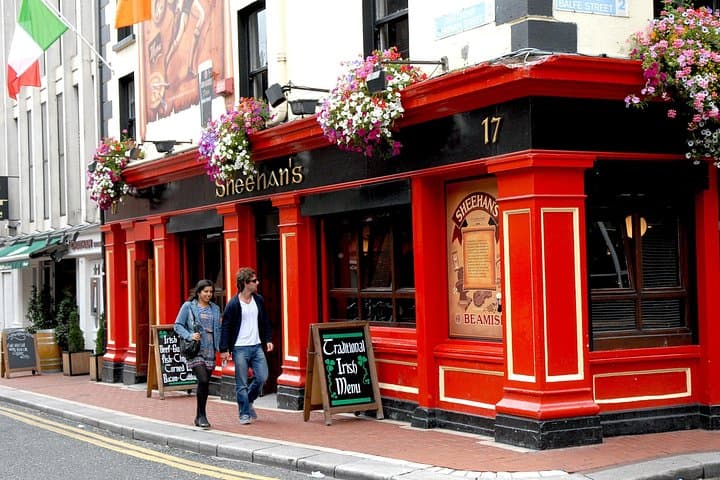
The tour opens on a brisk Dublin street, guide leading a small group past cobbled corners where stone facades hold the echoes of merchants and marauders. You move at a steady pace—two hours of compact, readable history—stopping often enough to let the city breathe: the spire of Christ Church slicing the skyline, the hush at the gate of Trinity College, and the energetic clatter of Temple Bar’s lanes.
The tour opens on a brisk Dublin street, guide leading a small group past cobbled corners where stone facades hold the echoes of merchants and marauders. You move at a steady pace—two hours of compact, readable history—stopping often enough to let the city breathe: the spire of Christ Church slicing the skyline, the hush at the gate of Trinity College, and the energetic clatter of Temple Bar’s lanes.
This walk threads through nearly a millennium of history. Foundational Viking settlements became Anglo‑Norman strongholds; medieval cathedrals were reshaped by centuries of politics and philanthropy. You’ll hear about the Book of Kells, the Guinness family's civic role, and the city’s part in the 1916 Easter Rising, all set against Dublin’s Georgian squares and reclaimed riverbanks.
Geologically there’s little vertical drama—the route follows low-lying limestone plains shaped by glacial melt and the River Liffey’s slow course—so the focus is architectural texture and urban storytelling rather than alpine views. Cultural notes include Temple Bar’s shift from working neighborhood to arts and nightlife hub, plus how public green spaces like St Stephen’s Green evolved from private estates.
Practical guidance: wear comfortable walking shoes and layers for sudden weather changes; expect 1.5–3 miles of walking on paved streets and light inclines. Guides typically point out exterior features only; most entrance fees are separate. Morning or late-afternoon departures avoid peak crowds and give better light for photos. Bring a small bottle of water and an umbrella—Dublin’s weather likes to surprise.