THE ADVENTURE COLLECTIVE® · Independent discovery and booking for outdoor travel

Spend two hours observing rescued elephants and learning rubber-tapping traditions outside Phuket. This short, conservation-focused visit emphasizes respectful viewing, cultural context, and hands-off education — ideal for travelers who want close encounters without riding or performances.
Spend two hours observing rescued elephants and learning rubber-tapping traditions outside Phuket. This short, conservation-focused visit emphasizes respectful viewing, cultural context, and hands-off education — ideal for travelers who want close encounters without riding or performances.
Late-morning heat presses against the canopy as a line of steady trunks appears between the palms — elephants moving with the deliberate patience of animals that have learned to read human schedules. In this two-hour Mini Elephant Nature visit outside Phuket, observation takes precedence: guests watch elephants feed, walk close enough for respectful photos, and stand beneath rubber trees while a local demonstrates tapping and sheet making.
Verified experiences and guided adventures in the surrounding area.
Operated by MY Holiday Centre · Phuket Town, Phuket
Late-morning heat presses against the canopy as a line of steady trunks appears between the palms — elephants moving with the deliberate patience of animals that have learned to read human schedules. In this two-hour Mini Elephant Nature visit outside Phuket, observation takes precedence: guests watch elephants feed, walk close enough for respectful photos, and stand beneath rubber trees while a local demonstrates tapping and sheet making.
The island’s relationship with elephants is layered: historically they worked in logging and transport across southern Thailand, and today many parks pivot toward rescue and rehabilitation. Geologically, Phuket’s low limestone ridges and red-clay soils support rubber plantations that frame the park; culturally, the region blends Phuket’s Sino-Portuguese town life with rural southern Thai farm practices you’ll glimpse during the transfer.
Expect slow, quiet moments rather than high-energy interactions. Guides explain behaviors — how elephants use trunks like hands, how social cues signal comfort or stress — and demonstrate traditional rubber tapping, connecting local livelihoods to the landscape. Photography is allowed but controlled; touching is managed for safety.
Practical notes: arrive hydrated and sun-protected; shoes will get dusty. Morning slots are cooler and soft light favors photos; afternoons are warmer and more active with feeding. The operator provides hotel transfer and basic insurance, and the itinerary is suitable for most fitness levels but not for those with serious back or cardiovascular issues. Bring a small binocular, a refillable bottle, and an open, patient mindset: this is an educational, conservation-focused encounter more than a performance.
easy.
2 hours.
Light mobility required—able to stand and walk short, uneven paths; suitable for most fitness levels
No—this activity is an observation-focused visit; touching may be allowed under strict guidance but riding is not part of the program.
Yes, the tour lists hotel transfer as included; confirm pickup point when booking and allow time for shared transfers.
Infant seats are available and the tour is generally suitable for families, but those with mobility or health restrictions should check advisories.
A mid-zoom lens or smartphone with a 2–3x optical zoom captures behavior without approaching animals; bring extra battery or power bank.
Elephants in southern Thailand historically worked in logging and transport; many parks now rehabilitate animals retired from labor and tourism misuse.
This tour emphasizes observation and education over riding; sustainable visitor behavior and support for rescue-based facilities reduce stress on elephants and encourage ethical tourism.
MY Holiday Centre operates guided outdoor trips and adventures with an emphasis on safety, stewardship, and memorable experiences.
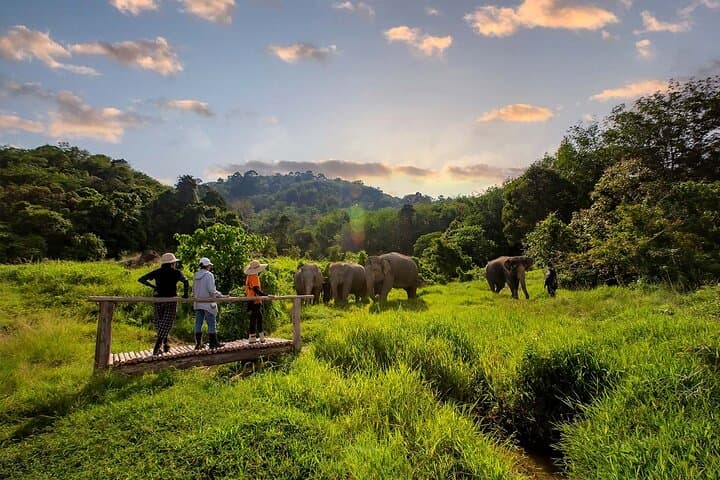
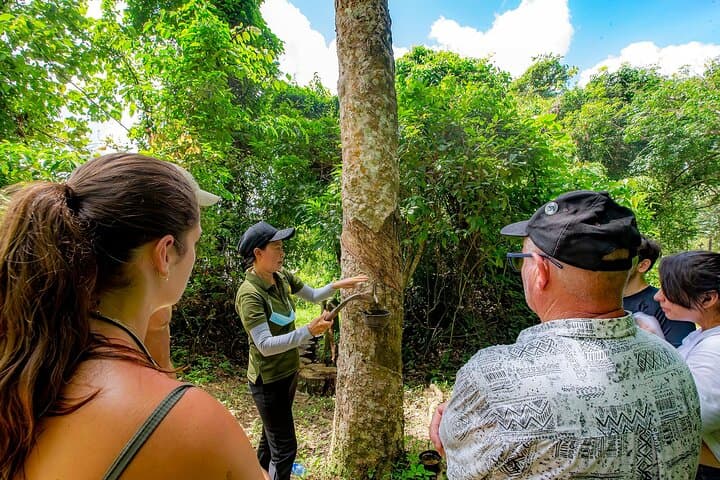
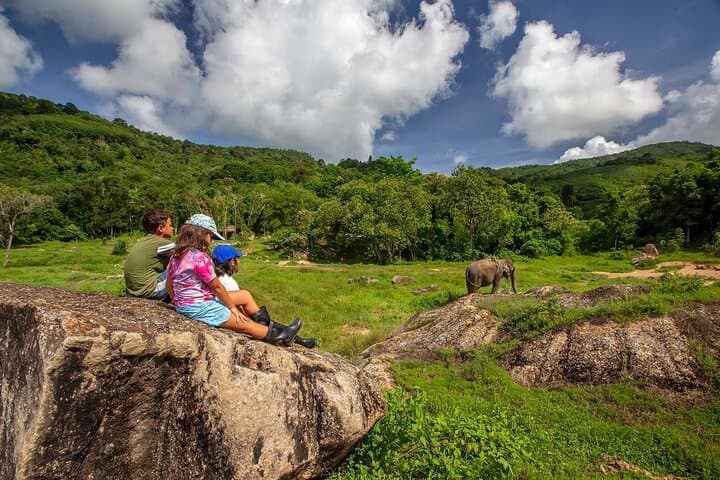
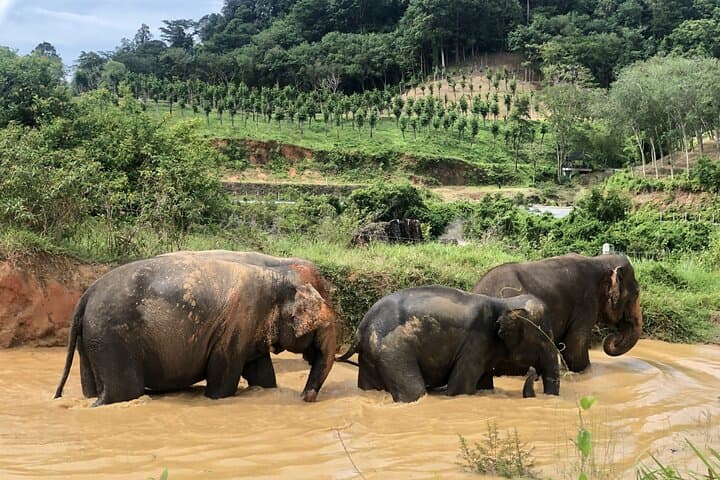
Late-morning heat presses against the canopy as a line of steady trunks appears between the palms — elephants moving with the deliberate patience of animals that have learned to read human schedules. In this two-hour Mini Elephant Nature visit outside Phuket, observation takes precedence: guests watch elephants feed, walk close enough for respectful photos, and stand beneath rubber trees while a local demonstrates tapping and sheet making.
Late-morning heat presses against the canopy as a line of steady trunks appears between the palms — elephants moving with the deliberate patience of animals that have learned to read human schedules. In this two-hour Mini Elephant Nature visit outside Phuket, observation takes precedence: guests watch elephants feed, walk close enough for respectful photos, and stand beneath rubber trees while a local demonstrates tapping and sheet making.
The island’s relationship with elephants is layered: historically they worked in logging and transport across southern Thailand, and today many parks pivot toward rescue and rehabilitation. Geologically, Phuket’s low limestone ridges and red-clay soils support rubber plantations that frame the park; culturally, the region blends Phuket’s Sino-Portuguese town life with rural southern Thai farm practices you’ll glimpse during the transfer.
Expect slow, quiet moments rather than high-energy interactions. Guides explain behaviors — how elephants use trunks like hands, how social cues signal comfort or stress — and demonstrate traditional rubber tapping, connecting local livelihoods to the landscape. Photography is allowed but controlled; touching is managed for safety.
Practical notes: arrive hydrated and sun-protected; shoes will get dusty. Morning slots are cooler and soft light favors photos; afternoons are warmer and more active with feeding. The operator provides hotel transfer and basic insurance, and the itinerary is suitable for most fitness levels but not for those with serious back or cardiovascular issues. Bring a small binocular, a refillable bottle, and an open, patient mindset: this is an educational, conservation-focused encounter more than a performance.