THE ADVENTURE COLLECTIVE® · Independent discovery and booking for outdoor travel

A short, guided 4 km canoe that threads the Bibi River into the marsh forest corridor leading to Lake Utonai. Perfect for beginners and birdwatchers, with airport transfers and full instruction provided.
A short, guided 4 km canoe that threads the Bibi River into the marsh forest corridor leading to Lake Utonai. Perfect for beginners and birdwatchers, with airport transfers and full instruction provided.
The paddle begins where the river narrows beneath Bibi-bashi bridge, sunlight speckling the surface and reeds brushing the gunwales as you push off. For the first half-hour the Bibi River opens like a slow ribbon, a calm downstream drift that invites conversation and quiet observation. Soon the channel slides into a marsh-forest tunnel — low branches and hanging moss closing in, the air cooling and the river's current doing the work.
Verified experiences and guided adventures in the surrounding area.
Operated by JTB Hokkaido · Chitose, Hokkaido
The paddle begins where the river narrows beneath Bibi-bashi bridge, sunlight speckling the surface and reeds brushing the gunwales as you push off. For the first half-hour the Bibi River opens like a slow ribbon, a calm downstream drift that invites conversation and quiet observation. Soon the channel slides into a marsh-forest tunnel — low branches and hanging moss closing in, the air cooling and the river's current doing the work.
Geologically the Bibi corridor is part of Hokkaido’s lowland plain carved after the last ice age; peat and alluvial soils feed the marsh habitat that cushions Lake Utonai. Culturally the area sits in the broader landscape of southern Hokkaido where wetlands have long supported fishing, reed harvesting and seasonal bird migrations that local communities and conservationists monitor closely.
Practically speaking this is a 4 km guided route, roughly two hours on the water. Guides provide a short paddling lesson, life jackets, and a return drive to the meeting point. The first half is a leisurely descent suitable for beginners; the second half requires steady paddling and attention as the channel narrows through the marsh forest.
Expect birdsong, reedbeds sliding past, and close-up views of waterfowl as you approach Lake Utonai, one of the region’s premier bird sanctuaries. Bring a dry bag, quick-dry layers, insect repellent, and a camera with a zoom lens. Transfers are often available from New Chitose Airport (about 10 minutes), making this a concentrated nature outing that’s easy to add to a Hokkaido itinerary.
easy.
2 hours.
Light fitness; suitable for beginners and travelers who can sit and paddle for short periods
No — guides give a short lesson and the first half is an easy downstream paddle suitable for beginners.
Yes, dogs are allowed but must wear life jackets and be able to sit calmly in the canoe.
There is typically a free 10-minute transfer from New Chitose Airport — confirm pickup time and flight details when booking.
Standard cancellation rules apply; cancel at least 24 hours before departure for a full refund and operators may reschedule if conditions make the river unsafe.
Lake Utonai and its surrounding wetlands have long been recognized locally for migratory waterfowl and are managed as an important bird area by regional conservation groups.
Visitors are asked to minimize disturbance to birds — keep noise low, don’t feed wildlife, and follow guide instructions especially near nesting season.
JTB Hokkaido operates guided outdoor trips and adventures with an emphasis on safety, stewardship, and memorable experiences.
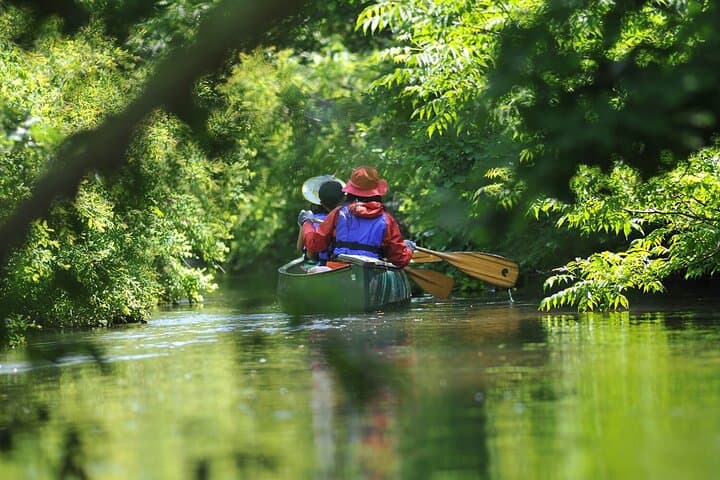
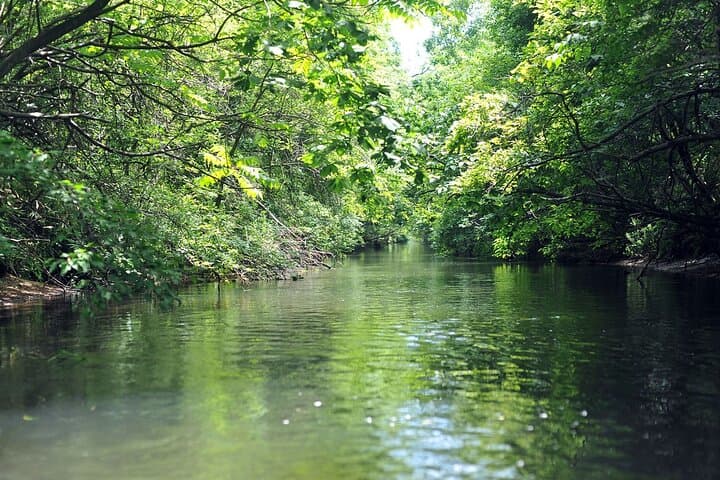
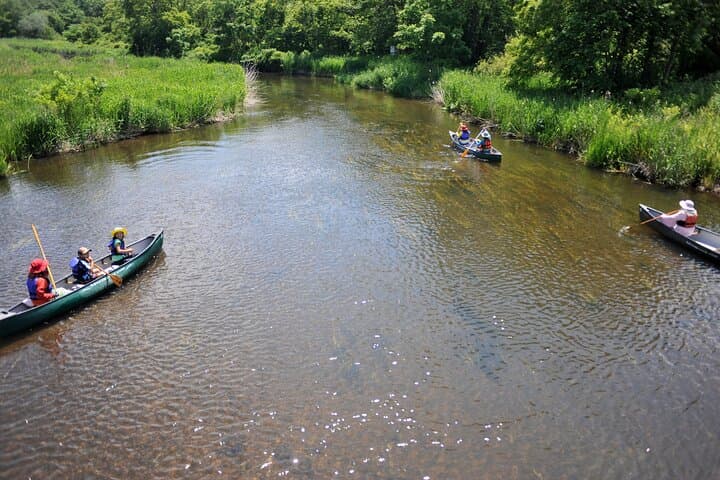
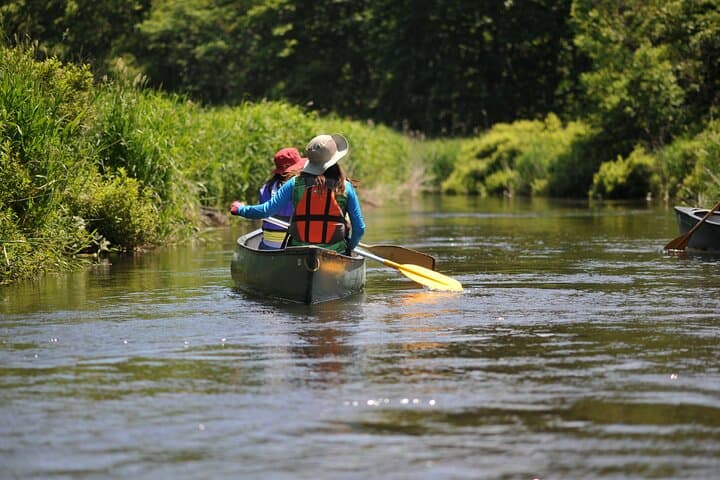
The paddle begins where the river narrows beneath Bibi-bashi bridge, sunlight speckling the surface and reeds brushing the gunwales as you push off. For the first half-hour the Bibi River opens like a slow ribbon, a calm downstream drift that invites conversation and quiet observation. Soon the channel slides into a marsh-forest tunnel — low branches and hanging moss closing in, the air cooling and the river's current doing the work.
The paddle begins where the river narrows beneath Bibi-bashi bridge, sunlight speckling the surface and reeds brushing the gunwales as you push off. For the first half-hour the Bibi River opens like a slow ribbon, a calm downstream drift that invites conversation and quiet observation. Soon the channel slides into a marsh-forest tunnel — low branches and hanging moss closing in, the air cooling and the river's current doing the work.
Geologically the Bibi corridor is part of Hokkaido’s lowland plain carved after the last ice age; peat and alluvial soils feed the marsh habitat that cushions Lake Utonai. Culturally the area sits in the broader landscape of southern Hokkaido where wetlands have long supported fishing, reed harvesting and seasonal bird migrations that local communities and conservationists monitor closely.
Practically speaking this is a 4 km guided route, roughly two hours on the water. Guides provide a short paddling lesson, life jackets, and a return drive to the meeting point. The first half is a leisurely descent suitable for beginners; the second half requires steady paddling and attention as the channel narrows through the marsh forest.
Expect birdsong, reedbeds sliding past, and close-up views of waterfowl as you approach Lake Utonai, one of the region’s premier bird sanctuaries. Bring a dry bag, quick-dry layers, insect repellent, and a camera with a zoom lens. Transfers are often available from New Chitose Airport (about 10 minutes), making this a concentrated nature outing that’s easy to add to a Hokkaido itinerary.