THE ADVENTURE COLLECTIVE® · Independent discovery and booking for outdoor travel

A compact two-day loop from Marrakech to Zagora that pairs High Atlas panoramas and Draa Valley oases with sunset and sunrise camel treks and an overnight Berber desert camp. Ideal for travelers who want immersive Sahara time without a multi-day expedition.
A compact two-day loop from Marrakech to Zagora that pairs High Atlas panoramas and Draa Valley oases with sunset and sunrise camel treks and an overnight Berber desert camp. Ideal for travelers who want immersive Sahara time without a multi-day expedition.
You leave Marrakech before dawn, the city’s sandstone silhouettes shrinking behind you as the road climbs the Tizi-n-Tichka pass. The air thins, Atlas slopes open to ochre ridgelines, and by afternoon you’re slipping into the palm-lined pockets of the Drâa Valley. The dunes of Zagora rise like slow waves; a string of dromedaries kneels to let you climb on, and the caravan pulls you toward a sunset that burns a flat gold across the sand.
Verified experiences and guided adventures in the surrounding area.
Operated by Bladi Vacances Tours · Zagora, Drâa-Tafilalet
You leave Marrakech before dawn, the city’s sandstone silhouettes shrinking behind you as the road climbs the Tizi-n-Tichka pass. The air thins, Atlas slopes open to ochre ridgelines, and by afternoon you’re slipping into the palm-lined pockets of the Drâa Valley. The dunes of Zagora rise like slow waves; a string of dromedaries kneels to let you climb on, and the caravan pulls you toward a sunset that burns a flat gold across the sand.
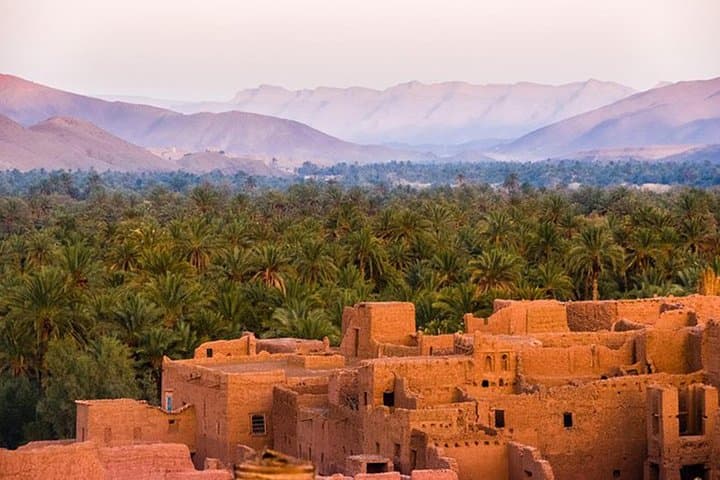
Geology here is blunt and honest: folded High Atlas rock giving way to alluvial fans and wind-sculpted dunes. Culturally, the route follows old caravan arteries — Aït Ben Haddou’s earthen ksar still marks a point where traders paused, and Ouarzazate’s kasbahs nod to both local life and a surprisingly robust film industry.
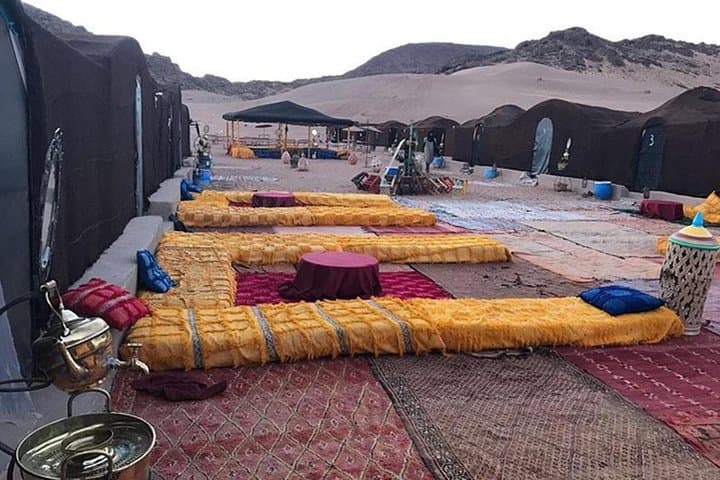
Practically, expect long drives on paved mountain roads and valley highways, then compacted tracks and soft sand approaching the camp. The camel rides at dusk and dawn are gentle but uneven; plan for 1–2 hours in the saddle at each end. Nights are cold despite the daytime heat — the sky is a clean, enormous black for star work. Your night in a Berber desert camp includes dinner, music, and basic but comfortable bedding.
Bring layered clothing, sun protection, and sturdy closed-toe shoes for walking dunes and ksar alleys. Hydrate before and during the tour and carry any necessary medications; staff can usually assist but this is remote territory. The trip balances long road travel with unforgettable desert time — a concise two-day slice of southern Morocco that’s as much about rhythm as sight.
moderate.
2 days (approx. 48 hours).
Suitable for average fitness; must be able to mount a camel and walk on soft sand for short periods
Yes — most shared tours include pickup and drop-off from riads or hotels in Marrakech; confirm your pickup point at booking.
Typical camel treks are about 1–2 hours each — a sunset ride to camp and a shorter sunrise ride the next morning.
Camps are basic but comfortable with bedding and dinners provided; facilities vary from simple tents to slightly more equipped berber-style tents depending on provider.
Not recommended for pregnant travelers or those with serious back or heart conditions; long drives and camel mounting require mobility.
The route follows historic caravan corridors; Aït Ben Haddou is a UNESCO-listed ksar that grew as a trans-Saharan trade stop and later became a film location hub at Ouarzazate.
The Sahara’s fragile soils and scarce water mean stay on established tracks, pack out waste, and support local guides and camps that follow low-impact practices.
Bladi Vacances Tours operates guided outdoor trips and adventures with an emphasis on safety, stewardship, and memorable experiences.
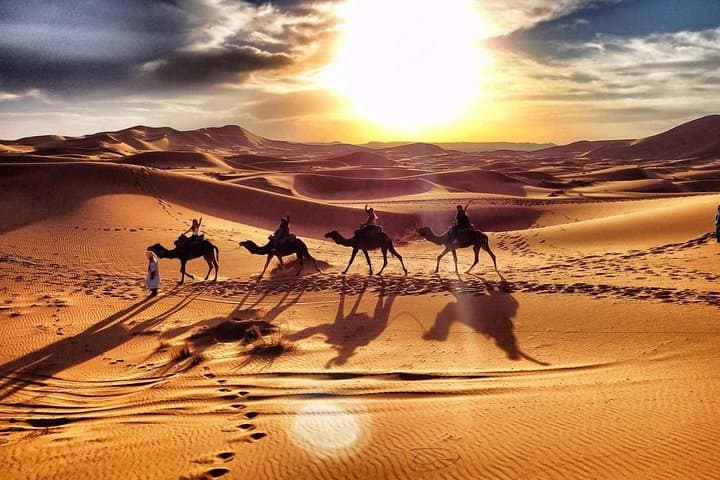
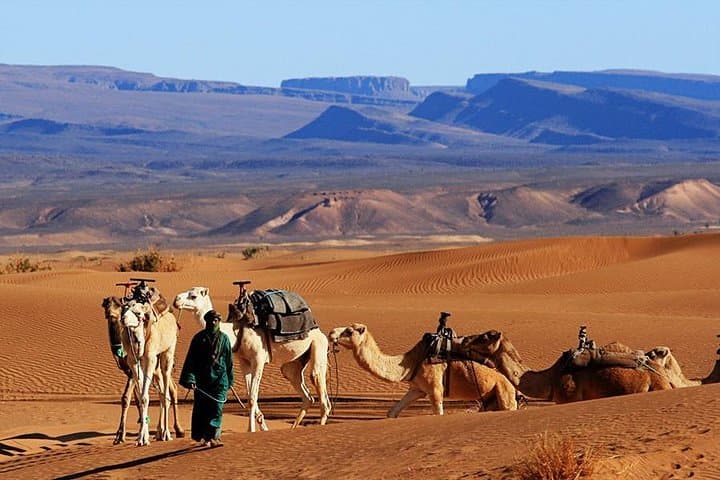
You leave Marrakech before dawn, the city’s sandstone silhouettes shrinking behind you as the road climbs the Tizi-n-Tichka pass. The air thins, Atlas slopes open to ochre ridgelines, and by afternoon you’re slipping into the palm-lined pockets of the Drâa Valley. The dunes of Zagora rise like slow waves; a string of dromedaries kneels to let you climb on, and the caravan pulls you toward a sunset that burns a flat gold across the sand.
You leave Marrakech before dawn, the city’s sandstone silhouettes shrinking behind you as the road climbs the Tizi-n-Tichka pass. The air thins, Atlas slopes open to ochre ridgelines, and by afternoon you’re slipping into the palm-lined pockets of the Drâa Valley. The dunes of Zagora rise like slow waves; a string of dromedaries kneels to let you climb on, and the caravan pulls you toward a sunset that burns a flat gold across the sand.
Geology here is blunt and honest: folded High Atlas rock giving way to alluvial fans and wind-sculpted dunes. Culturally, the route follows old caravan arteries — Aït Ben Haddou’s earthen ksar still marks a point where traders paused, and Ouarzazate’s kasbahs nod to both local life and a surprisingly robust film industry.
Practically, expect long drives on paved mountain roads and valley highways, then compacted tracks and soft sand approaching the camp. The camel rides at dusk and dawn are gentle but uneven; plan for 1–2 hours in the saddle at each end. Nights are cold despite the daytime heat — the sky is a clean, enormous black for star work. Your night in a Berber desert camp includes dinner, music, and basic but comfortable bedding.
Bring layered clothing, sun protection, and sturdy closed-toe shoes for walking dunes and ksar alleys. Hydrate before and during the tour and carry any necessary medications; staff can usually assist but this is remote territory. The trip balances long road travel with unforgettable desert time — a concise two-day slice of southern Morocco that’s as much about rhythm as sight.