THE ADVENTURE COLLECTIVE® · Independent discovery and booking for outdoor travel

A compact two-day loop from Marrakech to the edge of the Sahara: cross the High Atlas, walk through Ait Benhaddou, ride camels into Zagora’s dunes and sleep under desert skies. This guided tour pairs cultural stops with a hands-on desert experience.
A compact two-day loop from Marrakech to the edge of the Sahara: cross the High Atlas, walk through Ait Benhaddou, ride camels into Zagora’s dunes and sleep under desert skies. This guided tour pairs cultural stops with a hands-on desert experience.
The road unfurls out of Marrakech and the High Atlas rises, a folded spine of rock that the bus breathes up and over. By midafternoon the landscape softens into the palm-lined Draa Valley; beyond it the dunes begin to assert themselves, a plain that rearranges with every gust. The group disembarks for a slow walk through Ait Benhaddou, a fortified kasbah set on a hill where clay walls pick out the angles of old caravan routes.
Verified experiences and guided adventures in the surrounding area.
Operated by Fajga Travel · Zagora, Drâa-Tafilalet
The road unfurls out of Marrakech and the High Atlas rises, a folded spine of rock that the bus breathes up and over. By midafternoon the landscape softens into the palm-lined Draa Valley; beyond it the dunes begin to assert themselves, a plain that rearranges with every gust. The group disembarks for a slow walk through Ait Benhaddou, a fortified kasbah set on a hill where clay walls pick out the angles of old caravan routes.
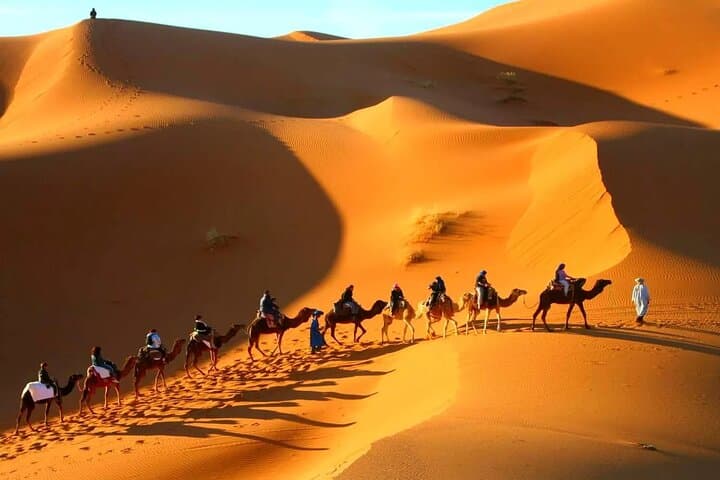
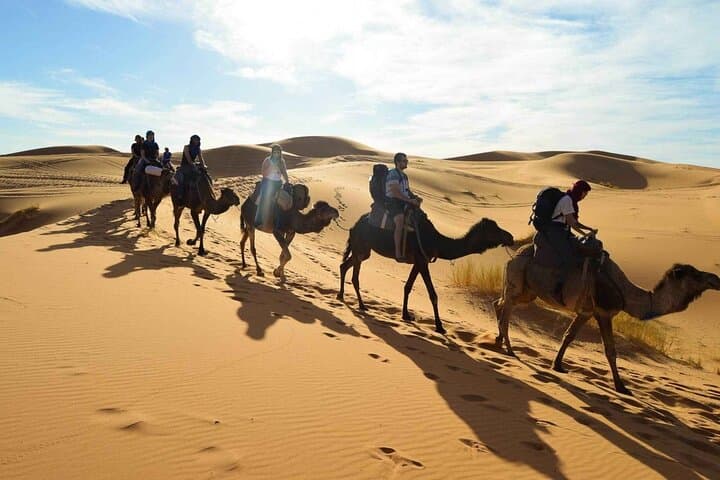
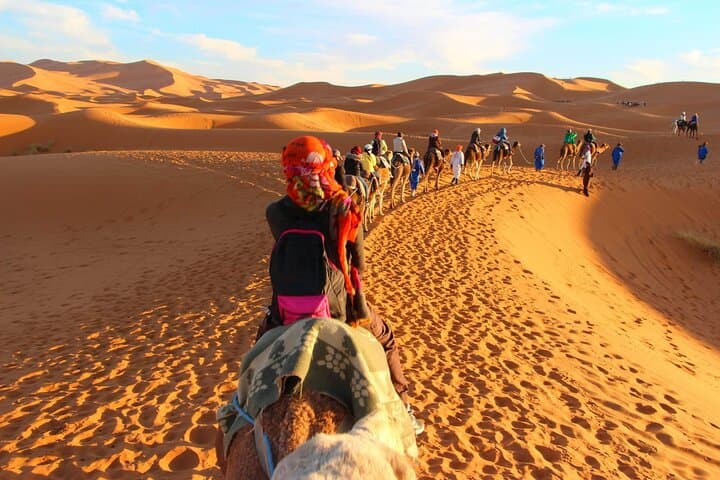
This trip threads together Morocco’s geology and history: the tangle of Atlas passes formed from tectonic collision, the irrigated oases of the Draa that supported trans-Saharan trade, and the mud-brick architecture of Amazigh (Berber) communities. Zagora sits at the edge of the Sahara proper — sand that moves like a thinking thing — and the camp experience highlights Sahrawi music, sunset-to-sky transitions, and a camel ride that recalls the region’s caravan past.
Practically, expect long but scenic driving (roughly 6–8 hours total each direction with stops), an afternoon of guided walks and views, a sunset camel ride to the dunes, a night in a desert camp with basic but comfortable accommodations, and a sunrise camel ride before heading back via Agdez and Ouarzazate. Bring layered clothing for warm days and chilly desert nights, sun protection, cash for small purchases and tips, and a good pair of closed-toe shoes for dunes and kasbah paths. The route suits most fitness levels but involves extended vehicle time and minimal walking on loose sand. For travelers wanting a compact Saharan taste from Marrakech, this two-day loop is direct, sensory, and logistically straightforward.
easy.
2 days (approx. 48 hours).
Suitable for most travelers in average fitness; involves vehicle travel, short guided walks and walking on soft sand.
Expect roughly 6–8 hours of driving with scheduled stops for Ait Benhaddou, viewpoints, and lunch; the route crosses Tizi n’Tichka pass.
Yes—camel rides on this tour are short, guided, and designed for first-timers with staff assisting mounting and dismounting.
Camps are basic but comfortable, typically offering mattress bedding in communal or private tents, a communal dinner and breakfast, and shared restroom facilities.
No special permits are required for this public tour; follow routine travel health advice and check current entry and health requirements for Morocco before travel.
This corridor linked trans-Saharan trade routes; kasbahs like Ait Benhaddou were fortified caravan stops and later film locations for international productions.
Water is scarce—choose operators who limit camp waste and respect local water use; stick to established tracks in dune areas to avoid disrupting fragile desert crusts.
Fajga Travel operates guided outdoor trips and adventures with an emphasis on safety, stewardship, and memorable experiences.
The road unfurls out of Marrakech and the High Atlas rises, a folded spine of rock that the bus breathes up and over. By midafternoon the landscape softens into the palm-lined Draa Valley; beyond it the dunes begin to assert themselves, a plain that rearranges with every gust. The group disembarks for a slow walk through Ait Benhaddou, a fortified kasbah set on a hill where clay walls pick out the angles of old caravan routes.
The road unfurls out of Marrakech and the High Atlas rises, a folded spine of rock that the bus breathes up and over. By midafternoon the landscape softens into the palm-lined Draa Valley; beyond it the dunes begin to assert themselves, a plain that rearranges with every gust. The group disembarks for a slow walk through Ait Benhaddou, a fortified kasbah set on a hill where clay walls pick out the angles of old caravan routes.
This trip threads together Morocco’s geology and history: the tangle of Atlas passes formed from tectonic collision, the irrigated oases of the Draa that supported trans-Saharan trade, and the mud-brick architecture of Amazigh (Berber) communities. Zagora sits at the edge of the Sahara proper — sand that moves like a thinking thing — and the camp experience highlights Sahrawi music, sunset-to-sky transitions, and a camel ride that recalls the region’s caravan past.
Practically, expect long but scenic driving (roughly 6–8 hours total each direction with stops), an afternoon of guided walks and views, a sunset camel ride to the dunes, a night in a desert camp with basic but comfortable accommodations, and a sunrise camel ride before heading back via Agdez and Ouarzazate. Bring layered clothing for warm days and chilly desert nights, sun protection, cash for small purchases and tips, and a good pair of closed-toe shoes for dunes and kasbah paths. The route suits most fitness levels but involves extended vehicle time and minimal walking on loose sand. For travelers wanting a compact Saharan taste from Marrakech, this two-day loop is direct, sensory, and logistically straightforward.