THE ADVENTURE COLLECTIVE® · Independent discovery and booking for outdoor travel

Two days of sweeping Sahara landscapes and oasis lakes: jeep safaris through Bahariya and the White Desert, then the fossil-rich Wadi Hitan and waterfalls of Fayoum. Expect long drives, short hikes, and vivid limestone formations.
Two days of sweeping Sahara landscapes and oasis lakes: jeep safaris through Bahariya and the White Desert, then the fossil-rich Wadi Hitan and waterfalls of Fayoum. Expect long drives, short hikes, and vivid limestone formations.
Before the sun clears Cairo’s skyline you’re already rolling west, the city falling behind as palms and sand begin to trade places. By mid-morning the Bahariya Oasis opens like a green wound in the desert — palms, farm plots and a ribbon of cool air around its springs. A rugged jeep waits to carry you across corrugated dunes where winds dare you to keep pace and limestone pillars in the White Desert stand like slow-moving sculptures.
Verified experiences and guided adventures in the surrounding area.
Operated by Sun Pyramids Tours · Cairo, Cairo Governorate
Before the sun clears Cairo’s skyline you’re already rolling west, the city falling behind as palms and sand begin to trade places. By mid-morning the Bahariya Oasis opens like a green wound in the desert — palms, farm plots and a ribbon of cool air around its springs. A rugged jeep waits to carry you across corrugated dunes where winds dare you to keep pace and limestone pillars in the White Desert stand like slow-moving sculptures.
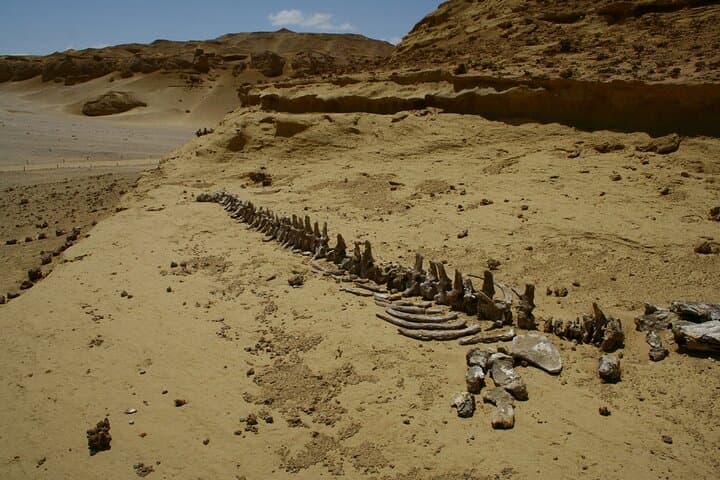
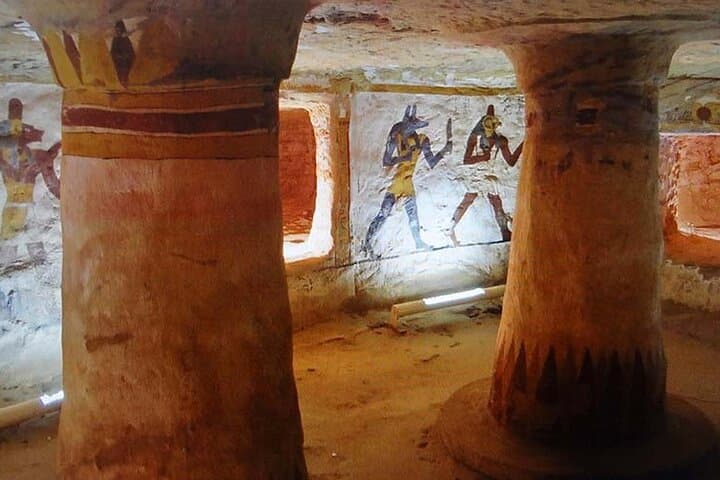
This route stitches together deep time and human history: Paleogene limestone carved into mushroom and tent shapes, 40-million-year-old whale fossils at Wadi Hitan (a UNESCO site), and oasis settlements that have farmed these margins for millennia. The geology reads like a field guide; the culture, a community that depends on limited water and seasonal crops.
Expect two full days of long drives between highlights, punctuated by short walks, sandboarding opportunities, and visits to natural waterfalls at Wadi El Rayan — Egypt’s only cascading drop born from modern irrigation overflow. The pace is expeditionary but accessible: short bursts of activity and plenty of vehicle time.
Practical essentials: bring layered sun protection, a sturdy pair of shoes for uneven limestone and sand, at least 3 liters of water per person, and cash for small village purchases. Timing matters — early starts avoid midday heat and winter nights can be sharply cool. Respect protected zones, follow guide directions around fragile fossils, and carry out all trash. This two-day circuit delivers raw desert scenery, fossil-rich badlands, and the quieter, agricultural side of Egypt beyond the Nile.
moderate.
2 days.
Moderate fitness: able to tolerate several hours of light walking, short climbs on uneven rock, and vehicle transfers.
Pickup and drop-off are provided from Cairo hotels; daily departures typically start early in the morning.
It’s accessible to most people with moderate mobility — activities include short walks, sandboarding, and standing on uneven ground.
The itinerary lists lunch and entrance fees to mentioned sites as included; water and AC transfers are provided.
This specific two-day itinerary returns to Cairo and does not include overnight desert camping; verify with the operator for multi-night options.
The Fayoum region has been inhabited since pharaonic times; Wadi Hitan preserves whale fossils that reveal the area’s marine past.
Wadi Hitan and parts of Wadi El Rayan are protected; visitors should follow established paths, avoid fossil disturbance, and minimize plastic waste.
Sun Pyramids Tours operates guided outdoor trips and adventures with an emphasis on safety, stewardship, and memorable experiences.

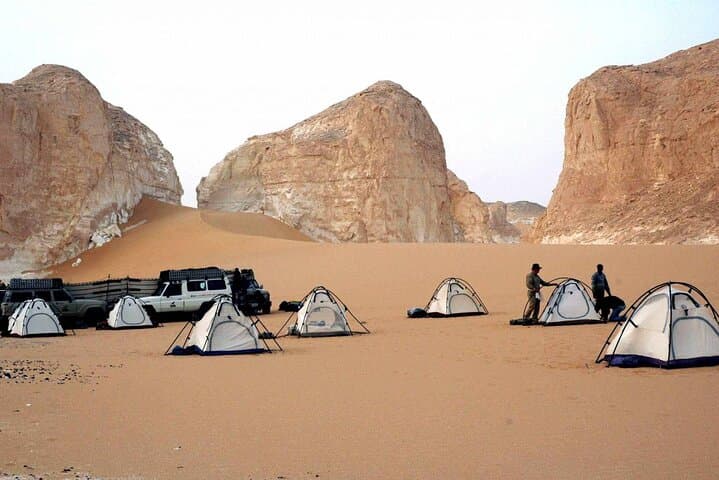
Before the sun clears Cairo’s skyline you’re already rolling west, the city falling behind as palms and sand begin to trade places. By mid-morning the Bahariya Oasis opens like a green wound in the desert — palms, farm plots and a ribbon of cool air around its springs. A rugged jeep waits to carry you across corrugated dunes where winds dare you to keep pace and limestone pillars in the White Desert stand like slow-moving sculptures.
Before the sun clears Cairo’s skyline you’re already rolling west, the city falling behind as palms and sand begin to trade places. By mid-morning the Bahariya Oasis opens like a green wound in the desert — palms, farm plots and a ribbon of cool air around its springs. A rugged jeep waits to carry you across corrugated dunes where winds dare you to keep pace and limestone pillars in the White Desert stand like slow-moving sculptures.
This route stitches together deep time and human history: Paleogene limestone carved into mushroom and tent shapes, 40-million-year-old whale fossils at Wadi Hitan (a UNESCO site), and oasis settlements that have farmed these margins for millennia. The geology reads like a field guide; the culture, a community that depends on limited water and seasonal crops.
Expect two full days of long drives between highlights, punctuated by short walks, sandboarding opportunities, and visits to natural waterfalls at Wadi El Rayan — Egypt’s only cascading drop born from modern irrigation overflow. The pace is expeditionary but accessible: short bursts of activity and plenty of vehicle time.
Practical essentials: bring layered sun protection, a sturdy pair of shoes for uneven limestone and sand, at least 3 liters of water per person, and cash for small village purchases. Timing matters — early starts avoid midday heat and winter nights can be sharply cool. Respect protected zones, follow guide directions around fragile fossils, and carry out all trash. This two-day circuit delivers raw desert scenery, fossil-rich badlands, and the quieter, agricultural side of Egypt beyond the Nile.