THE ADVENTURE COLLECTIVE® · Independent discovery and booking for outdoor travel

Trade Cairo’s bustle for a 48-hour sweep through Bahariya Oasis and the White Desert. Expect basalt ridges, chalk mushrooms, Bedouin campfires and a stark star-filled night.
Trade Cairo’s bustle for a 48-hour sweep through Bahariya Oasis and the White Desert. Expect basalt ridges, chalk mushrooms, Bedouin campfires and a stark star-filled night.
Before dawn you leave Cairo and the city’s lights shrink to a thin line on the horizon.
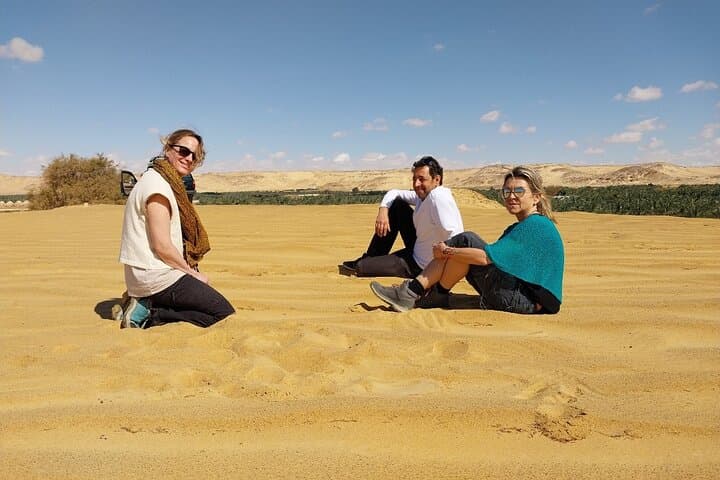
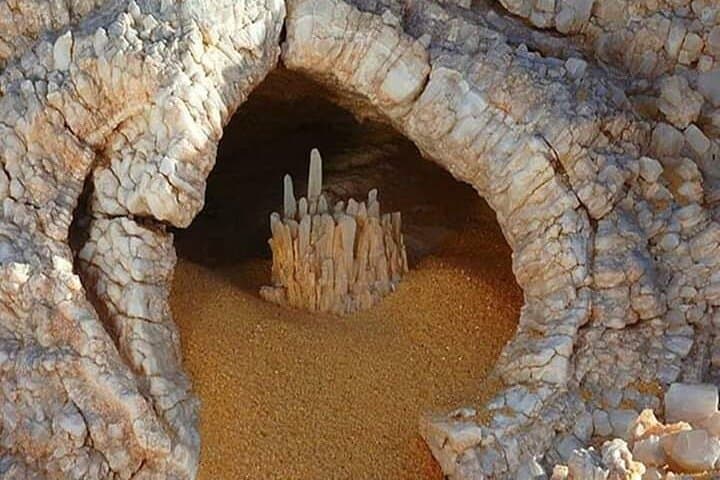
The asphalt gives way to a desert road and, through a wind-streaked window, the landscape opens into flat salt pans, basalt ridges and distant limestone silhouettes. By midmorning the convoy exchanges sedans for 4x4s and the real terrain begins: the Black Desert’s basalt hummocks rise like dark teeth; crystalline outcrops scatter light at the Crystal Mountain; sand dunes slope soft and warm underfoot.
Verified experiences and guided adventures in the surrounding area.
Operated by Misrona Tours · Bawiti (Bahariya Oasis), Giza Governorate
Before dawn you leave Cairo and the city’s lights shrink to a thin line on the horizon.
The asphalt gives way to a desert road and, through a wind-streaked window, the landscape opens into flat salt pans, basalt ridges and distant limestone silhouettes. By midmorning the convoy exchanges sedans for 4x4s and the real terrain begins: the Black Desert’s basalt hummocks rise like dark teeth; crystalline outcrops scatter light at the Crystal Mountain; sand dunes slope soft and warm underfoot.
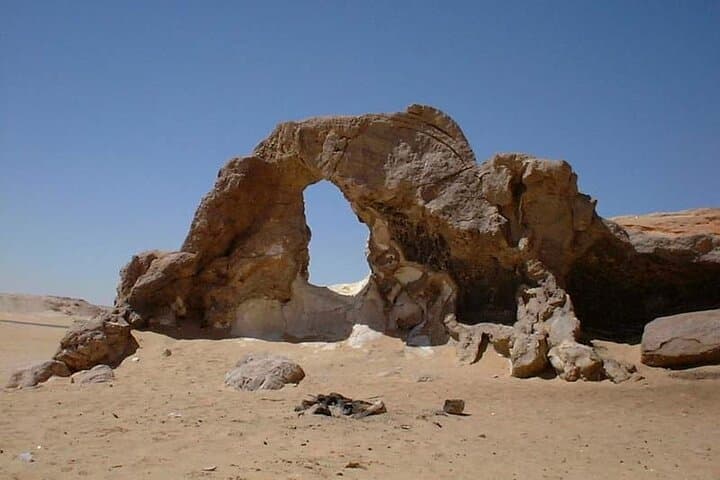
Geology here reads like a slow-motion sculptor’s notebook—wind-carved chalk in the White Desert, basalt fields from ancient volcanism, and limestone ribs worn into mushroom shapes in the Old White Desert. Bahariya itself has long been a caravan hub and, more recently, a waypoint for explorers and naturalists cataloguing these formations.
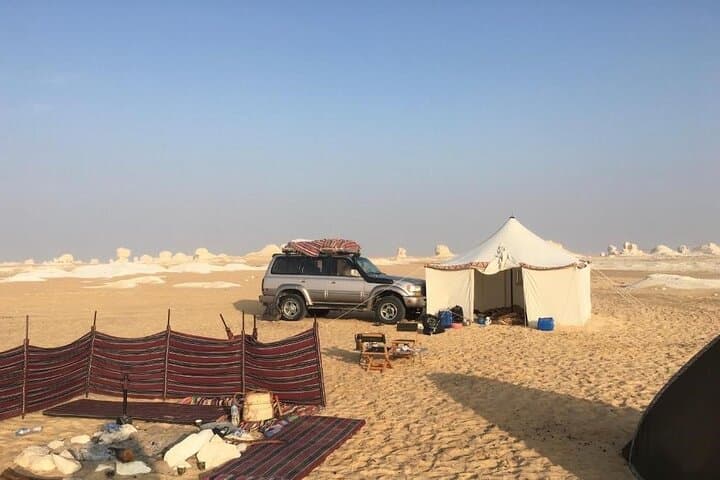
Culture is visible at camp: Bedouin tea brewing over embers, argul rhythms after dinner, and tents arranged beneath a sky that seems to sharpen every star. Sunrise and sunset are the real events—light slides across the sculptures, turning chalk from pale cream to molten gold and then to rose.
Practical guide: expect long drives on unpaved tracks, short walks over sand and rock, and minimal facilities at the desert campsite. Bring layered clothing for hot days and cold nights, carry at least 3 liters of water, and protect skin from intense sun and reflected light. The trip is suitable for most travelers but not for those with serious spinal issues; infant seating is lap-only. With basic preparation this two-day loop delivers dramatic geology, quiet nights, and close-up cultural encounters with Egypt’s desert heart.
easy.
2 days (approx. 48 hours).
Suitable for most people in average health; requires short walks on sand and some scrambling over rocks.
The tour includes breakfast, lunch and dinner plus an overnight stay in desert tents at the White Desert campsite.
Cairo to Bahariya is roughly 370 km; much of the itinerary combines paved desert roads with several hours on unpaved tracks and 4x4 routes.
Infants must sit on laps; the operator flags the trip as not recommended for travelers with spinal injuries due to bumpy vehicle transfers.
No separate visitor permit is typically required for this guided private tour; the operator manages site access and logistics.
Bahariya has been a caravan and agricultural oasis for millennia; the surrounding deserts have attracted explorers and paleontologists since the early 20th century.
Stay on designated routes, carry out all waste and avoid climbing fragile chalk formations—the park’s geological features are sensitive to human impact.
Misrona Tours operates guided outdoor trips and adventures with an emphasis on safety, stewardship, and memorable experiences.
Before dawn you leave Cairo and the city’s lights shrink to a thin line on the horizon.
The asphalt gives way to a desert road and, through a wind-streaked window, the landscape opens into flat salt pans, basalt ridges and distant limestone silhouettes. By midmorning the convoy exchanges sedans for 4x4s and the real terrain begins: the Black Desert’s basalt hummocks rise like dark teeth; crystalline outcrops scatter light at the Crystal Mountain; sand dunes slope soft and warm underfoot.
Before dawn you leave Cairo and the city’s lights shrink to a thin line on the horizon.
The asphalt gives way to a desert road and, through a wind-streaked window, the landscape opens into flat salt pans, basalt ridges and distant limestone silhouettes. By midmorning the convoy exchanges sedans for 4x4s and the real terrain begins: the Black Desert’s basalt hummocks rise like dark teeth; crystalline outcrops scatter light at the Crystal Mountain; sand dunes slope soft and warm underfoot.
Geology here reads like a slow-motion sculptor’s notebook—wind-carved chalk in the White Desert, basalt fields from ancient volcanism, and limestone ribs worn into mushroom shapes in the Old White Desert. Bahariya itself has long been a caravan hub and, more recently, a waypoint for explorers and naturalists cataloguing these formations.
Culture is visible at camp: Bedouin tea brewing over embers, argul rhythms after dinner, and tents arranged beneath a sky that seems to sharpen every star. Sunrise and sunset are the real events—light slides across the sculptures, turning chalk from pale cream to molten gold and then to rose.
Practical guide: expect long drives on unpaved tracks, short walks over sand and rock, and minimal facilities at the desert campsite. Bring layered clothing for hot days and cold nights, carry at least 3 liters of water, and protect skin from intense sun and reflected light. The trip is suitable for most travelers but not for those with serious spinal issues; infant seating is lap-only. With basic preparation this two-day loop delivers dramatic geology, quiet nights, and close-up cultural encounters with Egypt’s desert heart.