THE ADVENTURE COLLECTIVE® · Independent discovery and booking for outdoor travel

Two days from Cairo takes you into the White Desert’s wind-sculpted chalk forests and the Black Desert’s volcanic shoulders. Camp beneath a sky of stars, visit crystal mountains and Bedouin springs, and learn the local rhythms of Bahariya Oasis.
Two days from Cairo takes you into the White Desert’s wind-sculpted chalk forests and the Black Desert’s volcanic shoulders. Camp beneath a sky of stars, visit crystal mountains and Bedouin springs, and learn the local rhythms of Bahariya Oasis.
Dawn eases out of Cairo and the highway gives way to brown horizons; five hours later you stand at the lip of an emptied world where wind has been the sculptor for millennia. A private jeep cuts across the black desert, past basalt-capped hills, toward the chalk ghosts of the White Desert. Rocks that look like animals and mushrooms appear like stage props under a high, dry sky. By evening the camp is set among limestone monoliths and the stars push the dark back into sharp focus.
Verified experiences and guided adventures in the surrounding area.
Operated by Egypt Desert Rose · Bawiti (Bahariya Oasis), Giza Governorate
Dawn eases out of Cairo and the highway gives way to brown horizons; five hours later you stand at the lip of an emptied world where wind has been the sculptor for millennia. A private jeep cuts across the black desert, past basalt-capped hills, toward the chalk ghosts of the White Desert. Rocks that look like animals and mushrooms appear like stage props under a high, dry sky. By evening the camp is set among limestone monoliths and the stars push the dark back into sharp focus.
Geology here is obvious: white chalk and limestone washed up when the region was under a shallow sea, then carved by wind and sand; the Black Desert’s dark volcanic caps are the counterpoint, relics of ancient flows. Culturally the route runs through Bahariya Oasis life — small settlements, cold springs, and Bedouin hospitality that explains desert rhythms more than any map.
Expect largely flat driving interrupted by short walks over crumbly limestone and wind-smoothed sand. The itinerary typically covers the Black Desert, El Hez village and spring, Crystal Mountain, and both the old (mushroom) and new White Desert formations, with an overnight tent camp. Temperatures swing hard: hot days, cold nights.
Practical notes: accept that travel time is included (roughly five hours each way from Cairo), bring sun and cold protection, carry 3–4 liters of water per person, and wear sturdy boots for uneven surfaces. Follow your guide — climbing fragile formations is prohibited and leaves lasting damage. With simple preparation this two-day excursion pairs cinematic landscapes with hands-on cultural windows into oasis life.
moderate.
2 days.
Comfortable with long vehicle transfers, short uneven hikes, and basic camping overnight; no special fitness required
The trip includes roughly five hours of driving each way from Cairo to Bahariya Oasis, which is built into the 2-day schedule.
Yes — the standard itinerary includes lunch, dinner and breakfast, and guides typically provide tents and basic camping equipment.
The tour is listed as suitable for all physical fitness levels but is not recommended for travelers with spinal, heart, or pregnancy-related conditions; expect bumpy jeep rides and uneven short walks.
Cell coverage is limited across the desert; plan for minimal connectivity and download maps or emergency info before departure.
The White Desert’s chalk formations were formed from ancient marine sediments later sculpted by wind; the Black Desert’s darker hills are capped by ancient volcanic material. The oasis network has supported human settlement for millennia.
These formations are fragile; follow leave-no-trace rules, avoid climbing on sculptures, and use local guides to minimize impact and support the local economy.
Egypt Desert Rose operates guided outdoor trips and adventures with an emphasis on safety, stewardship, and memorable experiences.
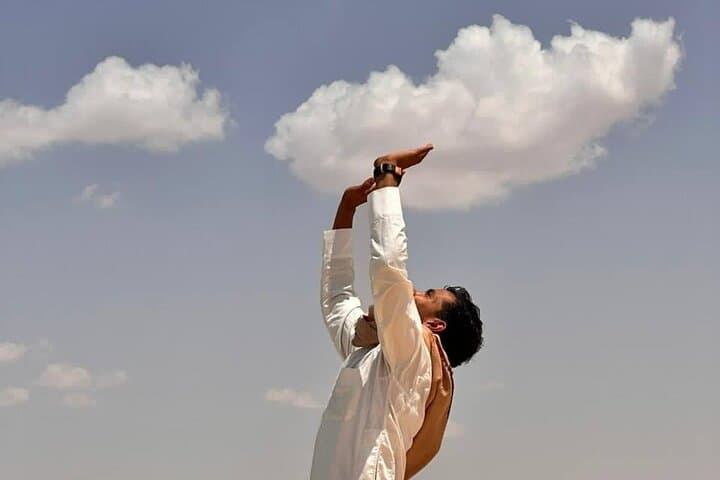
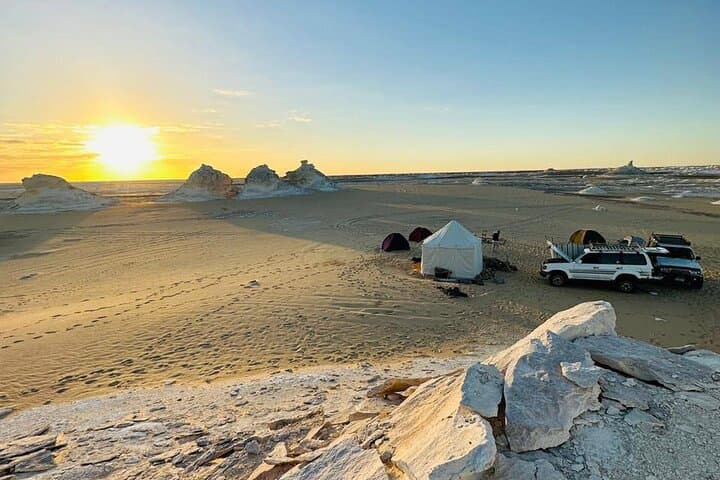
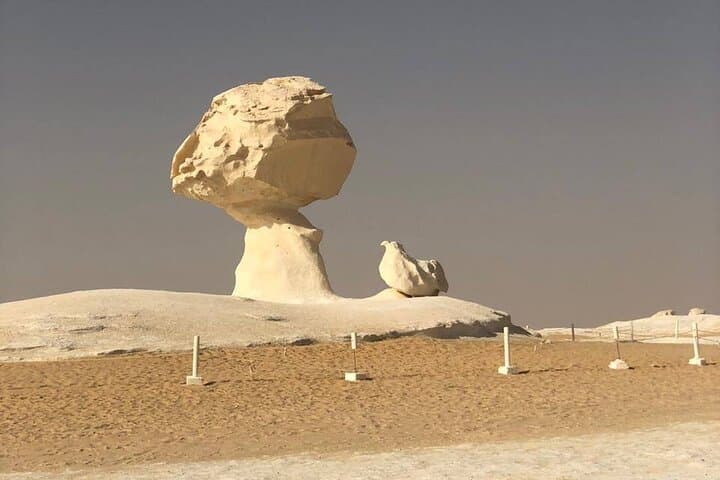
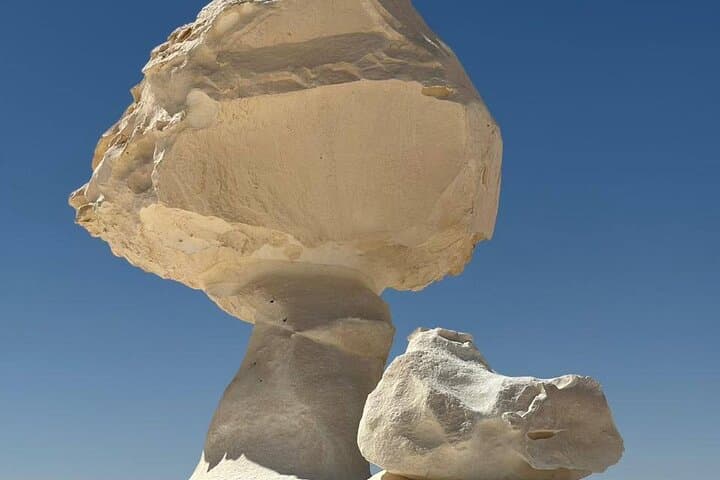
Dawn eases out of Cairo and the highway gives way to brown horizons; five hours later you stand at the lip of an emptied world where wind has been the sculptor for millennia. A private jeep cuts across the black desert, past basalt-capped hills, toward the chalk ghosts of the White Desert. Rocks that look like animals and mushrooms appear like stage props under a high, dry sky. By evening the camp is set among limestone monoliths and the stars push the dark back into sharp focus.
Dawn eases out of Cairo and the highway gives way to brown horizons; five hours later you stand at the lip of an emptied world where wind has been the sculptor for millennia. A private jeep cuts across the black desert, past basalt-capped hills, toward the chalk ghosts of the White Desert. Rocks that look like animals and mushrooms appear like stage props under a high, dry sky. By evening the camp is set among limestone monoliths and the stars push the dark back into sharp focus.
Geology here is obvious: white chalk and limestone washed up when the region was under a shallow sea, then carved by wind and sand; the Black Desert’s dark volcanic caps are the counterpoint, relics of ancient flows. Culturally the route runs through Bahariya Oasis life — small settlements, cold springs, and Bedouin hospitality that explains desert rhythms more than any map.
Expect largely flat driving interrupted by short walks over crumbly limestone and wind-smoothed sand. The itinerary typically covers the Black Desert, El Hez village and spring, Crystal Mountain, and both the old (mushroom) and new White Desert formations, with an overnight tent camp. Temperatures swing hard: hot days, cold nights.
Practical notes: accept that travel time is included (roughly five hours each way from Cairo), bring sun and cold protection, carry 3–4 liters of water per person, and wear sturdy boots for uneven surfaces. Follow your guide — climbing fragile formations is prohibited and leaves lasting damage. With simple preparation this two-day excursion pairs cinematic landscapes with hands-on cultural windows into oasis life.