THE ADVENTURE COLLECTIVE® · Independent discovery and booking for outdoor travel

Drive into the Western Desert for two days of surreal chalk pillars, basalt hills and crystalline ridges. This jeep safari from Bahariya Oasis mixes short explorations with an overnight camp beneath spectacular desert stars.
Drive into the Western Desert for two days of surreal chalk pillars, basalt hills and crystalline ridges. This jeep safari from Bahariya Oasis mixes short explorations with an overnight camp beneath spectacular desert stars.
You step from the air-conditioned jeep into a silence that seems to push back — wind carving chalk into mushroom shapes, dunes flattening the horizon. Early light throws the White Desert’s sculptures into sharp relief while the Black Desert’s basalt-capped hills broach the skyline like dark islands in sand.
Verified experiences and guided adventures in the surrounding area.
Operated by Tamer Safari · Bahariya Oasis, Giza
You step from the air-conditioned jeep into a silence that seems to push back — wind carving chalk into mushroom shapes, dunes flattening the horizon. Early light throws the White Desert’s sculptures into sharp relief while the Black Desert’s basalt-capped hills broach the skyline like dark islands in sand.
This two-day route threads Bahariya Oasis and the White and Black Deserts, following ancient caravan paths that once linked oases across the Western Desert. Geology writes the story here: wind-sanded chalk in the White Desert, volcanic basalt in the Black Desert, and crystalline calcite at the so-called Crystal Mountain. Bedouin communities still guide travelers, and their camps and simple meals reflect a long history of desert hospitality.
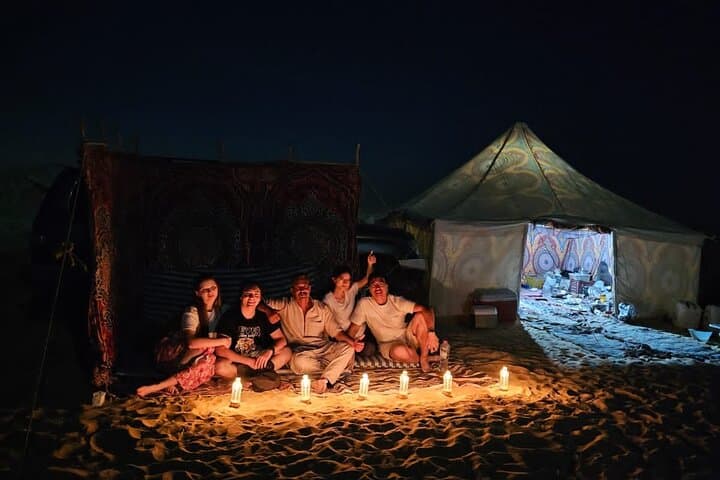
Expect jeep transfers over washboard tracks, short walks to viewpoints, and one night of camping in American tents among the formations — a near-total lack of light reveals a dense Milky Way. Guides usually prepare basic meals; water is provided but bring extra. Terrain is firm sand, occasional gravel and sharp rock at Black Desert outcrops; sturdy footwear matters. Sunrise and sunset are the photography highlights; mid-day is best for resting in shade.
Practical tips: layer for hot days and cold nights, carry a headlamp and sunscreen, and protect gear from sand. The trip is accessible to most travelers but involves rugged travel and simple camping comfort. Leave sites as you found them — the park’s fragile rock sculptures are easily scarred.
moderate.
2 days.
Suitable for travelers in average fitness: short walks, getting in and out of 4x4s, and basic campsite mobility.
Camps are set among rock formations within White Desert National Park with no permanent facilities; basics are provided by the operator.
The tour is labeled accessible for most fitness levels, but consider vehicle roughness and minimal campsite comfort for very young children or those with mobility limits.
Hot, dry days and cool to cold nights; seasonal extremes are common so pack layers and sun protection.
Facilities are basic — expect portable or simple pit-style arrangements; bring personal hygiene supplies and hand sanitizer.
Bahariya served as an oasis stop on trans-desert routes and today Bedouin communities retain guiding and hospitality traditions used by modern tours.
The White Desert is a protected national park; visitors are asked to avoid climbing delicate chalk formations and to pack out all trash to prevent irreversible erosion or scarring.
Tamer Safari operates guided outdoor trips and adventures with an emphasis on safety, stewardship, and memorable experiences.
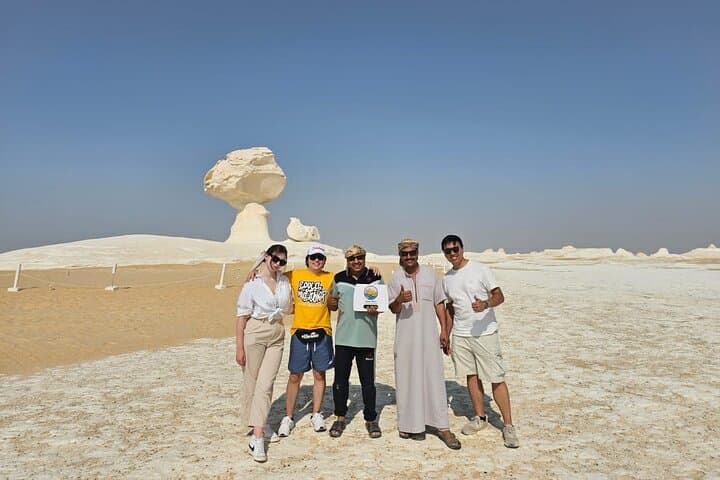
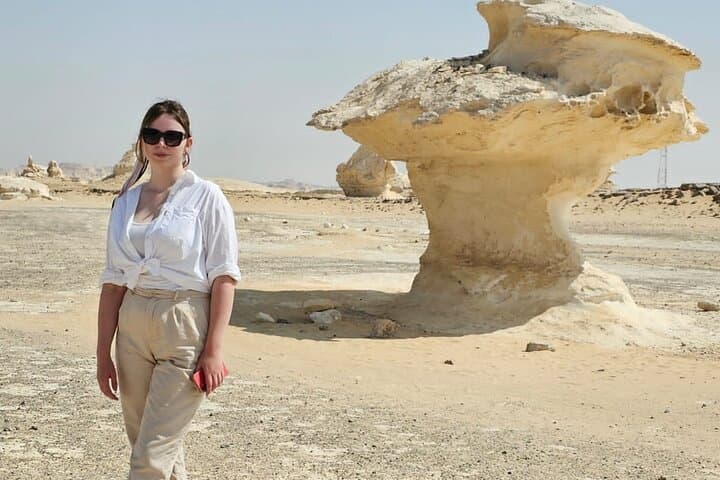
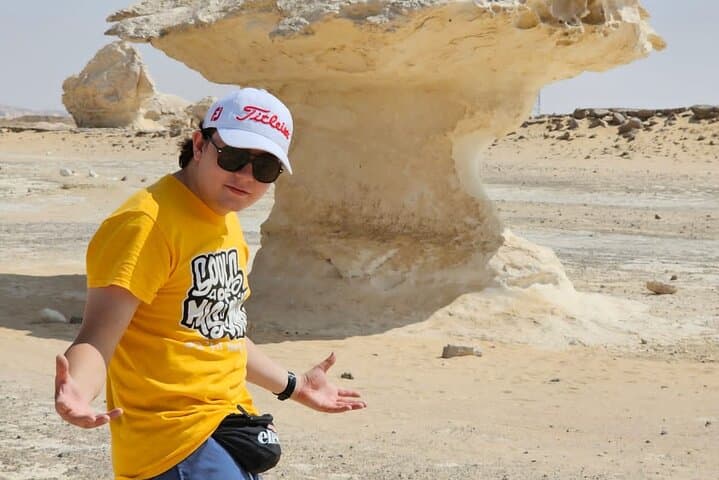
You step from the air-conditioned jeep into a silence that seems to push back — wind carving chalk into mushroom shapes, dunes flattening the horizon. Early light throws the White Desert’s sculptures into sharp relief while the Black Desert’s basalt-capped hills broach the skyline like dark islands in sand.
You step from the air-conditioned jeep into a silence that seems to push back — wind carving chalk into mushroom shapes, dunes flattening the horizon. Early light throws the White Desert’s sculptures into sharp relief while the Black Desert’s basalt-capped hills broach the skyline like dark islands in sand.
This two-day route threads Bahariya Oasis and the White and Black Deserts, following ancient caravan paths that once linked oases across the Western Desert. Geology writes the story here: wind-sanded chalk in the White Desert, volcanic basalt in the Black Desert, and crystalline calcite at the so-called Crystal Mountain. Bedouin communities still guide travelers, and their camps and simple meals reflect a long history of desert hospitality.
Expect jeep transfers over washboard tracks, short walks to viewpoints, and one night of camping in American tents among the formations — a near-total lack of light reveals a dense Milky Way. Guides usually prepare basic meals; water is provided but bring extra. Terrain is firm sand, occasional gravel and sharp rock at Black Desert outcrops; sturdy footwear matters. Sunrise and sunset are the photography highlights; mid-day is best for resting in shade.
Practical tips: layer for hot days and cold nights, carry a headlamp and sunscreen, and protect gear from sand. The trip is accessible to most travelers but involves rugged travel and simple camping comfort. Leave sites as you found them — the park’s fragile rock sculptures are easily scarred.