THE ADVENTURE COLLECTIVE® · Independent discovery and booking for outdoor travel

Spend two days exploring the White Desert from Bahariya Oasis: wind-sculpted chalk formations, a night under desert stars, and visits to the Black Desert and Crystal Mountain. This short, guided Jeep safari balances easy walking, spectacular geology, and cultural insight from Bahariya’s oasis community.
Spend two days exploring the White Desert from Bahariya Oasis: wind-sculpted chalk formations, a night under desert stars, and visits to the Black Desert and Crystal Mountain. This short, guided Jeep safari balances easy walking, spectacular geology, and cultural insight from Bahariya’s oasis community.
Morning light strips across a bleached horizon as the jeep grinds away from Bawiti and the desert begins to shape itself: long chalk mushrooms, twisted arches and low white ridges that seem to move with the wind. The White Desert doesn’t whisper — it rearranges itself daily, daring you to read the landscape’s slow edits.
Verified experiences and guided adventures in the surrounding area.
Operated by Travel Village · Bawiti, New Valley (Al Wadi Al Jadid)
Morning light strips across a bleached horizon as the jeep grinds away from Bawiti and the desert begins to shape itself: long chalk mushrooms, twisted arches and low white ridges that seem to move with the wind. The White Desert doesn’t whisper — it rearranges itself daily, daring you to read the landscape’s slow edits.
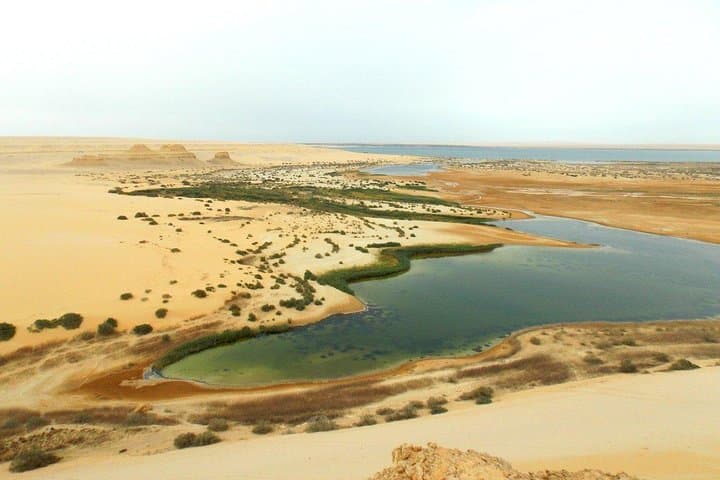
This corner of Egypt’s Western Desert sits on an ancient lakebed; wind-carved chalk and sedimentary gypsum create the stark white formations visitors come to see. The trip threads through Bahariya Oasis, the surrounding Black Desert with its weathered volcanic cones, and the glittering slabs of Crystal Mountain — an artery of quartz-strewn rock where light fractures across the slope. Locals in Bahariya have been farming date palms and trading oasis goods for millennia; the region carries traces of Pharaonic-era use and more recent Bedouin routes.
You’ll camp under clear desert sky — temperatures swing widely, so evenings bring surprising cold while daytime can push intensely hot. Meals are simple and local: stewed dishes, bread, and shared tea, served at camp after a short evening walk to watch the sunset silhouette the chalk mushrooms.
Practical guidance: plan for dusty roads and 4x4 transfer times, bring at least 3 liters of water per person per day, and layer for temperature swings. Footwear should handle sand and compact rubble rather than technical rock. Expect basic, safe overnight camping; the tour is accessible to most fitness levels but involves some climbing over uneven terrain. Book with a provider that includes permits and knows local regulations — the landscape is fragile and best explored with experienced guides.
moderate.
2 days (approx. 48 hours).
Suitable for travelers with basic mobility; able to climb into a jeep and walk short stretches over uneven ground.
Routes are on desert tracks suited to 4x4 vehicles; expect bumpy sections and some soft sand — drivers experienced with local conditions manage this routinely.
Yes; organized camps use safe, established sites and experienced guides, but bring warm clothing and follow guide instructions after dark.
Yes, but summer can be extremely hot during the day; late fall through early spring offers cooler daytime temps and more comfortable nights.
Facilities are limited at remote campsites; some operators provide basic portable toilets and handwashing; hotels in Bahariya have full facilities before and after the excursion.
The White Desert sits on an ancient Pleistocene lakebed; the chalk formations are wind-sculpted remnants of sedimentary deposits that once lay under water.
The area is ecologically fragile — stick to established paths, pack out all waste, and use guides who prioritize low-impact camping and local stewardship.
Travel Village operates guided outdoor trips and adventures with an emphasis on safety, stewardship, and memorable experiences.

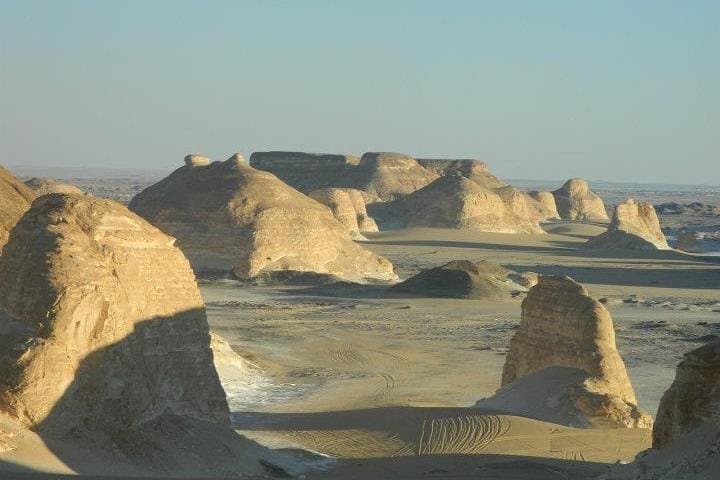
Morning light strips across a bleached horizon as the jeep grinds away from Bawiti and the desert begins to shape itself: long chalk mushrooms, twisted arches and low white ridges that seem to move with the wind. The White Desert doesn’t whisper — it rearranges itself daily, daring you to read the landscape’s slow edits.
Morning light strips across a bleached horizon as the jeep grinds away from Bawiti and the desert begins to shape itself: long chalk mushrooms, twisted arches and low white ridges that seem to move with the wind. The White Desert doesn’t whisper — it rearranges itself daily, daring you to read the landscape’s slow edits.
This corner of Egypt’s Western Desert sits on an ancient lakebed; wind-carved chalk and sedimentary gypsum create the stark white formations visitors come to see. The trip threads through Bahariya Oasis, the surrounding Black Desert with its weathered volcanic cones, and the glittering slabs of Crystal Mountain — an artery of quartz-strewn rock where light fractures across the slope. Locals in Bahariya have been farming date palms and trading oasis goods for millennia; the region carries traces of Pharaonic-era use and more recent Bedouin routes.
You’ll camp under clear desert sky — temperatures swing widely, so evenings bring surprising cold while daytime can push intensely hot. Meals are simple and local: stewed dishes, bread, and shared tea, served at camp after a short evening walk to watch the sunset silhouette the chalk mushrooms.
Practical guidance: plan for dusty roads and 4x4 transfer times, bring at least 3 liters of water per person per day, and layer for temperature swings. Footwear should handle sand and compact rubble rather than technical rock. Expect basic, safe overnight camping; the tour is accessible to most fitness levels but involves some climbing over uneven terrain. Book with a provider that includes permits and knows local regulations — the landscape is fragile and best explored with experienced guides.