THE ADVENTURE COLLECTIVE® · Independent discovery and booking for outdoor travel

Leave Cairo for two days of lunar rock formations, basalt ridges and a starlit desert camp near Farafra. This private tour pairs short walks with vehicle transfers to the White and Black Deserts and Crystal Mountain.
Leave Cairo for two days of lunar rock formations, basalt ridges and a starlit desert camp near Farafra. This private tour pairs short walks with vehicle transfers to the White and Black Deserts and Crystal Mountain.
A wind-swept dawn breaks over chalky mushroom rocks as the minibus grinds out of Cairo and the Nile's green gives way to ochre plains. By mid-afternoon the landscape has changed entirely: alabaster sculptures of the White Desert push light into surreal shapes, and the camp crew arranges tents beneath a vault of stars that feel impossibly close.
Verified experiences and guided adventures in the surrounding area.
Operated by egypt white desert · Farafra Oasis, New Valley Governorate
A wind-swept dawn breaks over chalky mushroom rocks as the minibus grinds out of Cairo and the Nile's green gives way to ochre plains. By mid-afternoon the landscape has changed entirely: alabaster sculptures of the White Desert push light into surreal shapes, and the camp crew arranges tents beneath a vault of stars that feel impossibly close.
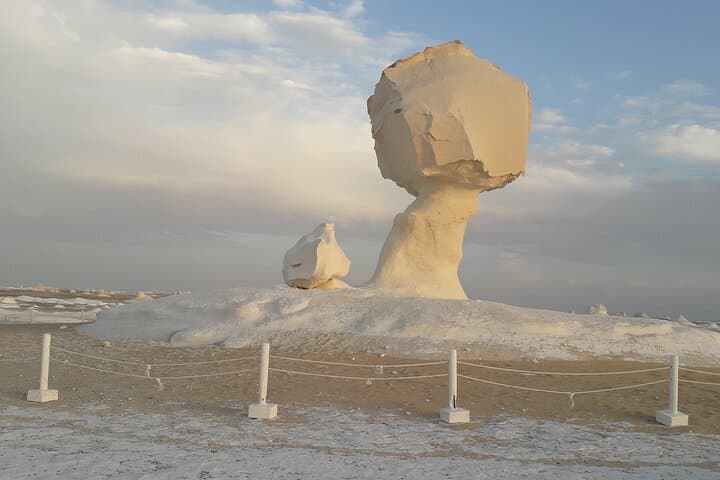
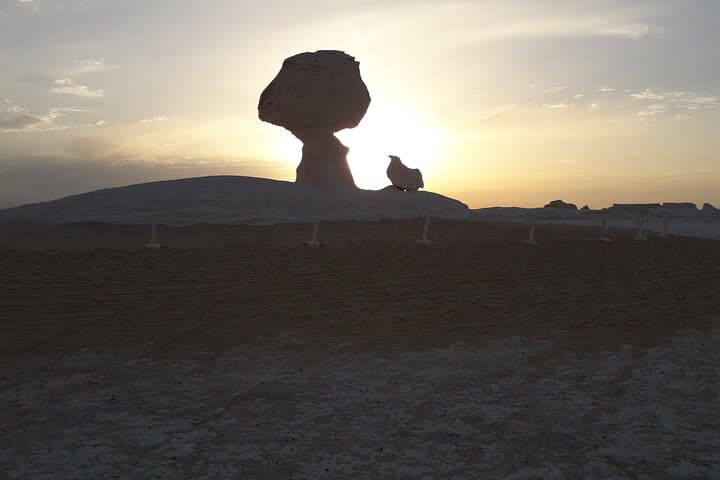
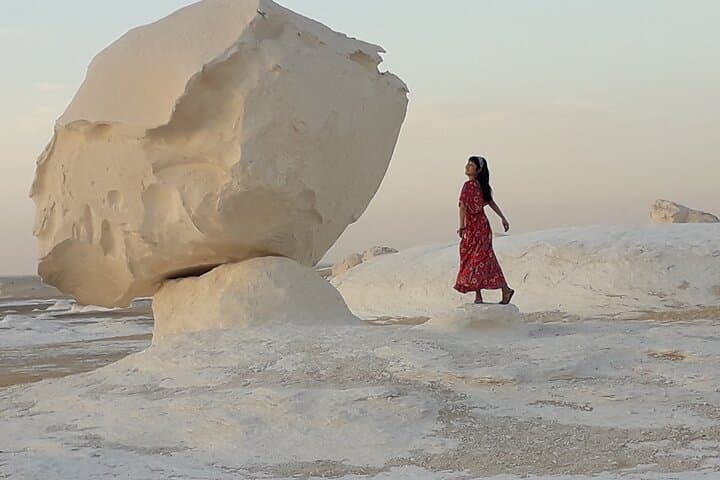
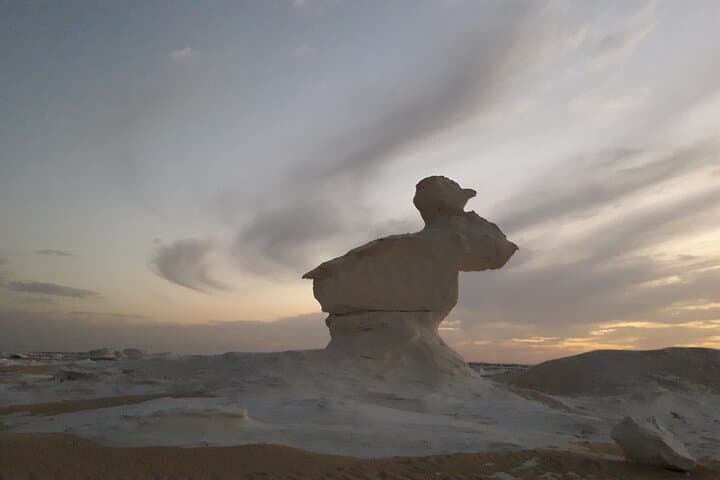
The White Desert (Sahara el Beyda) around Farafra formed when wind and rare rains sculpted Tertiary chalk into the iconic mushroom and animal-like pillars visitors come to study. Nearby the Black Desert spreads in volcanic ridges of basalt and scoria; Crystal Mountain is a low ridge of quartz and mica that glints under sun and moon alike. The local culture ties to oases communities—Farafra’s small settlements have long been caravan and pastoral stops, with simple hospitality and Bedouin-influenced desert cuisine.
Expect low-impact walking between viewpoints, a night of basic desert camping, and short drives over graded desert tracks. Guides typically include lunch, dinner and breakfast and handle permits and campsite setup; travelers should plan for exposed sun, wind, and temperature swings after sunset.
Practical: bring sun protection, refillable water (carry at least 2–3 L), closed-toe shoes for rocky ground, and a warm layer for night. Early starts avoid midday heat and produce the best light for photography. While physically undemanding, the experience rewards curiosity—watch for fossil fragments in chalk outcrops and listen for the desert wind shaping the next day’s silhouettes.
moderate.
2 days (24–36 hours).
Light-to-moderate fitness; able to walk short distances over uneven desert ground and board vehicles for transfers.
The tour is an overnight road trip of roughly 6–8 hours one-way depending on stops and traffic; travel is mostly on desert highways and graded roads.
Yes—this private tour typically includes tent setup, sleeping mats and basic camp facilities handled by guides; confirm if you need sleeping bags or extra pads.
The itinerary is suitable for most fitness levels with short walks, but uneven terrain and sand may be challenging—discuss specific mobility needs with the operator before booking.
Meals included are local and commonly straightforward—freshly cooked lunches, dinner and breakfast are provided; notify the operator of dietary restrictions when booking.
Oasis settlements such as Farafra have long served trans-Saharan routes; the geology records marine sediments turned to chalk when this region was once under an ancient sea.
Visitors should stick to established tracks and campsites to avoid damaging fragile chalk formations; pack out all waste and follow guide instructions to minimize impact.
egypt white desert operates guided outdoor trips and adventures with an emphasis on safety, stewardship, and memorable experiences.
A wind-swept dawn breaks over chalky mushroom rocks as the minibus grinds out of Cairo and the Nile's green gives way to ochre plains. By mid-afternoon the landscape has changed entirely: alabaster sculptures of the White Desert push light into surreal shapes, and the camp crew arranges tents beneath a vault of stars that feel impossibly close.
A wind-swept dawn breaks over chalky mushroom rocks as the minibus grinds out of Cairo and the Nile's green gives way to ochre plains. By mid-afternoon the landscape has changed entirely: alabaster sculptures of the White Desert push light into surreal shapes, and the camp crew arranges tents beneath a vault of stars that feel impossibly close.
The White Desert (Sahara el Beyda) around Farafra formed when wind and rare rains sculpted Tertiary chalk into the iconic mushroom and animal-like pillars visitors come to study. Nearby the Black Desert spreads in volcanic ridges of basalt and scoria; Crystal Mountain is a low ridge of quartz and mica that glints under sun and moon alike. The local culture ties to oases communities—Farafra’s small settlements have long been caravan and pastoral stops, with simple hospitality and Bedouin-influenced desert cuisine.
Expect low-impact walking between viewpoints, a night of basic desert camping, and short drives over graded desert tracks. Guides typically include lunch, dinner and breakfast and handle permits and campsite setup; travelers should plan for exposed sun, wind, and temperature swings after sunset.
Practical: bring sun protection, refillable water (carry at least 2–3 L), closed-toe shoes for rocky ground, and a warm layer for night. Early starts avoid midday heat and produce the best light for photography. While physically undemanding, the experience rewards curiosity—watch for fossil fragments in chalk outcrops and listen for the desert wind shaping the next day’s silhouettes.