THE ADVENTURE COLLECTIVE® · Independent discovery and booking for outdoor travel

Two days of high-altitude spectacle across Bolivia’s Salar de Uyuni and Eduardo Avaroa Reserve: salt deserts, rock islands, colored lagoons and flamingos, all accessed by private 4x4. Read on for what to expect, altitude tips, and packing must-haves.
Two days of high-altitude spectacle across Bolivia’s Salar de Uyuni and Eduardo Avaroa Reserve: salt deserts, rock islands, colored lagoons and flamingos, all accessed by private 4x4. Read on for what to expect, altitude tips, and packing must-haves.
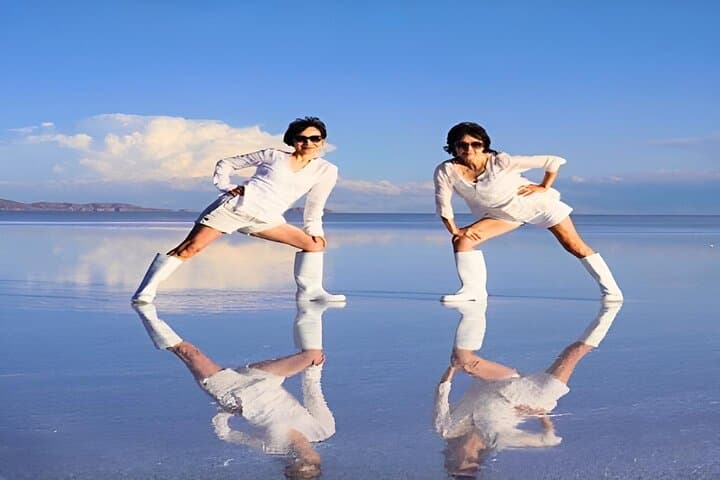
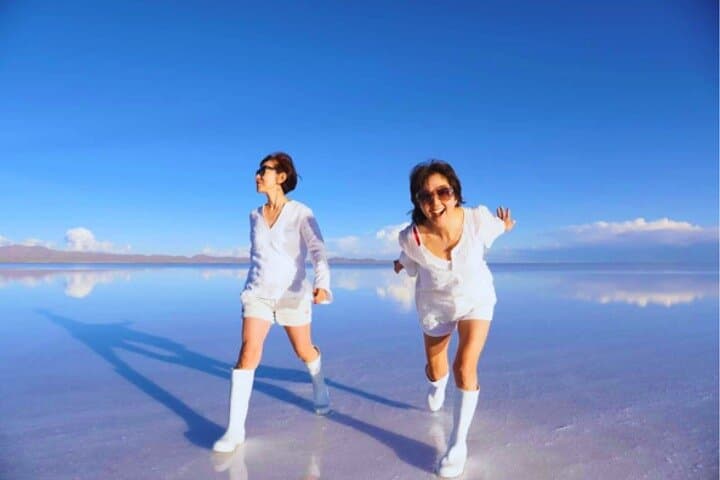
You step out of a cold, quiet jeep onto a white surface so bright it forces you to squint. The Salar de Uyuni stretches to the horizon — a sodium plain that flattens perspective and turns distances into puzzles. By sunset the light scrubs the land into liquid gold and reflection; by dawn the high puna air bites, and distant volcanoes draw sharp silhouettes.
Verified experiences and guided adventures in the surrounding area.
Operated by Bolivia Highlights · Uyuni, Potosí Department
You step out of a cold, quiet jeep onto a white surface so bright it forces you to squint. The Salar de Uyuni stretches to the horizon — a sodium plain that flattens perspective and turns distances into puzzles. By sunset the light scrubs the land into liquid gold and reflection; by dawn the high puna air bites, and distant volcanoes draw sharp silhouettes.
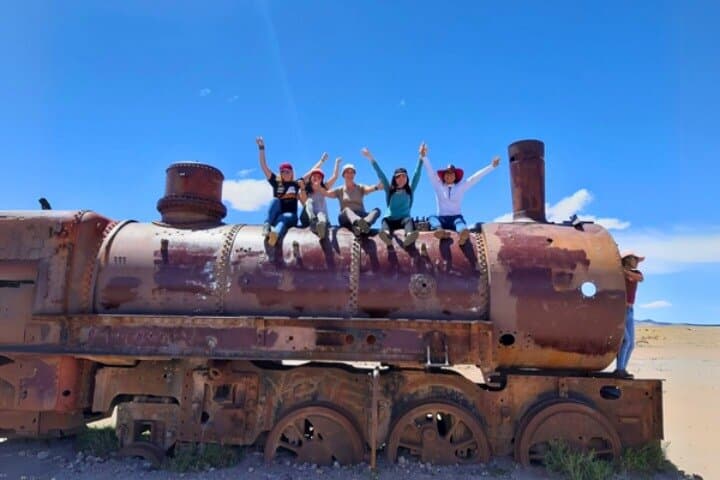
This two-day private 4x4 route threads together the region’s geological extremes: rusting steam locomotives left at the Train Cemetery from the 19th-century mining boom, salt-harvesting hamlets like Colchani, Inkahuasi’s giant cacti perched on volcanic rock, and the surreal lagoons and rock forests of Eduardo Avaroa National Reserve. The high Andean plateau—formed by uplift and volcanic activity—hosts mineral-rich lakes that stain the landscape crimson, green, and cobalt and attract flocks of Andean and James’s flamingos.
Expect long drives on salt crust, gravel, and desert track, punctuated by short hikes for viewpoints and photo ops. Altitudes commonly exceed 3,600–4,300 m; acclimatization, slow pacing, and hydration matter. Facilities are basic outside Uyuni town; the itinerary usually includes simple meals, a night in a salt-themed hotel, and guided stops for sunset and sunrise.
Practical essentials: layer for vast temperature swings, carry sun protection and a full water bottle, and bring a camera with spare batteries—cold drains power fast. If you travel in the rainy season (roughly Jan–Mar) be prepared for flooded sections that create mirror-like reflections but can limit vehicle access. With planning and respect for fragile high-altitude ecosystems, this concentrated loop delivers the region’s most cinematic landscapes in two compact days.
moderate.
2 days.
Reasonable fitness for short hikes and long vehicle days; ability to walk over uneven terrain and tolerate high altitude recommended
Many stops are between ~3,600–4,300 m; some travelers experience mild symptoms. Allow time to acclimatize, drink water, avoid alcohol, and notify your guide if you feel unwell.
Outside Uyuni town facilities are basic—expect simple lunches and rustic restrooms at remote stops; bring toilet paper and hand sanitizer just in case.
Yes, but the rainy season (roughly Jan–Mar) can flood sections of the salt, creating reflective surfaces but potentially altering access to some sites like Inkahuasi.
Children can ride in vehicles and infant seats may be available, but long drives and high altitude make this tour better suited to older children and families accustomed to altitude.
The region’s rail relics and salt economy date to the late 19th-century mining boom; indigenous communities have long harvested and used salt and puna resources.
The high Andean wetlands and salt crusts are fragile—stay on designated tracks, avoid driving on wet salt crusts, and pack out all trash to protect breeding flamingo habitats.
Bolivia Highlights operates guided outdoor trips and adventures with an emphasis on safety, stewardship, and memorable experiences.

You step out of a cold, quiet jeep onto a white surface so bright it forces you to squint. The Salar de Uyuni stretches to the horizon — a sodium plain that flattens perspective and turns distances into puzzles. By sunset the light scrubs the land into liquid gold and reflection; by dawn the high puna air bites, and distant volcanoes draw sharp silhouettes.
You step out of a cold, quiet jeep onto a white surface so bright it forces you to squint. The Salar de Uyuni stretches to the horizon — a sodium plain that flattens perspective and turns distances into puzzles. By sunset the light scrubs the land into liquid gold and reflection; by dawn the high puna air bites, and distant volcanoes draw sharp silhouettes.
This two-day private 4x4 route threads together the region’s geological extremes: rusting steam locomotives left at the Train Cemetery from the 19th-century mining boom, salt-harvesting hamlets like Colchani, Inkahuasi’s giant cacti perched on volcanic rock, and the surreal lagoons and rock forests of Eduardo Avaroa National Reserve. The high Andean plateau—formed by uplift and volcanic activity—hosts mineral-rich lakes that stain the landscape crimson, green, and cobalt and attract flocks of Andean and James’s flamingos.
Expect long drives on salt crust, gravel, and desert track, punctuated by short hikes for viewpoints and photo ops. Altitudes commonly exceed 3,600–4,300 m; acclimatization, slow pacing, and hydration matter. Facilities are basic outside Uyuni town; the itinerary usually includes simple meals, a night in a salt-themed hotel, and guided stops for sunset and sunrise.
Practical essentials: layer for vast temperature swings, carry sun protection and a full water bottle, and bring a camera with spare batteries—cold drains power fast. If you travel in the rainy season (roughly Jan–Mar) be prepared for flooded sections that create mirror-like reflections but can limit vehicle access. With planning and respect for fragile high-altitude ecosystems, this concentrated loop delivers the region’s most cinematic landscapes in two compact days.