THE ADVENTURE COLLECTIVE® · Independent discovery and booking for outdoor travel

Spend two days driving and walking across the world’s largest salt flat, photographing mirrored horizons, visiting the Train Cemetery and Colchani salt village, and exploring Thunupa Volcano and Incahuasi Island. This high‑altitude trip balances easy walks with longer vehicle transfers and iconic photo stops.
Spend two days driving and walking across the world’s largest salt flat, photographing mirrored horizons, visiting the Train Cemetery and Colchani salt village, and exploring Thunupa Volcano and Incahuasi Island. This high‑altitude trip balances easy walks with longer vehicle transfers and iconic photo stops.
The first light breaks across a flat so vast it reads like a horizon without walls. On day one the world becomes a polished screen: the Salar de Uyuni stretches in every direction, reflecting sky and boots, while the low ridge of Thunupa looms dark and patient to the north.
Verified experiences and guided adventures in the surrounding area.
Operated by Magic Land Travel · Uyuni, Potosí Department
The first light breaks across a flat so vast it reads like a horizon without walls. On day one the world becomes a polished screen: the Salar de Uyuni stretches in every direction, reflecting sky and boots, while the low ridge of Thunupa looms dark and patient to the north.
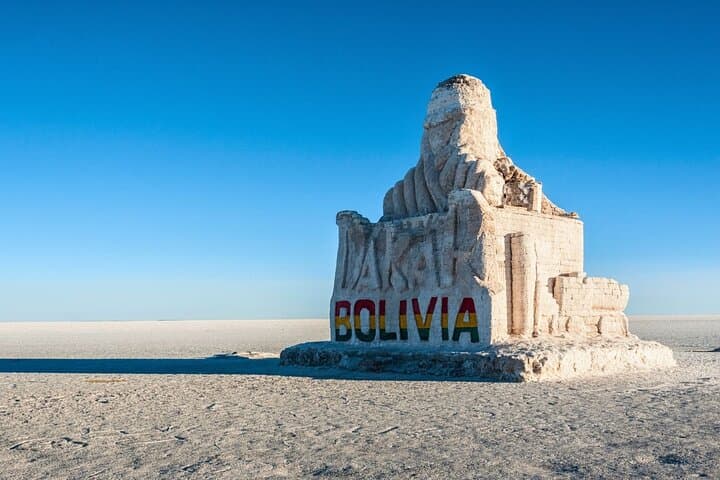
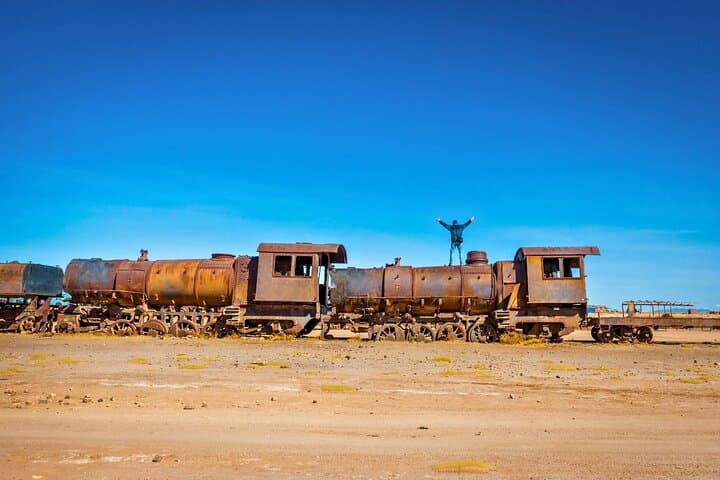
This route threads history and geology — abandoned steam locomotives at the Train Cemetery recall the 19th‑century mining boom, salt-refining pits at Colchani show centuries-old extraction techniques, and Incahuasi Island’s fossilized coral and giant cacti hint at a time when this plain was seabed. Local Aymara and Quechua culture persists in small markets and salt‑craft stalls, and the Coquesa mummies connect visitors to precolonial regional life.
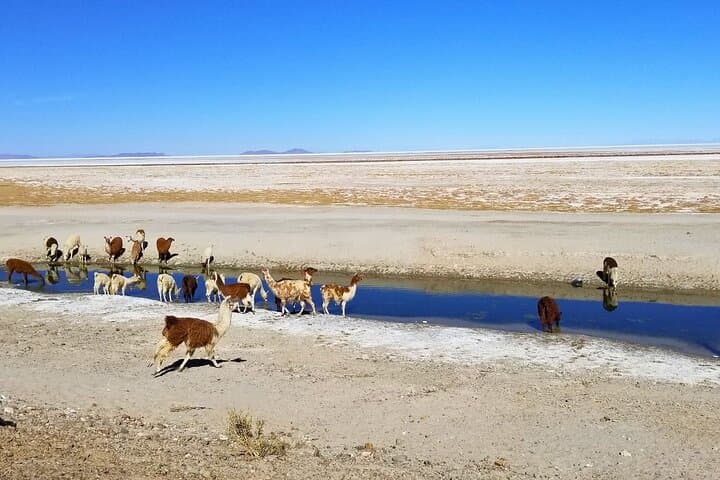
Expect high‑altitude conditions: the salt flats sit at roughly 3,656 m (11,995 ft), open wind-swept plains, and short hikes around Incahuasi or to Thunupa’s lower craters involve uneven volcanic scree and altitude gain of a few hundred meters. Wildlife appears in pockets — flamingos and llamas are common near seasonal lagoons.
Practically, this is a two‑day, vehicle‑forward trip with several short walks and photo stops: a morning departure, afternoon salt-flat session and sunset at Thunupa on day one; sunrise options, Coquesa visit, Incahuasi and return on day two. Bring layered clothing for strong sun and subzero nights, sun protection, water, and plan for long stretches in a 4×4. Acclimatize beforehand and carry cash for small purchases in Colchani.
moderate.
2 days (approx. 48 hours).
Suitable for most active travelers who can tolerate high altitude and several hours of sitting in a 4×4; short hikes require basic stamina.
For the basic two‑day route a Spanish‑speaking driver/guide is included; local guides are recommended for full Thunupa summits or detailed cultural visits like Coquesa.
Night temperatures can drop below freezing, especially in the dry season—bring warm layers and an insulated sleeping bag if staying in minimalist lodging.
The mirror effect happens in the rainy season (roughly December–March) after rains create a thin water layer on the salt surface.
Yes—the region is around 3,656 m; symptoms are common for unacclimatized visitors. Rest, hydrate, and ascend slowly; seek medical help if symptoms worsen.
The Uyuni basin was an ancient lake bed; salt extraction and 19th‑century railroad development shaped the local economy and settlements.
Visitors should avoid overnight stays directly on the salt crust and use designated pathways; local groups work to limit contamination and protect water pools that host flamingos.
Magic Land Travel operates guided outdoor trips and adventures with an emphasis on safety, stewardship, and memorable experiences.
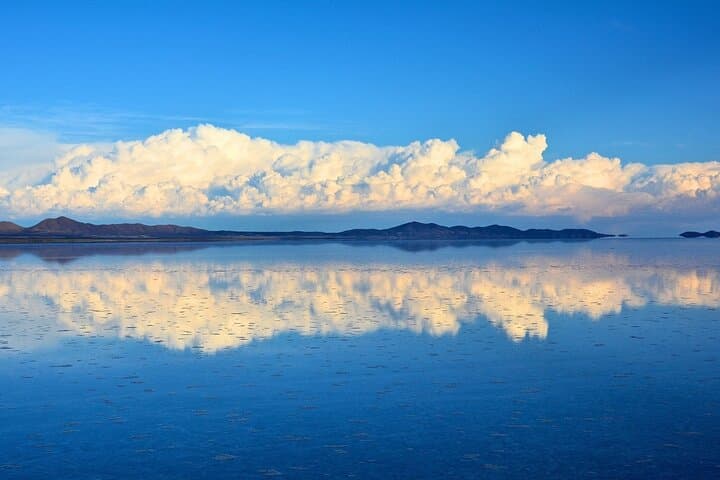
The first light breaks across a flat so vast it reads like a horizon without walls. On day one the world becomes a polished screen: the Salar de Uyuni stretches in every direction, reflecting sky and boots, while the low ridge of Thunupa looms dark and patient to the north.
The first light breaks across a flat so vast it reads like a horizon without walls. On day one the world becomes a polished screen: the Salar de Uyuni stretches in every direction, reflecting sky and boots, while the low ridge of Thunupa looms dark and patient to the north.
This route threads history and geology — abandoned steam locomotives at the Train Cemetery recall the 19th‑century mining boom, salt-refining pits at Colchani show centuries-old extraction techniques, and Incahuasi Island’s fossilized coral and giant cacti hint at a time when this plain was seabed. Local Aymara and Quechua culture persists in small markets and salt‑craft stalls, and the Coquesa mummies connect visitors to precolonial regional life.
Expect high‑altitude conditions: the salt flats sit at roughly 3,656 m (11,995 ft), open wind-swept plains, and short hikes around Incahuasi or to Thunupa’s lower craters involve uneven volcanic scree and altitude gain of a few hundred meters. Wildlife appears in pockets — flamingos and llamas are common near seasonal lagoons.
Practically, this is a two‑day, vehicle‑forward trip with several short walks and photo stops: a morning departure, afternoon salt-flat session and sunset at Thunupa on day one; sunrise options, Coquesa visit, Incahuasi and return on day two. Bring layered clothing for strong sun and subzero nights, sun protection, water, and plan for long stretches in a 4×4. Acclimatize beforehand and carry cash for small purchases in Colchani.