THE ADVENTURE COLLECTIVE® · Independent discovery and booking for outdoor travel

Two days of coastline, forest canopy and wildlife: cross the Storms River suspension bridge, stand beneath an 800-year-old yellowwood and choose a canopy tour or kayak on protected water. Finish with primate reserves and Jeffreys Bay’s surf culture.
Two days of coastline, forest canopy and wildlife: cross the Storms River suspension bridge, stand beneath an 800-year-old yellowwood and choose a canopy tour or kayak on protected water. Finish with primate reserves and Jeffreys Bay’s surf culture.
The day opens on the Paul Sauer (Storms River) Bridge, wind and spray sharpening the edge of the ocean as walkers peer over the plank-and-steel span that threads the storm-battered mouth of the river. Tsitsikamma’s forest closes in immediately beyond the bridge—green boles, dripping lianas and a damp, loamy scent that seems to slow time.
Verified experiences and guided adventures in the surrounding area.
Operated by Carlin's Tours · Storms River Village, Eastern Cape
The day opens on the Paul Sauer (Storms River) Bridge, wind and spray sharpening the edge of the ocean as walkers peer over the plank-and-steel span that threads the storm-battered mouth of the river. Tsitsikamma’s forest closes in immediately beyond the bridge—green boles, dripping lianas and a damp, loamy scent that seems to slow time.
The region sits on the eastern edge of the Garden Route, where coastal sandstones meet ancient forest soils. The Storms River Mouth suspension bridge sits above a rock-cut inlet sculpted by wave and tidal force; nearby the Big Tree, an 800-year-old yellowwood rising roughly 36 m with a 9 m circumference, recalls the forest’s antiquity. The cultural landscape blends Xhosa coastal communities, a long history of maritime trade, and recent ecotourism focused on low-impact trails and wildlife viewing.
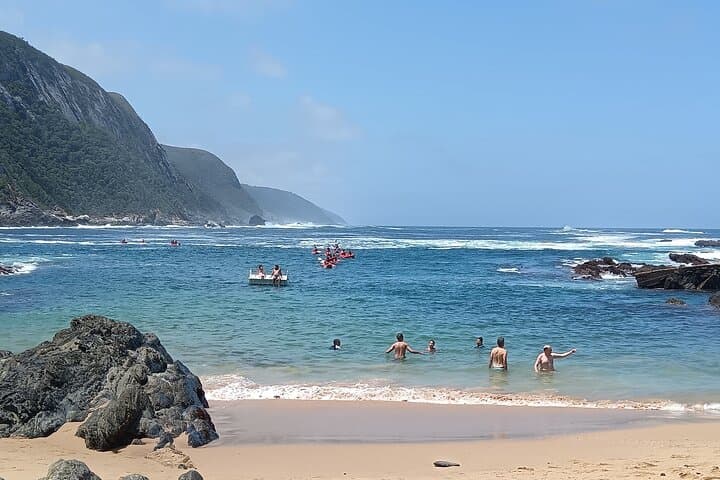
On this private two-day route, expect a 2 km photographic walk to the suspension bridge, a 1 km circular Big Tree trail, and a choice between an up-to-30 m Tsitsikamma canopy tour or a guided kayak-and-lilo option on sheltered water (wetsuits in winter). Day two highlights include Birds of Eden (the world’s largest free-flight aviary), Monkeyland’s free-roaming primates, and a coastal detour to Jeffreys Bay, a global surf destination. The Bloukrans bridge viewpoint appears on the route; bungy jumping from the bridge (206 m) is optional and payable locally.
Practical guidance: pack sturdy, waterproof shoes for muddy forest tracks, layers for coastal wind, and 1–2 liters of water for daily outings. Start hikes mid-morning for better light and calmer sea breezes, and carry a daypack with rain protection—this coast can change quickly.
moderate.
2 days (active periods ~4–6 hours/day).
Moderate fitness: able to walk uneven trails for several hours and manage short flights of stairs or uneven boardwalks.
The walk from the park parking area to the Storms River suspension bridge is about 2 km round trip and is suitable for most visitors with a moderate fitness level.
The Tsitsikamma canopy tour is conducted on cables up to 30 m above the forest floor and is relaxed in pace; participants with significant acrophobia should choose the kayak/lilo option instead.
Bungy jumping at Bloukrans is optional and booked/paid locally (quoted price R1690); the tour stops at the viewpoint even if you do not jump.
Wetsuits are available in winter for the kayak and lilo option—confirm sizes in advance with the operator.
The Garden Route coastline around Tsitsikamma has long been a maritime corridor; the Paul Sauer Bridge (Storms River Bridge) is an early 20th-century landmark linking coastal communities and protected areas.
Tsitsikamma National Park emphasizes low-impact visitation and trail maintenance; visitors are asked to stick to paths, avoid feeding wildlife, and pack out waste to protect fragile coastal and forest ecosystems.
Carlin's Tours operates guided outdoor trips and adventures with an emphasis on safety, stewardship, and memorable experiences.
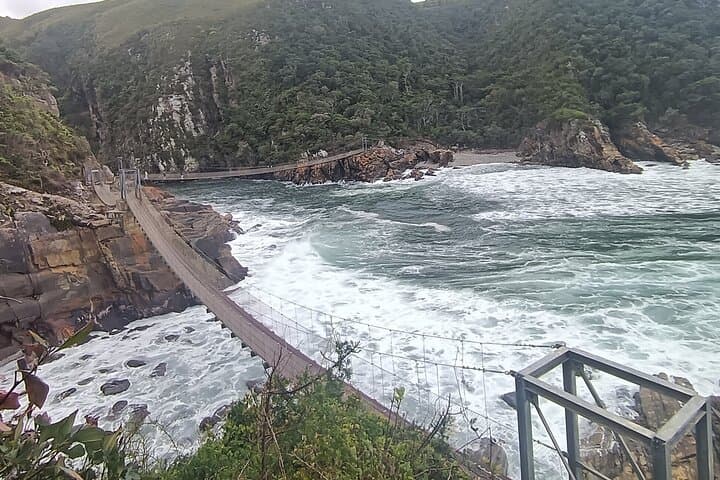
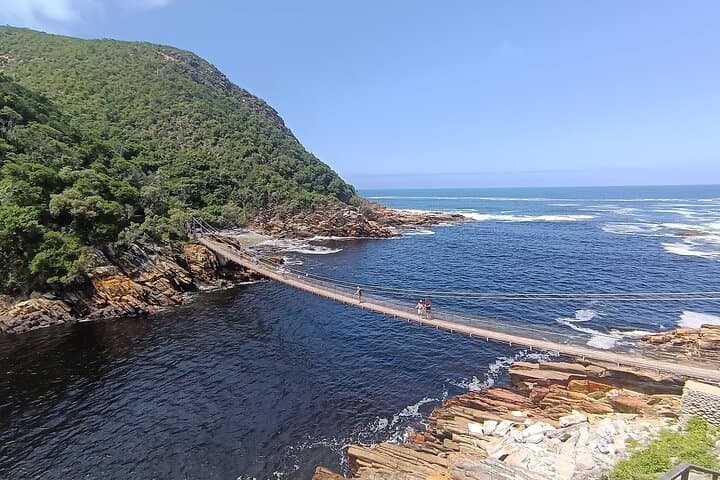
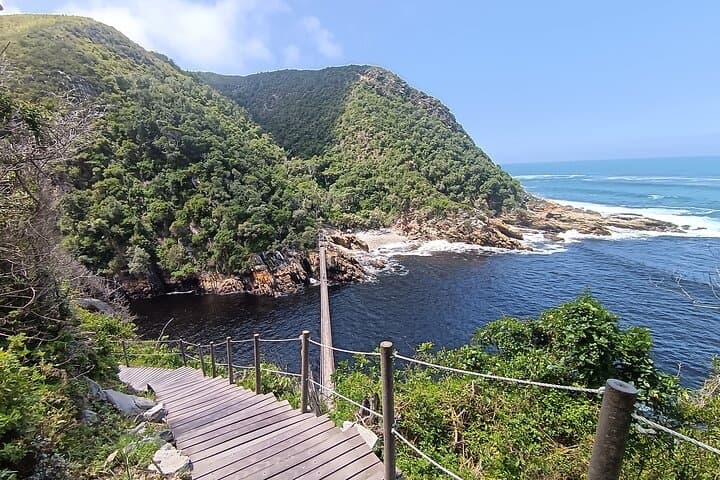
The day opens on the Paul Sauer (Storms River) Bridge, wind and spray sharpening the edge of the ocean as walkers peer over the plank-and-steel span that threads the storm-battered mouth of the river. Tsitsikamma’s forest closes in immediately beyond the bridge—green boles, dripping lianas and a damp, loamy scent that seems to slow time.
The day opens on the Paul Sauer (Storms River) Bridge, wind and spray sharpening the edge of the ocean as walkers peer over the plank-and-steel span that threads the storm-battered mouth of the river. Tsitsikamma’s forest closes in immediately beyond the bridge—green boles, dripping lianas and a damp, loamy scent that seems to slow time.
The region sits on the eastern edge of the Garden Route, where coastal sandstones meet ancient forest soils. The Storms River Mouth suspension bridge sits above a rock-cut inlet sculpted by wave and tidal force; nearby the Big Tree, an 800-year-old yellowwood rising roughly 36 m with a 9 m circumference, recalls the forest’s antiquity. The cultural landscape blends Xhosa coastal communities, a long history of maritime trade, and recent ecotourism focused on low-impact trails and wildlife viewing.
On this private two-day route, expect a 2 km photographic walk to the suspension bridge, a 1 km circular Big Tree trail, and a choice between an up-to-30 m Tsitsikamma canopy tour or a guided kayak-and-lilo option on sheltered water (wetsuits in winter). Day two highlights include Birds of Eden (the world’s largest free-flight aviary), Monkeyland’s free-roaming primates, and a coastal detour to Jeffreys Bay, a global surf destination. The Bloukrans bridge viewpoint appears on the route; bungy jumping from the bridge (206 m) is optional and payable locally.
Practical guidance: pack sturdy, waterproof shoes for muddy forest tracks, layers for coastal wind, and 1–2 liters of water for daily outings. Start hikes mid-morning for better light and calmer sea breezes, and carry a daypack with rain protection—this coast can change quickly.