THE ADVENTURE COLLECTIVE® · Independent discovery and booking for outdoor travel

Spend two focused days in Tsavo East National Park—long game drives, a night at a full-board lodge near Voi, and high chances of seeing elephants, lions, giraffes, and zebras. This compact safari is ideal for travelers who want intense wildlife viewing without a long route change.
Spend two focused days in Tsavo East National Park—long game drives, a night at a full-board lodge near Voi, and high chances of seeing elephants, lions, giraffes, and zebras. This compact safari is ideal for travelers who want intense wildlife viewing without a long route change.
The vehicle hums to life before dawn and the plains open like a map, red dust lifting where elephants move between acacia shadows. Morning in Tsavo East is about silhouettes—giraffes feeding on thorny crowns, zebras banded against the light, and a distant pillar of dust announcing a buffalo herd.
Verified experiences and guided adventures in the surrounding area.
Operated by Shagami Kenya Tours and Safaris · Voi, Taita-Taveta County
The vehicle hums to life before dawn and the plains open like a map, red dust lifting where elephants move between acacia shadows. Morning in Tsavo East is about silhouettes—giraffes feeding on thorny crowns, zebras banded against the light, and a distant pillar of dust announcing a buffalo herd.
Tsavo East is one of Kenya’s largest protected areas, a semi-arid expanse carved by the Galana River and dotted with volcanic outcrops and seasonal dambos. The park’s modern fame mixes natural history with human history: the late-19th-century railway and the infamous “man-eaters of Tsavo” are part of the region’s story, while nearby Taita communities keep long-standing cultural ties to the land.
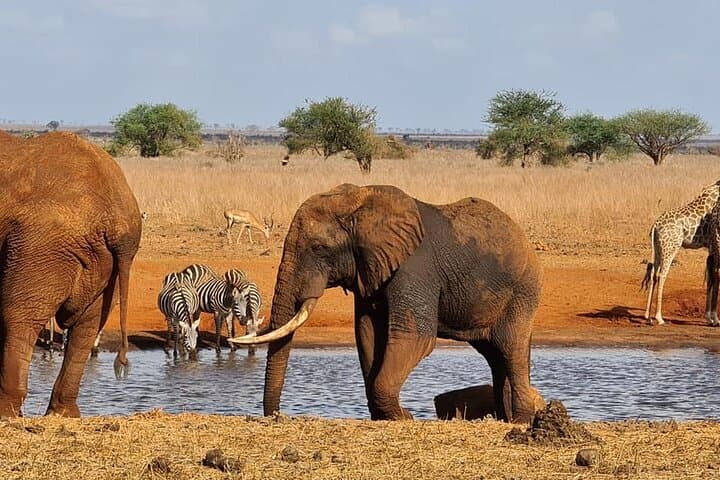
Geology gives Tsavo its character—ancient lava flows, kopjes, and wide red plains that concentrate game at seasonal waterholes. Wildlife sightings here are often up close: large elephant herds, prides of lion, elusive leopards, and roaming giraffes are common on game drives, especially during the dry months when animals cluster near permanent water.
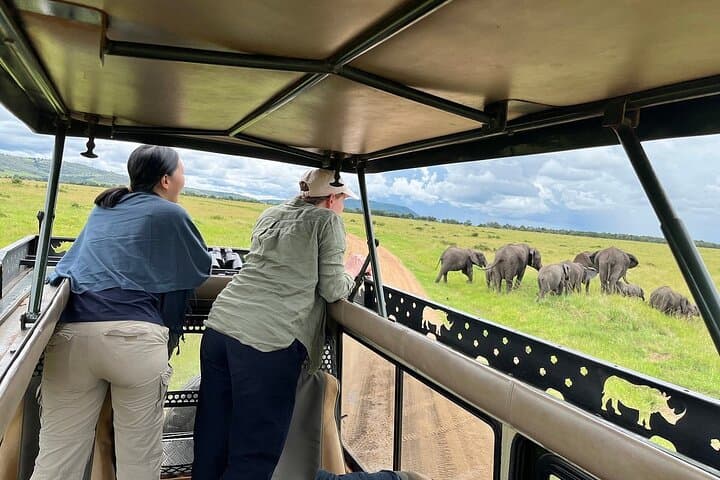
Practically, expect long game-drive windows, bumpy dirt tracks, and strong sun. The itinerary typically includes a three-hour transfer to the park, afternoon and early-morning drives, and one night at a full-board lodge near Voi. Bring binoculars and a 200–400mm lens if you carry a camera; layers for cool mornings; insect repellent and malaria precautions; and neutral clothing to reduce spooking animals. Respect vehicle rules and keep distance—Tsavo’s wildlife is wild, not tame. Early starts yield the best light and the most movement; aim to be ready before first light to make the most of a compact, wildlife-focused two-day safari.
easy.
2 days.
Low to moderate—able to sit for extended game drives and walk short distances at the lodge.
Yes—according to the itinerary, park admission is included with the tour's game drives and lodge stay.
Pick-up is arranged from your accommodation in the Mombasa/Voi region—confirm your specific pickup point when booking.
The tour includes one night on full board at a lodge (examples listed like Ashnil Aruba Lodge or similar); the second night is typically not included if extending stay independently.
Dry months (June–September and January–February) concentrate wildlife at waterholes, improving sightings; rainy seasons make the park greener but can affect road conditions.
Tsavo’s modern park system grew around colonial-era railway routes and the late-19th-century stories of railway construction; those events shaped early conservation attention to the area.
Kenya Wildlife Service manages Tsavo with anti-poaching patrols and community outreach; visitors can support local conservation by following park rules and using licensed guides.
Shagami Kenya Tours and Safaris operates guided outdoor trips and adventures with an emphasis on safety, stewardship, and memorable experiences.
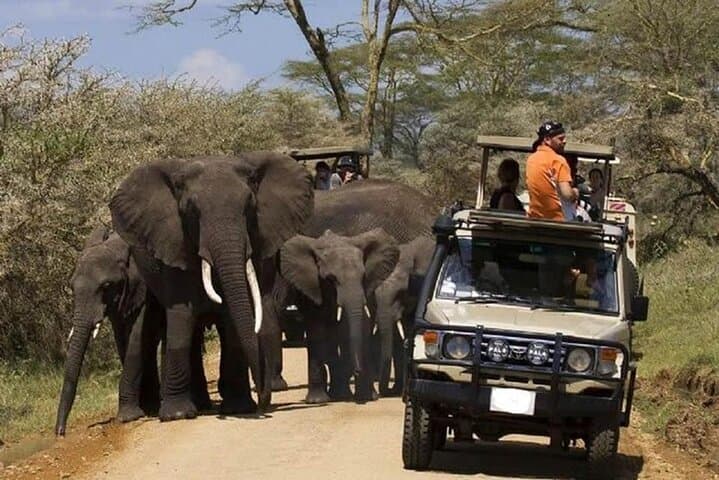
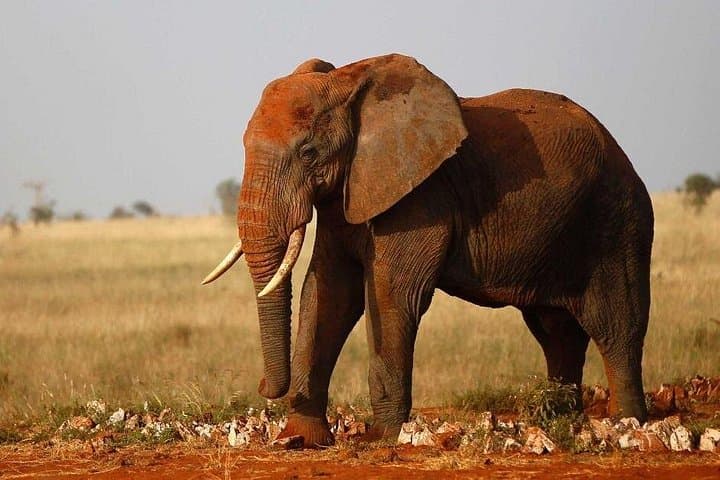
The vehicle hums to life before dawn and the plains open like a map, red dust lifting where elephants move between acacia shadows. Morning in Tsavo East is about silhouettes—giraffes feeding on thorny crowns, zebras banded against the light, and a distant pillar of dust announcing a buffalo herd.
The vehicle hums to life before dawn and the plains open like a map, red dust lifting where elephants move between acacia shadows. Morning in Tsavo East is about silhouettes—giraffes feeding on thorny crowns, zebras banded against the light, and a distant pillar of dust announcing a buffalo herd.
Tsavo East is one of Kenya’s largest protected areas, a semi-arid expanse carved by the Galana River and dotted with volcanic outcrops and seasonal dambos. The park’s modern fame mixes natural history with human history: the late-19th-century railway and the infamous “man-eaters of Tsavo” are part of the region’s story, while nearby Taita communities keep long-standing cultural ties to the land.
Geology gives Tsavo its character—ancient lava flows, kopjes, and wide red plains that concentrate game at seasonal waterholes. Wildlife sightings here are often up close: large elephant herds, prides of lion, elusive leopards, and roaming giraffes are common on game drives, especially during the dry months when animals cluster near permanent water.
Practically, expect long game-drive windows, bumpy dirt tracks, and strong sun. The itinerary typically includes a three-hour transfer to the park, afternoon and early-morning drives, and one night at a full-board lodge near Voi. Bring binoculars and a 200–400mm lens if you carry a camera; layers for cool mornings; insect repellent and malaria precautions; and neutral clothing to reduce spooking animals. Respect vehicle rules and keep distance—Tsavo’s wildlife is wild, not tame. Early starts yield the best light and the most movement; aim to be ready before first light to make the most of a compact, wildlife-focused two-day safari.