THE ADVENTURE COLLECTIVE® · Independent discovery and booking for outdoor travel

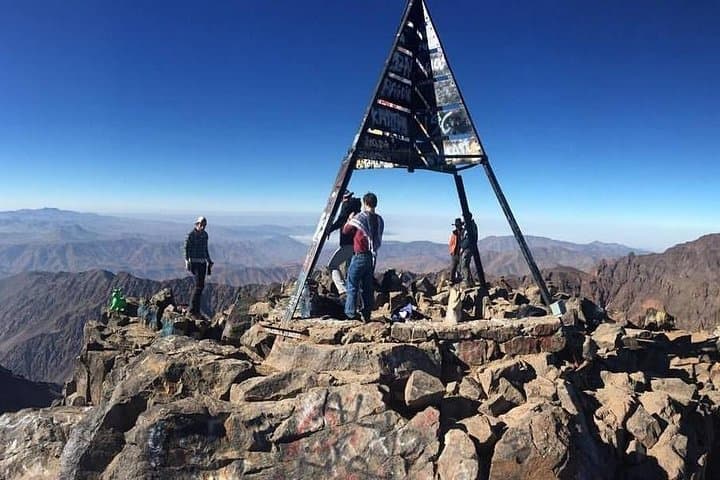
A focused two-day trek from Marrakech to the summit of Jebel Toubkal (4,167 m), combining mule-supported logistics and an overnight at the Toubkal Refuge. Expect long ascents, high-altitude exposure, and sweeping High Atlas views.
A focused two-day trek from Marrakech to the summit of Jebel Toubkal (4,167 m), combining mule-supported logistics and an overnight at the Toubkal Refuge. Expect long ascents, high-altitude exposure, and sweeping High Atlas views.
Dawn on the High Atlas arrives cold and absolute—the ridgelines sharpening into silhouette as you step from Imlil and let the valley fall away behind you.
Verified experiences and guided adventures in the surrounding area.
Operated by Smart Morocco Tours Excursions · Imlil, Marrakesh-Safi
Dawn on the High Atlas arrives cold and absolute—the ridgelines sharpening into silhouette as you step from Imlil and let the valley fall away behind you.
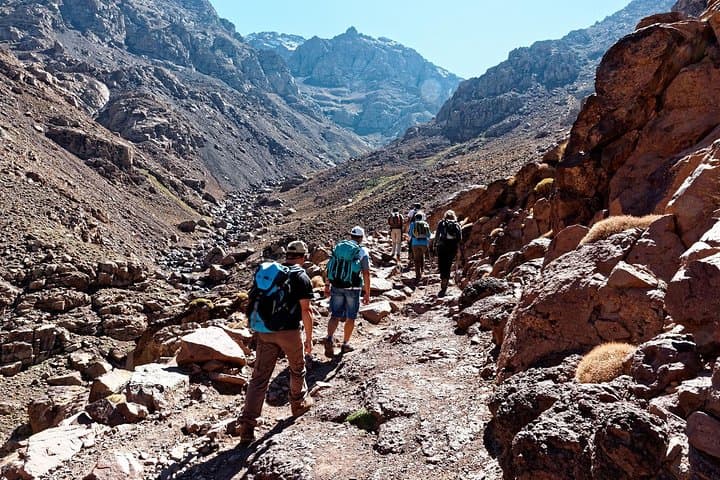
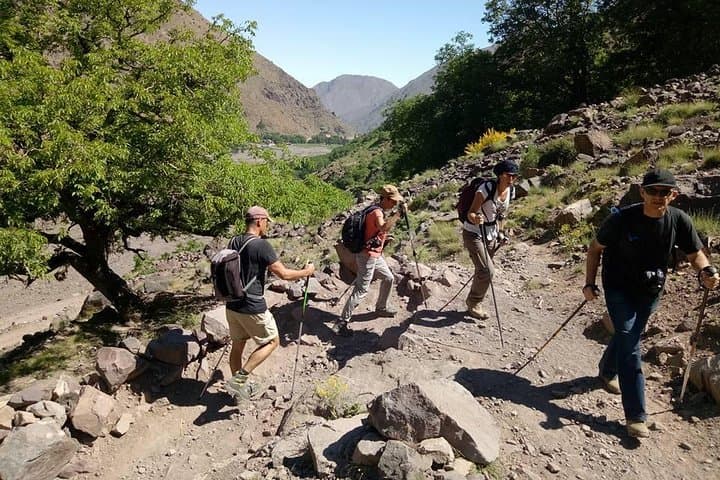
On this two-day route the trail climbs from roughly 1,740 m in Imlil up to the Toubkal Refuge (about 3,200 m) and then on to Jebel Toubkal (4,167 m). The first day is a steady, stone-stepped ascent through terraced Berber fields and small hamadas, meeting muleteers and local shepherds en route. The refuge sits above the treeline; here the wind has a voice and the stars feel close.
The High Atlas is the result of the African and Eurasian plates colliding—folded, uplifted metamorphic and sedimentary rock carved by winter snows and summer torrents. The valleys still host traditional Berber communities; lodges and small markets in Imlil reflect a long mountain culture rooted in pastoralism and craft.
Practical planning matters: expect 5–6 hours to the refuge (≈1,400 m gain) and an early start the summit day—3–4 hours from the refuge to the peak, then 3–4 hours descent back to Imlil. Trails are non-technical but high altitude, rocky, and subject to sudden weather shifts. The operator typically provides full board, a cook, mule support, and transfers to/from Marrakech, with an option to sleep in tents or the refuge.
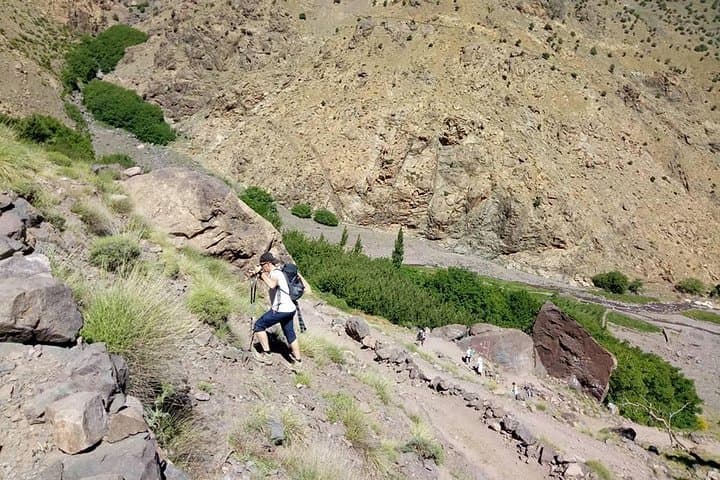
Bring layered insulation, tough boots, sun protection, and a compact daypack. Hydrate steadily, move deliberately on steep scree, and allow time at the refuge to rest—altitude, not distance, is the deciding factor on this classic Moroccan alpine outing.
challenging.
2 days.
Suitable for hikers who can manage full days of sustained uphill walking (5–7 hours) and handle altitude gain; prior multi-day hiking experience recommended.
You should be comfortable hiking 5–7 hours with continuous uphill sections and carrying a light daypack; cardiovascular stamina and previous day-hike experience are recommended.
The normal route is non-technical and does not require ropes or climbing gear, but conditions in winter may include snow and ice—microspikes or crampons can be necessary.
Options include tents or the Toubkal Refuge; the trip typically includes full board prepared by a cook, mineral water, guide and mule support for luggage.
Altitude can cause headaches, nausea, and fatigue; ascend slowly, hydrate, eat carbohydrates, rest at the refuge, and communicate symptoms to your guide—descend if symptoms worsen.
The High Atlas has long been inhabited by Amazigh (Berber) communities; valleys like Imlil historically functioned as seasonal pastoral and trade routes between Marrakech and mountain pastures.
Stick to packed trails to limit erosion, carry out all waste, and favor local guide services that contribute to village economies and responsible packing by muleteers.
Smart Morocco Tours Excursions operates guided outdoor trips and adventures with an emphasis on safety, stewardship, and memorable experiences.
Dawn on the High Atlas arrives cold and absolute—the ridgelines sharpening into silhouette as you step from Imlil and let the valley fall away behind you.
Dawn on the High Atlas arrives cold and absolute—the ridgelines sharpening into silhouette as you step from Imlil and let the valley fall away behind you.
On this two-day route the trail climbs from roughly 1,740 m in Imlil up to the Toubkal Refuge (about 3,200 m) and then on to Jebel Toubkal (4,167 m). The first day is a steady, stone-stepped ascent through terraced Berber fields and small hamadas, meeting muleteers and local shepherds en route. The refuge sits above the treeline; here the wind has a voice and the stars feel close.
The High Atlas is the result of the African and Eurasian plates colliding—folded, uplifted metamorphic and sedimentary rock carved by winter snows and summer torrents. The valleys still host traditional Berber communities; lodges and small markets in Imlil reflect a long mountain culture rooted in pastoralism and craft.
Practical planning matters: expect 5–6 hours to the refuge (≈1,400 m gain) and an early start the summit day—3–4 hours from the refuge to the peak, then 3–4 hours descent back to Imlil. Trails are non-technical but high altitude, rocky, and subject to sudden weather shifts. The operator typically provides full board, a cook, mule support, and transfers to/from Marrakech, with an option to sleep in tents or the refuge.
Bring layered insulation, tough boots, sun protection, and a compact daypack. Hydrate steadily, move deliberately on steep scree, and allow time at the refuge to rest—altitude, not distance, is the deciding factor on this classic Moroccan alpine outing.